Atlantic Halibut ( Hippoglossus hippoglossus ) in Norway
Field
notes
One eye on the move
The Atlantic halibut is a flatfish, and in flatfishes eye migration is the metamorphic process (a change in body form) whereby one eye migrates to the other side of the head. The retina is restructured too: the larva’s hexagonal lattice of single cones gives way to a mostly square mosaic of four double cones around each single cone. Cones are light-sensing cells in the eye.
The skull is involved too: in halibut larvae, the frontal bone shows torsion (a twist) correlated with eye migration, though its full hardening into bone is independent of the eye’s move. Researchers raising larvae also note that metamorphosis is protracted in halibut, meaning it is drawn out.
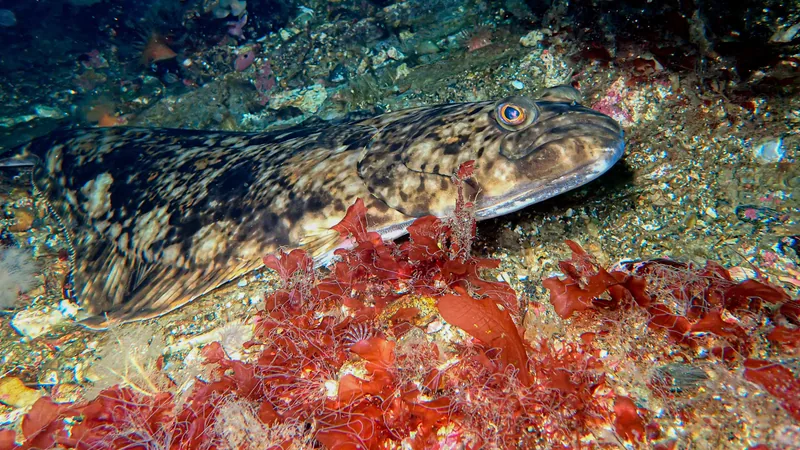
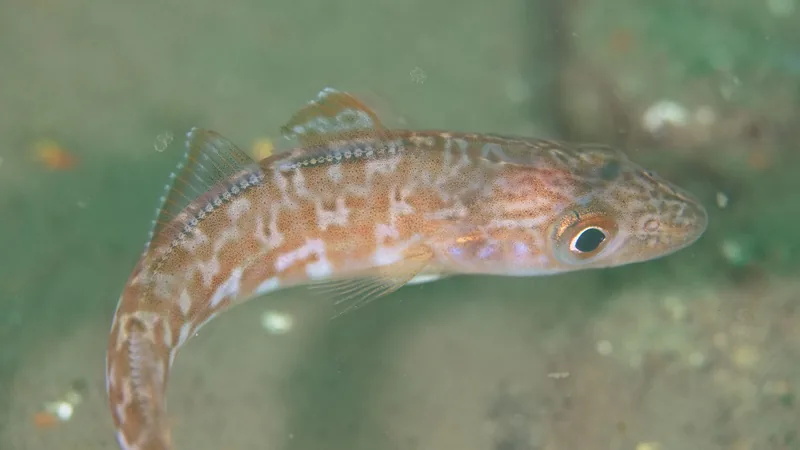
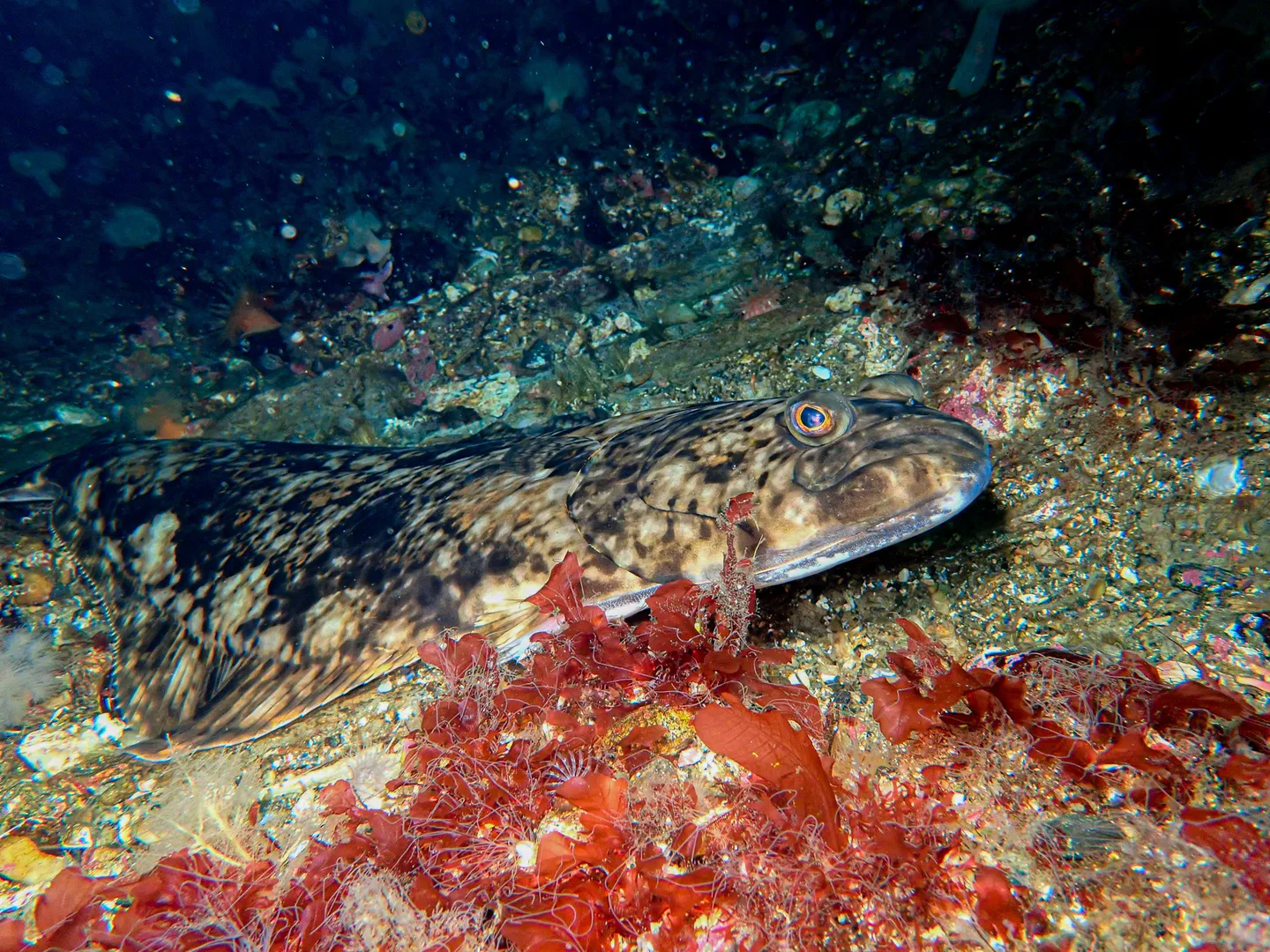
The adult ends up as a right-eyed flounder. NOAA tells it from other right-eyed flounders by its size, a concave tail fin, a large gaping mouth and an arched lateral line. It is uniformly dark brown or black, while young fish are marbled or spotted with paler marks. Its genus name comes from Greek for “horse tongue”.
Cape Ann giant The largest Atlantic halibut on record was taken off Cape Ann, Massachusetts, and weighed 615 pounds gutted with the head still attached. NOAA estimates it weighed about 700 pounds alive.
Built big, built slow
NOAA calls it the largest species of flatfish in the world, and says it can reach up to 15 feet in length. Full-grown females average 100 to 150 pounds, and males tend to be smaller.
NOAA calls it a long-lived, late-maturing species: it can live up to 50 years, and the average age at maturity is about 10 years. FishBase gives 7 to 8 years for males and 10 to 11 for females. FishBase notes that with slow growth and late maturity, halibut populations can be seriously affected by overfishing.
A menu that grows with it
Small halibut, up to about 12 inches long, feed almost exclusively on invertebrates. The proportion of fish in the diet increases as they grow, and by roughly 31 inches they eat almost exclusively fish. FishBase says they feed mainly on cod, haddock, pogge, sand-eels, herring and capelin, but also take cephalopods and large crustaceans.
Adults are benthic, meaning they live on the bottom, though they are occasionally pelagic (up in open water). They live on or near sand, gravel or clay at depths of 160 to 6,560 feet. The range runs from Labrador and Greenland to Iceland, and from the Barents Sea south to the Bay of Biscay and Virginia. In U.S. waters, they are most common in the Gulf of Maine.
Fished down
The IUCN Red List rates the species Near Threatened, in an assessment from 2021. In U.S. waters, NOAA’s 2024 stock assessment found the stock overfished. A rebuilding plan has a target date of 2055. In 2024, U.S. commercial landings totalled 76,000 pounds, valued at about $480,000, and federal waters have a limit of one fish per vessel per trip.
Published
Traits
Intel
& FAQ
Guess
first
How big is a Atlantic Halibut, really? Slide, lock in, and see what the sources say. Every answer is a figure from this page, quoted from where it came from.
Sources
- 01Atlantic Halibut. NOAA Fisheries.
- 02Hippoglossus hippoglossus summary page. FishBase.
- 03Bolstad & Novales Flamarique (2022). Chromatic organization of retinal photoreceptors during eye migration of Atlantic halibut (Hippoglossus hippoglossus). Journal of Comparative Neurology.
- 04Sæle et al. (2004). Staging of Atlantic halibut (Hippoglossus hippoglossus L.) from first feeding through metamorphosis, including cranial ossification independent of eye migration. Aquaculture.
- 05Cadrin et al. (2022). Hippoglossus hippoglossus. The IUCN Red List of Threatened Species 2022: e.T10097A148035632.
What the sources say: 52 claims checked word for word against these sources →