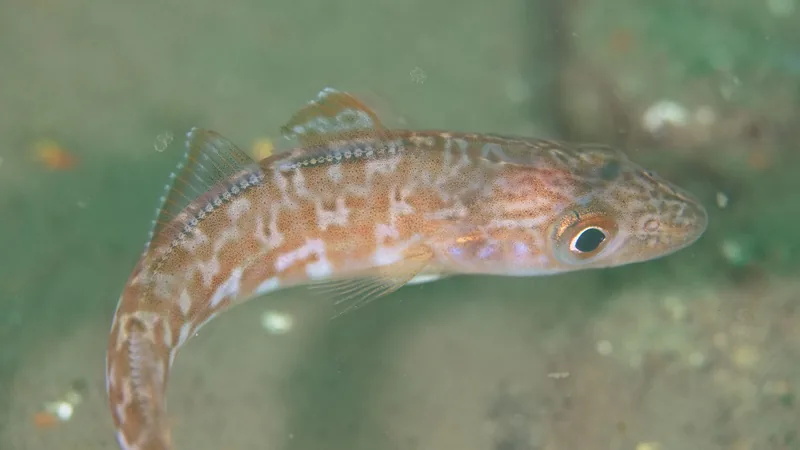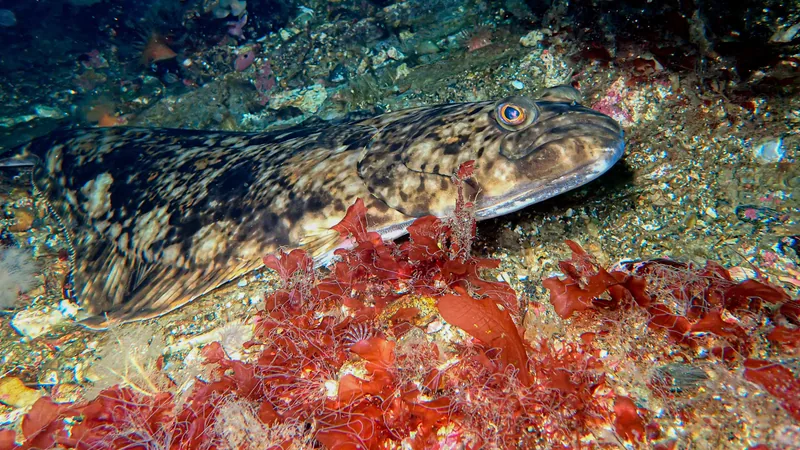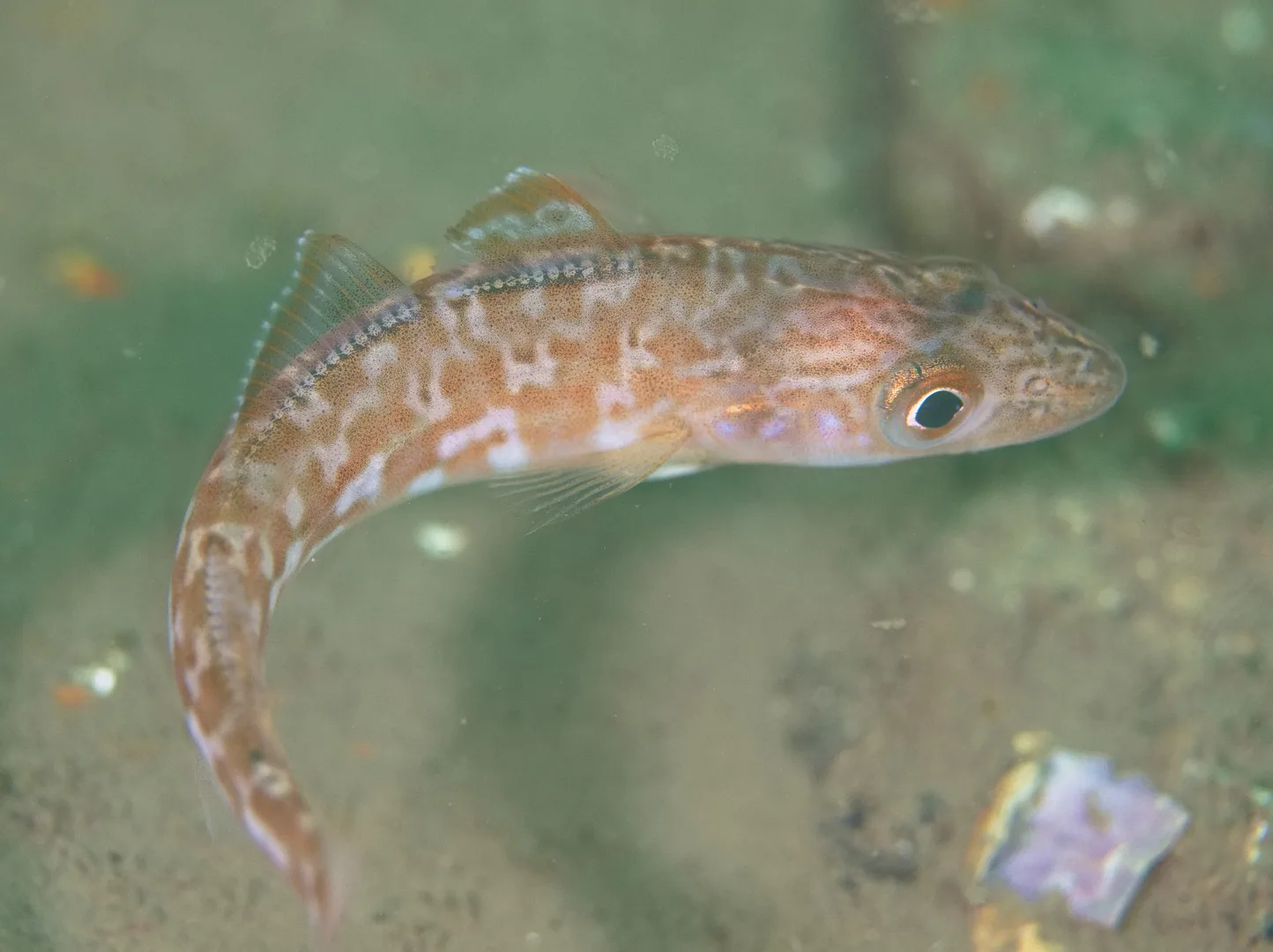
Atlantic cod off England.
Field
notes
A fish with a hole in its immune system
In 2011, researchers sequenced the cod’s genome and found something strange. The genes for MHC II, CD4 and invariant chain were simply missing. Together they run a pathway of the adaptive immune system, and that pathway is a standard feature across jawed vertebrates. What the cod does have is a highly expanded number of MHC I genes and an unusual mix of Toll-like receptor families.
Missing genes The cod has no genes for MHC II, CD4 or invariant chain, yet in natural conditions it is not especially prone to disease.
The authors take the extra MHC I genes and the odd receptor mix as signs that the cod evolved compensating mechanisms in both adaptive and innate immunity.
Heavy body, one whisker
The cod is a thick, heavy fish with a big head, a blunt nose and a single whisker, called a barbel, hanging from its chin like a catfish’s. Colour runs from yellowish-green to red and olive, and an individual can change colour readily.
FishBase lists a maximum length of 200 cm, a common length of 100 cm and a maximum published weight of 96 kg. The oldest cod on its record was 25 years old.
Cold water, hungry at dusk
The cod lives across the North Atlantic and Arctic, from Ungava Bay in Canada south to Cape Hatteras, North Carolina, around Greenland and Iceland, and across to the Barents Sea and the Bay of Biscay. It is found from the shoreline to 600 m, usually at 150 to 200 m, in water from 0 to 15 degrees C.
Young cod prefer shallow water with seagrass, gravel or boulders to shelter in. Adults are usually found in deeper, colder water. By day they school about 30 to 80 m above the bottom, then spread out at night to feed on invertebrates and fish, including young cod. Cod mostly stay within the area of their own stock, and trips over 200 km are rare.
Millions of eggs, then a crash
Cod spawn in winter and early spring. FishBase gives 2.5 million eggs for a 5 kg female and a record of 9 million for a 34 kg female. Off southern Labrador and eastern Newfoundland, the populations known as northern cod crashed in the late 1980s and early 1990s, one of the worst collapses fisheries have seen. Canada closed directed fishing for northern cod in July 1992, and in 2004 the authors reported the populations still historically low after a decade-long offshore moratorium. Up to the moratorium, the fish had been maturing at earlier ages and smaller sizes, a shift the authors suggest is fisheries-induced evolution.
The IUCN Red List rates the species Vulnerable, in an assessment made in 1996, which FishBase still lists as the Red List status.
Published
Traits
Intel
& FAQ
Guess
first
How big is a Atlantic Cod, really? Slide, lock in, and see what the sources say. Every answer is a figure from this page, quoted from where it came from.
Sources
- 01Sobel (1996). Gadus morhua. The IUCN Red List of Threatened Species 1996: e.T8784A12931575.
- 02Star et al. (2011). The genome sequence of Atlantic cod reveals a unique immune system. Nature.
- 03Olsen et al. (2004). Maturation trends indicative of rapid evolution preceded the collapse of northern cod. Nature.
- 04Gadus morhua, Atlantic cod. FishBase.
- 05Atlantic Cod. NOAA Fisheries.
What the sources say: 38 claims checked word for word against these sources →