Marsupials
Pouched mammals delivering tiny embryonic young that finish development outside the womb.
Marsupialia
Marsupials diverge from placental mammals by giving birth after very brief gestation periods to tiny, jellybean-sized young. The underdeveloped joey crawls into the maternal pouch or attaches to a teat, completing its growth in a temperature-controlled nursery.
Key Evolutionary Adaptations
Newborn kangaroo joeys weigh less than one gram and climb into the pouch purely through muscular instinct.
In a 2005 study, the Tasmanian devil had the highest estimated bite force for its body mass of any living mammal predator sampled.
Wombats produce cubic droppings due to alternating elasticity in their intestinal walls, preventing feces from rolling away.
All Marsupials
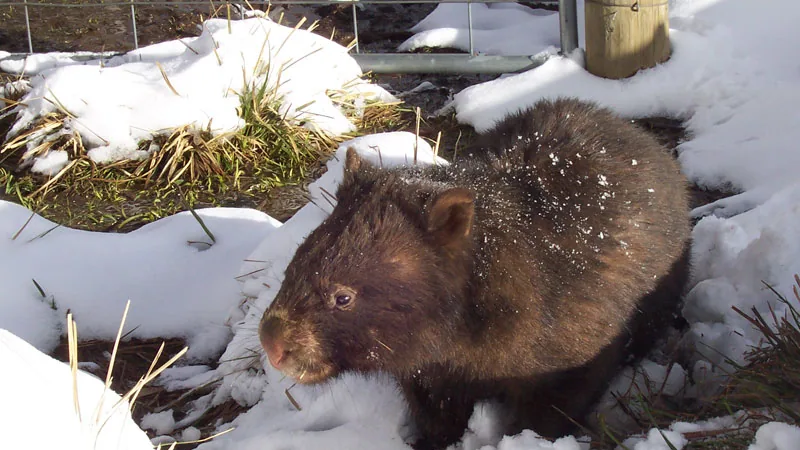
Bare-Nosed Wombat
A tough-skinned rump, cube-shaped scats, and the strength to crush an attacker against the burrow roof.
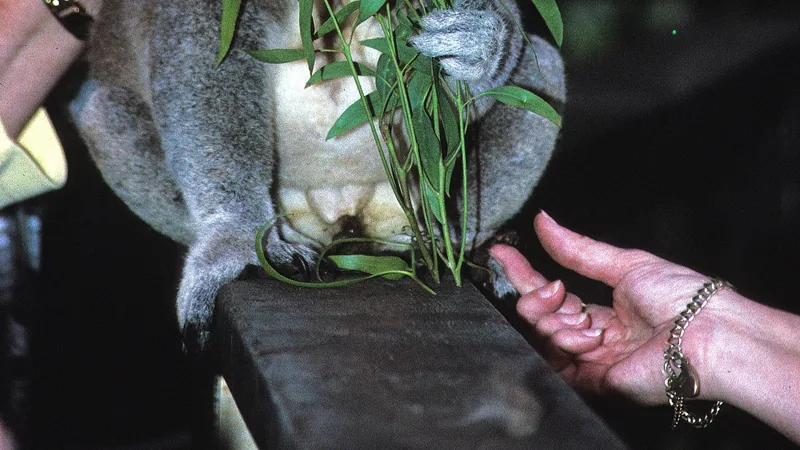
Koala
A slow-motion marsupial that sleeps up to 22 hours a day and leans on gut bacteria to live on eucalyptus leaves most herbivores can't tolerate.
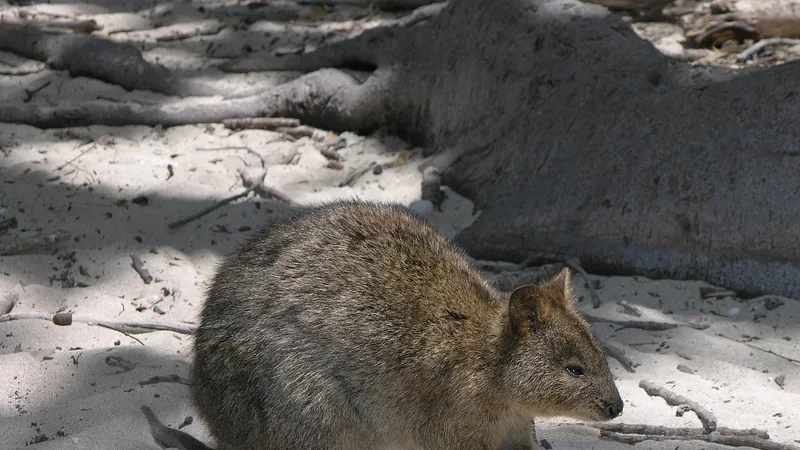
Quokka
A Western Australian wallaby with three kinds of colour cone, a permanent grin, and no fear of tourists.
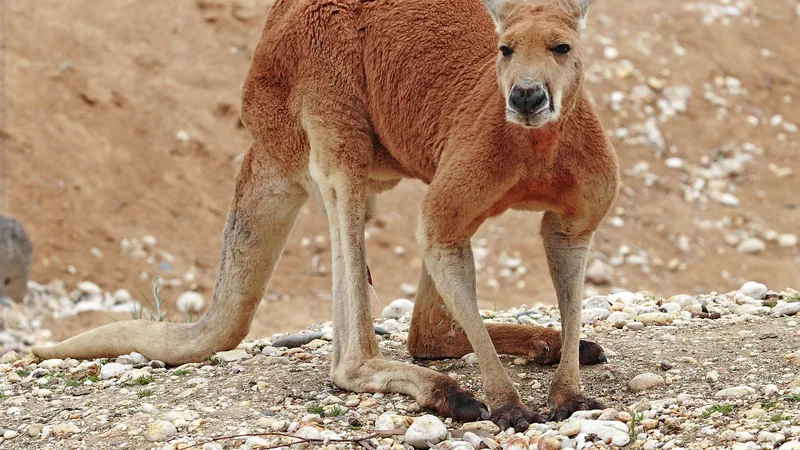
Red Kangaroo
Australia's biggest marsupial, hopping at 64 km/h on powerful hind legs, balanced by a tail it can also rest on.
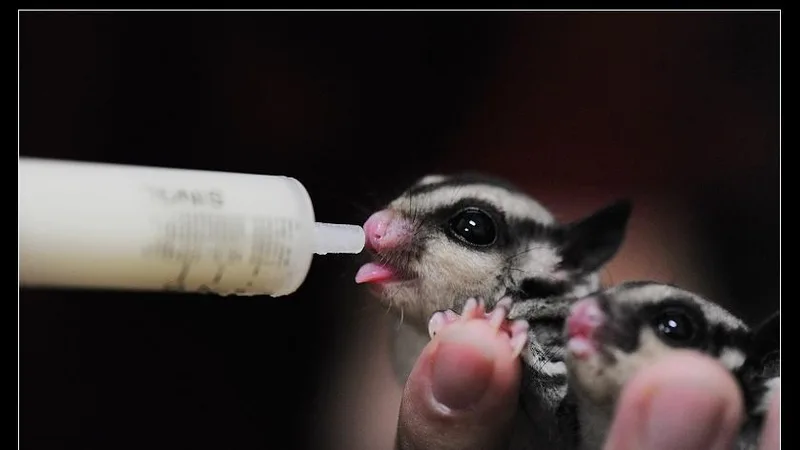
Sugar Glider
Patagium gliding membrane, glides that can reach about 150 feet between trees, and an appetite for eucalyptus sap and sweet nectar.
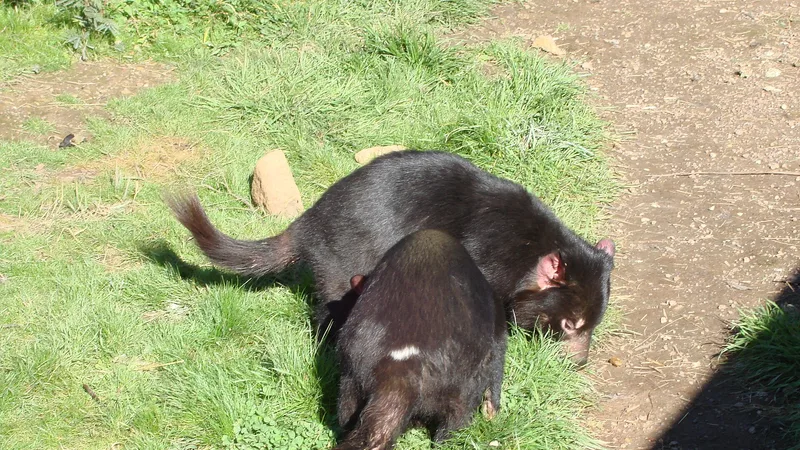
Tasmanian Devil
Pound for pound, the strongest estimated bite of any living mammal predator studied, bloodcurdling nocturnal screams, and a scavenger's take-no-prisoners appetite.
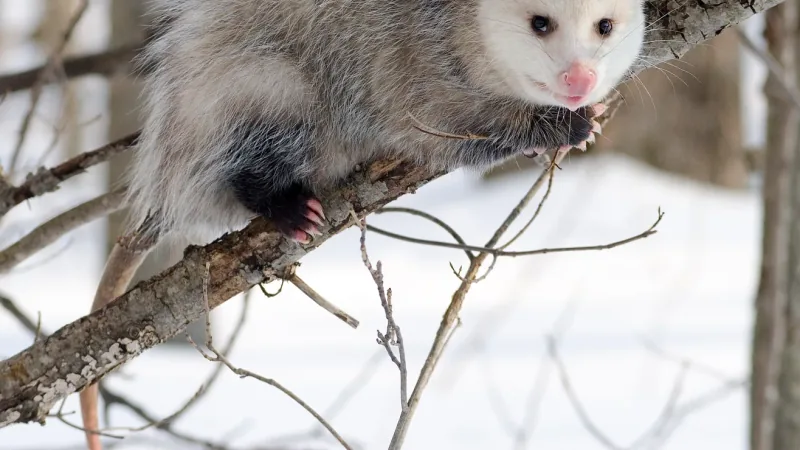
Virginia Opossum
Fifty-toothed marsupial that fakes its own death through an involuntary catatonic collapse and is virtually immune to pit viper venom.
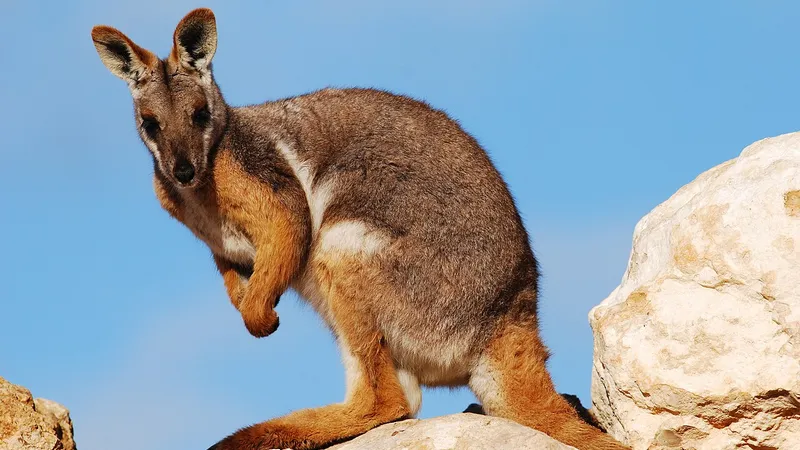
Yellow-Footed Rock-Wallaby
Ring-tailed outback acrobat that leaps up to four metres from rock to rock on short-clawed, thickly padded hind feet.