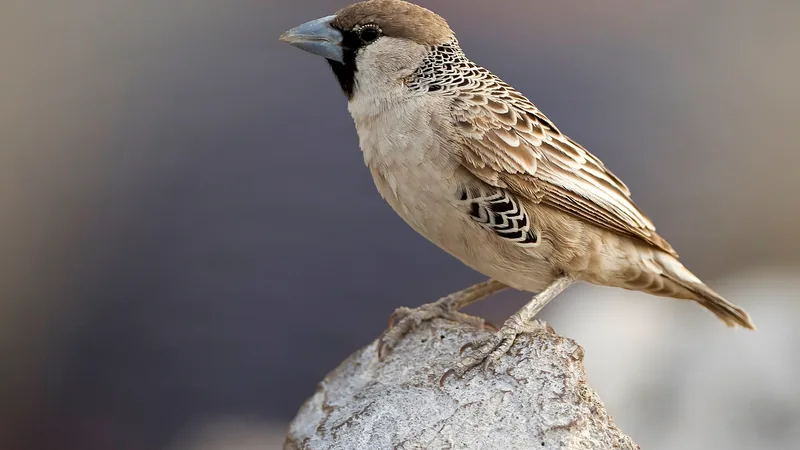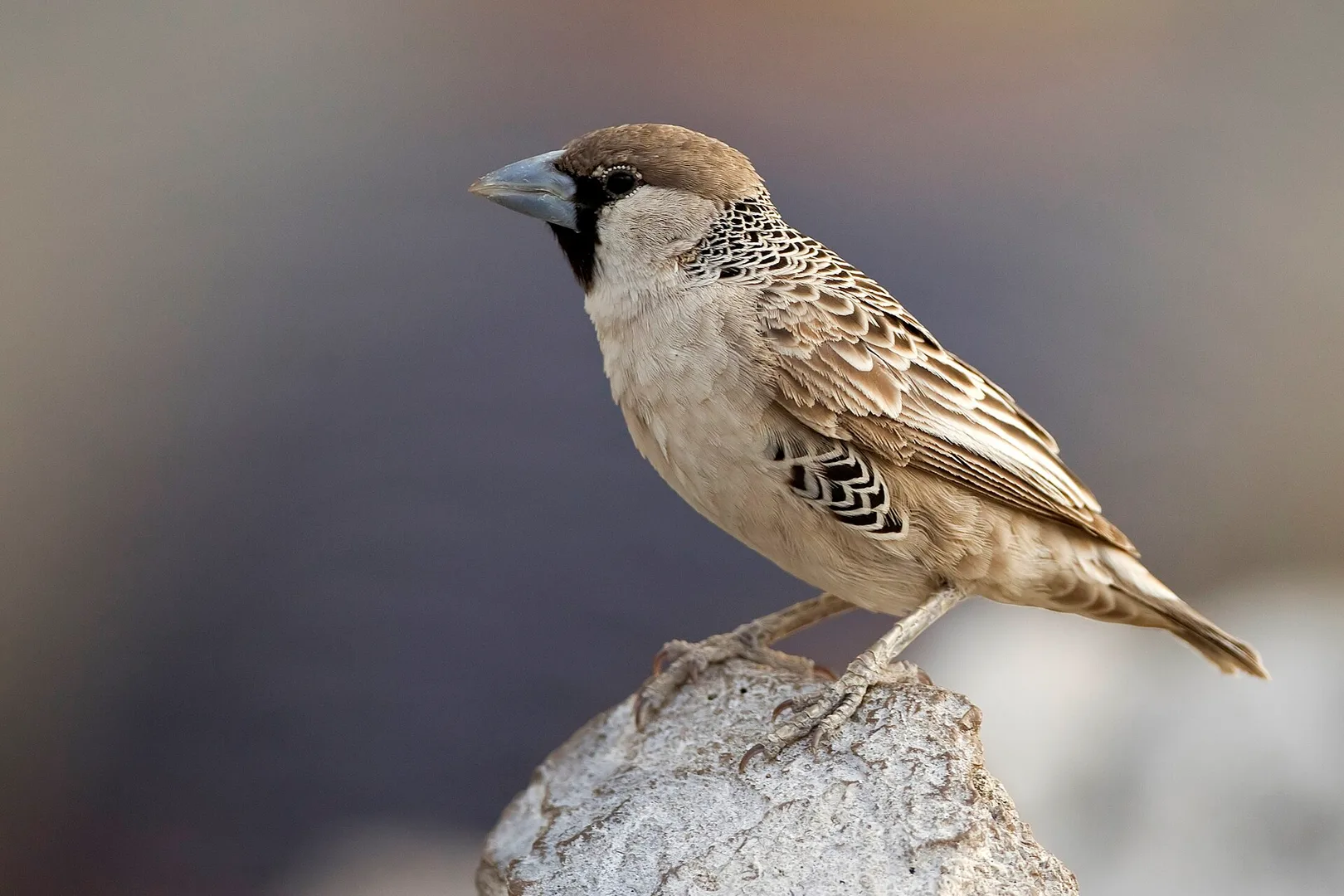
Sociable weaver in Etosha National Park
Field
notes
A Sparrow-Sized Bird, a Six-Meter Nest
At 14 centimeters tall and just 24 to 32 grams, the sociable weaver lives in the semi-arid acacia savannas of southern Africa’s Kalahari. Colonies of these little brown birds build the biggest nest structure made by any bird on Earth: one shared, haystack-like mass with a roof of twigs and chambers of dry grass that can stretch more than 6 meters wide and close to 3 meters tall, packed with over 100 separate chambers and home to as many as 400 birds. The whole thing can weigh several tons, heavy enough to bring down the tree holding it up. Some of these mega-nests have stayed occupied, and constantly added to, for more than a hundred years.
Built-In Air Conditioning
The nest isn’t built for size alone. Researchers White, Bartholomew and Howell found that easing the impact of low outside temperatures on the birds is one clear job it does. In a follow-up study during a Kalahari summer, they measured air outside a nest swinging from 16°C to 33.5°C, while the temperature inside an occupied chamber moved by only seven or eight degrees, staying inside the birds’ comfort zone the whole time.
Headcount is the thermostat. The main way a colony keeps its chambers in that comfortable band is by changing how many birds sleep in each one at night.
The engineering has limits. Straw spikes guard the tunnel entrances, but even the largest nests don’t stop a Cape cobra in the warm season, and one snake may eat the eggs and chicks in every chamber of a large nest.
A Cooperative With Hundreds of Roommates
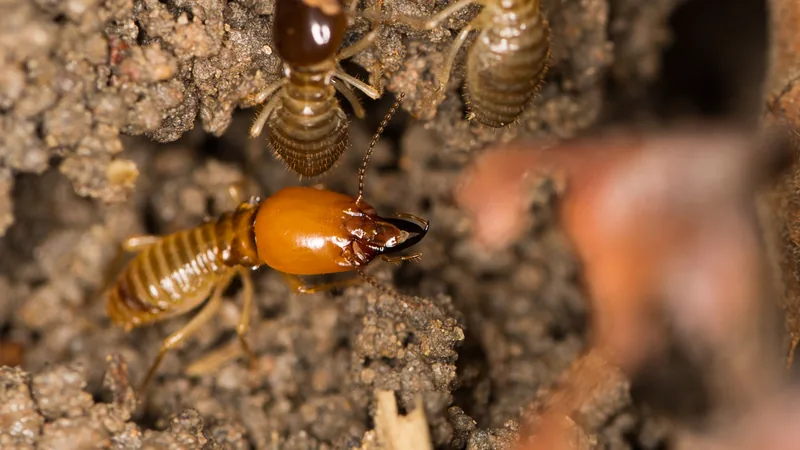
A single nest can shelter a colony of five to more than 300 birds. Males who help build it tend to be more closely related to the colony members around them than males who don’t build at all, and chicks raised with extra helpers survive better than chicks raised by their parents alone. Helpers cut both ways for the breeders: females breeding with more helpers survive better themselves, but males with more helpers actually survive worse. About four-fifths of a weaver’s diet is insects, especially harvester termites, with grass seeds making up the rest, and most never take a drink, getting all the moisture they need from their food. Weavers are relatively long-lived: the oldest one on record made it to 16.
Landlords of the Kalahari
Other animals move in too. The pygmy falcon, which also preys on the weavers, roosts and nests nowhere else. Kalahari tree skinks are more abundant in trees with a weaver nest than without one, take refuge in the nest when threatened, and even eavesdrop on the weavers’ own alarm calls to know when trouble is near.
Published Updated
Traits
Intel
& FAQ
Guess
first
How big is a Sociable Weaver, really? Slide, lock in, and see what the sources say. Every answer is a figure from this page, quoted from where it came from.
Sources
- 01Sociable Weaver. San Diego Zoo Wildlife Alliance.
- 02Philetairus socius. The IUCN Red List of Threatened Species 2024: e.T22718731A263786878.
- 03White, Bartholomew & Howell (1975). The Thermal Significance of the Nest of the Sociable Weaver Philetairus socius: Winter Observations. Ibis.
- 04Bartholomew, White & Howell (1976). The Thermal Significance of the Nest of the Sociable Weaver Philetairus socius: Summer Observations. Ibis.
- 05van Dijk et al. (2014). Cooperative investment in public goods is kin directed in communal nests of social birds. Ecology Letters.
- 06Paquet et al. (2013). Maternal Effects in Relation to Helper Presence in the Cooperatively Breeding Sociable Weaver. PLoS ONE.
- 07Paquet et al. (2015). Antagonistic effect of helpers on breeding male and female survival in a cooperatively breeding bird. Journal of Animal Ecology.
- 08Rymer, Thomson & Whiting (2014). At home with the birds: Kalahari tree skinks associate with sociable weaver nests despite African pygmy falcon presence. Austral Ecology.
- 09Lowney, Flower & Thomson (2020). Kalahari skinks eavesdrop on sociable weavers to manage predation by pygmy falcons and expand their realized niche. Behavioral Ecology.
What the sources say: 48 claims checked word for word against these sources →