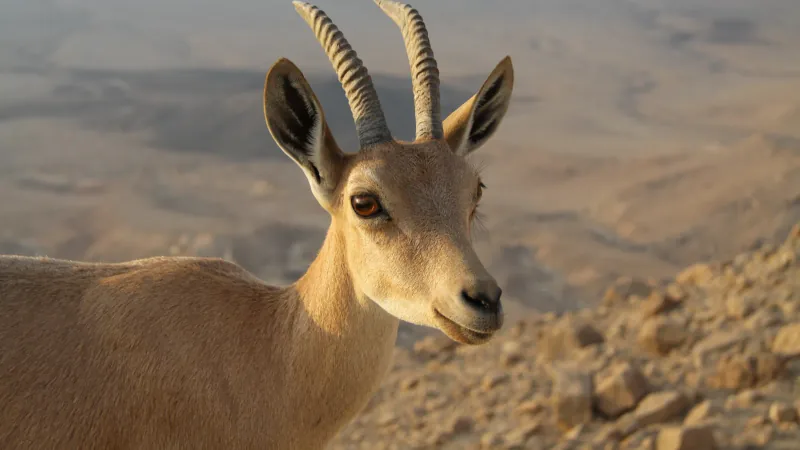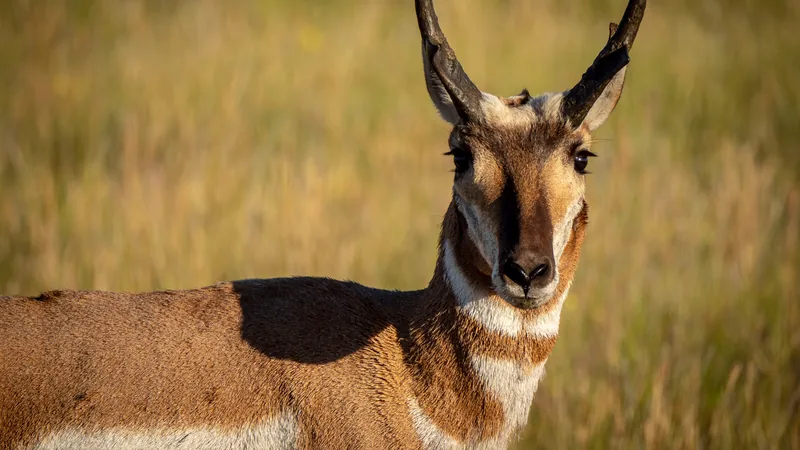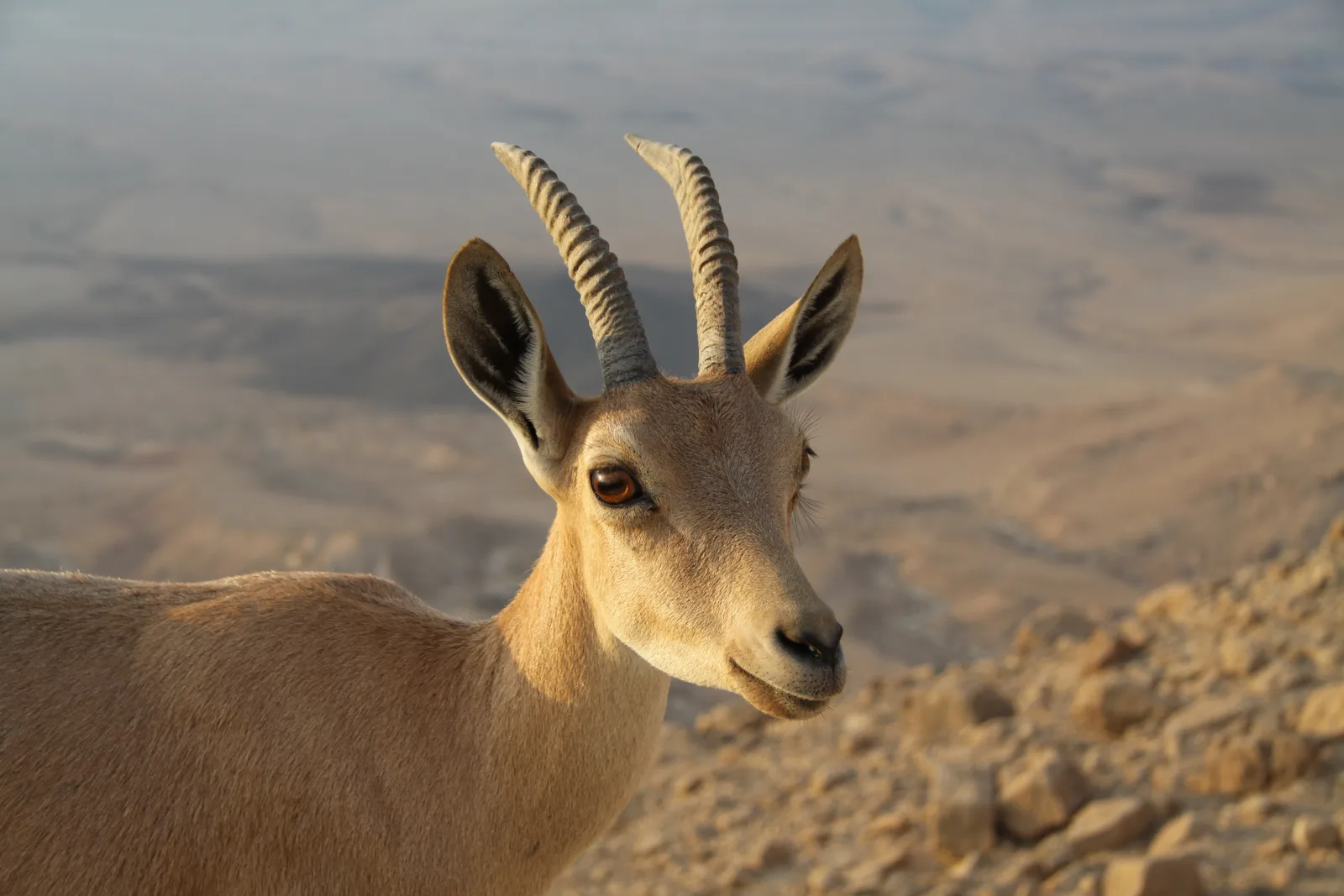
Male Nubian ibex with backward-sweeping knobby horns standing on desert plateau
Field
notes
In Israel’s Avedat Canyon, Nubian ibex mothers have been seen doing something that a 2007 Animal Diversity Web account calls unique among caprines, the group that holds the wild goats and sheep: they leave their kids together in a canyon and come back often to feed them. The Nubian Ibex (Capra nubiana) is a relatively small ibex and a true cliff dweller, found in small pockets of the Middle East and northeast Africa.
Males average about 62.5 kilograms and stand roughly 75 centimeters at the shoulder, more than twice the weight of females, which average 26.5 kilograms. Both sexes carry horns, but a male’s are long, slender, ridged, and backward-arching, and can reach up to 122 centimeters, more than three times the 36 centimeters of a female’s. In the care of humans, Nubian ibex have a median life expectancy of about nine years.
The Canyon Nursery Females leave their kids unattended in nursery groups with many other kids in a steep-walled canyon, and visit often to feed them. The same account says the nursery is most likely an accidental trap: the kids have fallen in and cannot climb its walls. They stay until they are mature enough to follow along on the steep cliffs.
Weapons for the Rut
Both sexes use their horns for fighting, for sexual selection, and to defend territory, and they fight by ramming rather than puncturing. During the rut, usually in October, the strongest males compete for the right to breed, often in forceful fights where they crash their horns together and try to overpower their opponents. Sparring to settle dominance seldom results in serious injury. Older males are solitary for most of the year, then join the females during the rut and try to drive off other males.
Life on the Rock Face
Nubian ibex live in small pockets from Egypt east of the Nile through Sudan, Ethiopia, and Eritrea to Israel, Jordan, Saudi Arabia, Yemen, and Oman, generally on the most remote, highest, and steepest cliffs, from sea level up to 3,000 meters. Staying close to a cliff edge lowers the risk of predation, and they typically come down the mountain only to graze. The main diet is herbs, shrubs, and tree foliage, especially acacia, with a preference for cadaba and camphorweed, and they drink water every day if it is available.
Grooming Birds and Threats
Tristram’s grackles peck at the hides of Nubian ibex, and have been known to groom them in a way that benefits both, eating insects and parasites on their skin. The threats vary by place: competition with livestock and feral camels in Egypt and Saudi Arabia, habitat loss and degradation, and hunting, which probably poses the greatest threat in Yemen. The IUCN’s 2020 assessment lists the Nubian ibex as Vulnerable.
Published Updated
Traits
Intel
& FAQ
Guess
first
How big is a Nubian Ibex, really? Slide, lock in, and see what the sources say. Every answer is a figure from this page, quoted from where it came from.
Sources
- 01Tomsen, J. (2007). Capra nubiana (Nubian ibex). Animal Diversity Web, University of Michigan.
- 02Nubian Ibex. San Diego Zoo Wildlife Alliance.
- 03Ross et al. (2020). Capra nubiana. The IUCN Red List of Threatened Species 2020: e.T3796A22143385.
- 04Yosef & Yosef (1991). Tristram's Grackles Groom Nubian Ibex. The Wilson Bulletin.
What the sources say: 67 claims checked word for word against these sources →