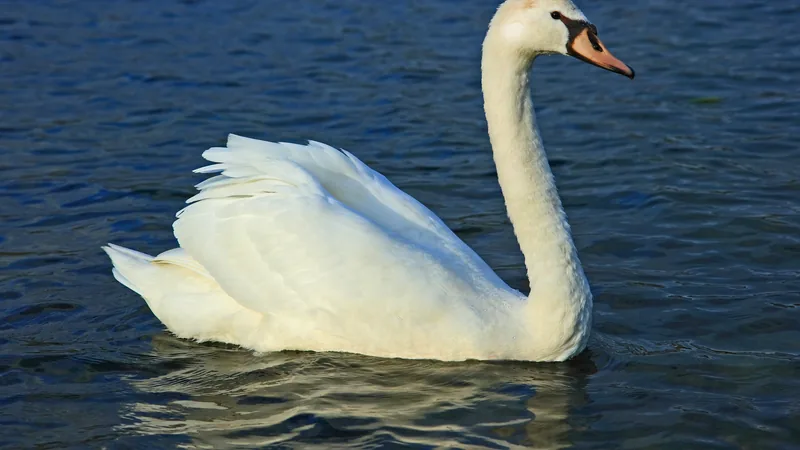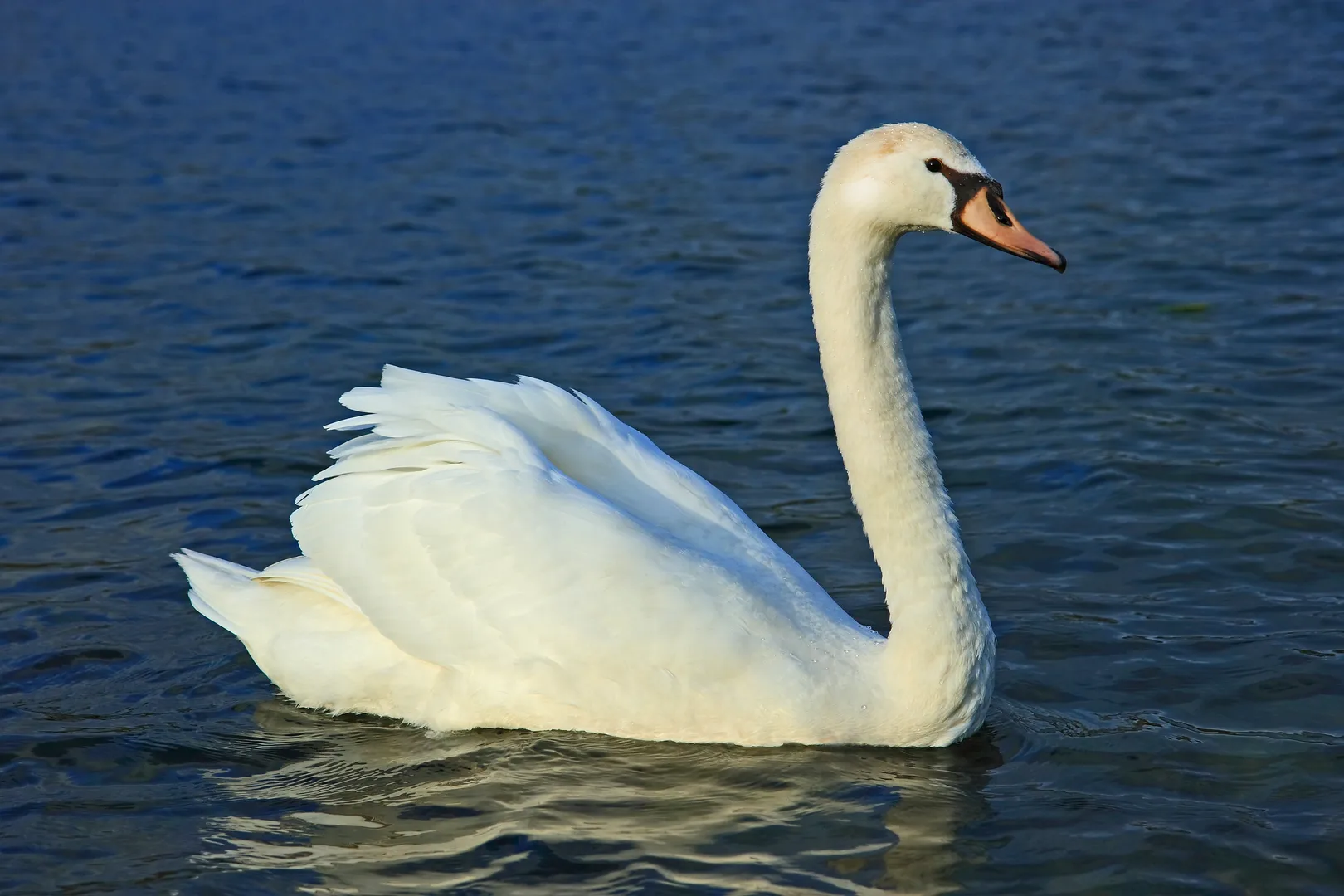
On the water.
Field
notes
Wings up, feathers fluffed
When an adult male with a nest or brood meets another male, both raise their wings and fluff their feathers. This is called busking, and the two males then twirl in place. New York’s wildlife agency says the ritual appears more like a dance than a fight. Busking is also part of the mating ritual.
Do not mistake the show for a gentle bird. Breeding mute swans are very territorial, and both sexes are aggressive toward people and other waterfowl within their nesting area. Animal Diversity Web says blows from their wings can be especially painful, and that there are records of swans knocking boaters off jet skis.
Not so mute after all
Despite the name, mute swans are not silent. They often grunt softly while feeding and will hiss loudly if disturbed, especially when protecting their young. In flight, their wings make a whooshing sound. Their voices do not carry far, and Animal Diversity Web ties that to a straight trachea, the windpipe.
Heavy, long-lived and slow to breed
An adult measures 144 to 158 cm long, with a wingspan of 2 to 2.5 metres. From weighings of live birds, adult males average 10.75 kg and females 8.54 kg. A bird that reaches breeding age typically lives 10 years, and breeding usually starts at four. The oldest bird in the British Trust for Ornithology’s ringing records was 29 years old, a record set in 2009.
Piggyback ride Newly hatched cygnets often hitch a ride on their parents’ backs for warmth, protection and to save energy.
Pairs, plants and an imported population
In spring, pairs bow to each other with wings held aloft, then entwine their necks, often forming a heart shape. Birds of the World says the pair bonds often last for life, though Animal Diversity Web notes that some swans have been seen with as many as four mates. The female lays four to seven eggs and incubates them while her partner stands guard. The grey cygnets turn grey-brown, then white, during their first year.
Mute swans feed mainly on aquatic plants, and also graze on grass in nearby fields. New York’s wildlife agency says they eat about 4 to 8 pounds (1.8 to 3.6 kg) of vegetation a day. They breed in the British Isles, north central Europe and north central Asia. New York’s wildlife agency says they were first brought to the United States from Europe in the late 1800s, and it lists the mute swan as a prohibited invasive species.
Published
Traits
Intel
& FAQ
Guess
first
How big is a Mute Swan, really? Slide, lock in, and see what the sources say. Every answer is a figure from this page, quoted from where it came from.
Sources
- 01Cygnus olor. The IUCN Red List of Threatened Species 2025: e.T22679839A281844289.
- 02Wood et al. (2024). Mute Swan (Cygnus olor). Birds of the World.
- 03BirdFacts: Mute Swan. British Trust for Ornithology.
- 04Mute Swan. RSPB.
- 05Mute Swan. New York State Department of Environmental Conservation.
- 06Cygnus olor (mute swan). Animal Diversity Web, University of Michigan.
What the sources say: 44 claims checked word for word against these sources →