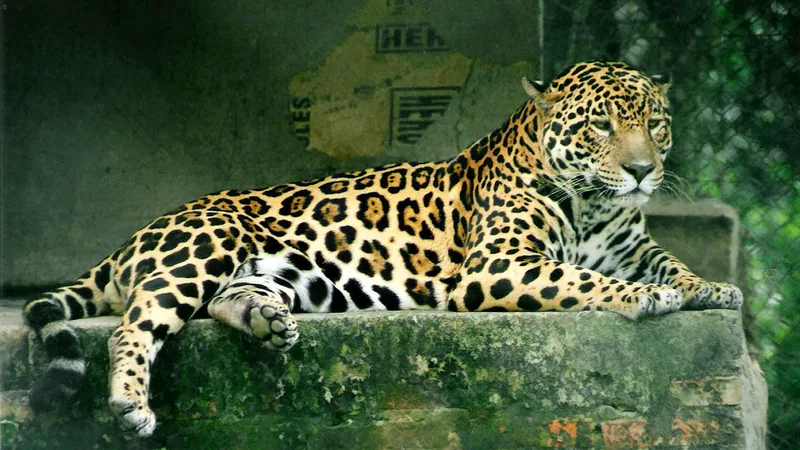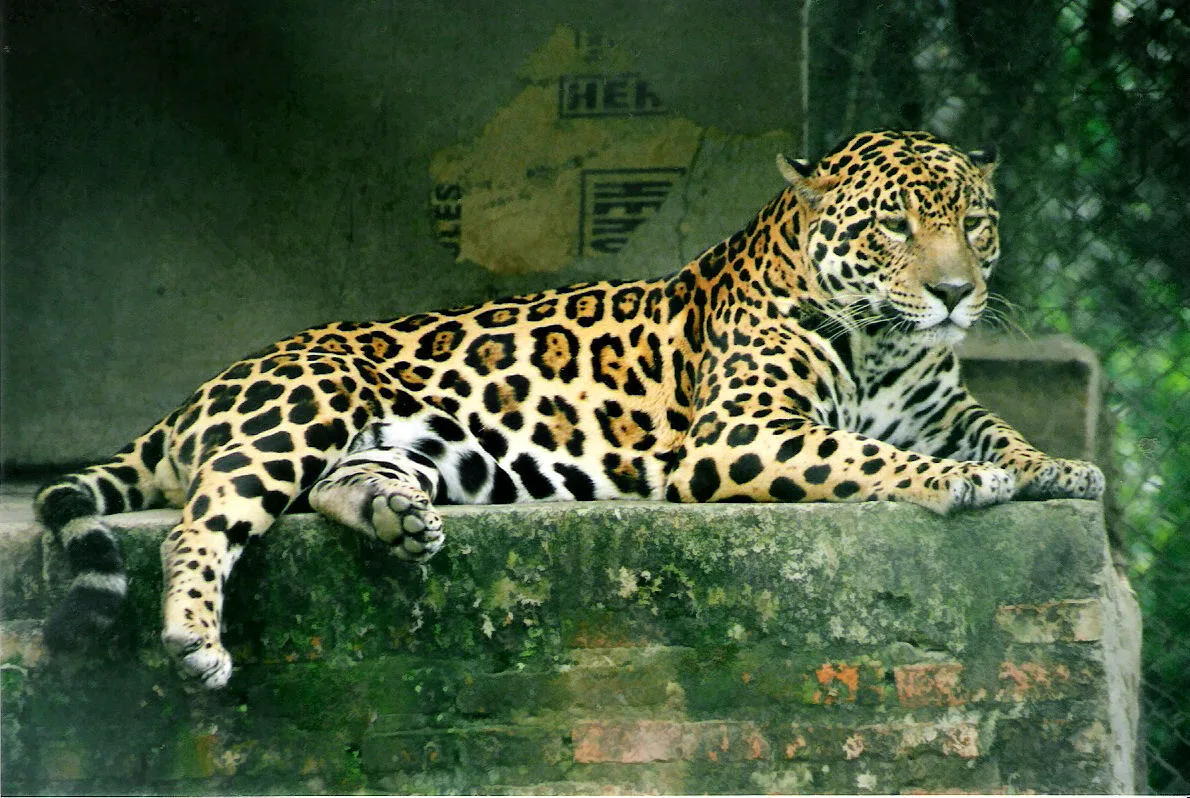
A female jaguar (Panthera onca) by the Piquiri River in the Pantanal, Brazil
Field
notes
The Skull-Piercer
The jaguar (Panthera onca) kills in one of two ways. It either delivers a direct bite to the neck and then suffocates its prey, or it kills instantly by piercing the back of the skull with its canines. Its powerful jaws and canines also get through thick reptile skin and turtle shells.
An instant kill A jaguar’s canines can pierce the back of its prey’s skull, killing it instantly.
Fish get a stranger treatment. Jaguars have been observed sitting quietly at the water’s edge, occasionally tapping the surface with their tail to attract fish.
Two Very Different Jaguars
Jaguars are the largest cats in the Americas and the third-largest cat species on Earth, smaller only than lions and tigers. But “jaguar-sized” depends heavily on where one lives. A survey of four populations found that jaguars from floodplain habitats, the Pantanal and the Llanos, were consistently larger across nearly every skull and body measurement than jaguars from forest habitats in the Amazon and Central America, and the gap held regardless of subspecies. In the Pantanal, males average around 100 kilograms and females 76 kilograms. In Honduras, where the smallest jaguars live, males average just 57 kilograms and females 42 kilograms. Skull size and body mass seem to track the biomass of prey each population takes more closely than latitude. In general, jaguars in dense forest are smaller than jaguars in more open habitat, possibly because large hoofed prey are more common in open country.
Power Over Speed
Jaguars have lean bodies and muscular limbs, built for power rather than speed, though they can run briefly. They are also excellent swimmers and are generally found near rivers, lagoons, or swamps. One was recorded dragging a 34-kilogram sea turtle 91.5 meters into forest cover. At Tortuguero beach in Costa Rica, jaguars hunt nesting marine turtles: a study found jaguar predation rose from one turtle in 1981 to 198 in 2013, though the researchers concluded the jaguars are not a threat to the beach’s green turtle population and are not the main cause of decline in its leatherbacks or hawksbills.
The Black Jaguar’s Secret
Not every jaguar wears rosettes. Black, or melanistic, jaguars are the result of a single, dominant allele, and their spots are usually still dimly visible against the black background. A study of the MC1R gene found two different deletions implicated in melanism in jaguars and jaguarundis. Melanism isn’t spread evenly, either. A ten-year camera-trap study of dense tropical forest in Costa Rica found that a quarter of jaguar sightings there were melanistic, against a global average of about 10 percent across open and closed habitats combined, and that black jaguars were active more often in daylight than their spotted relatives, which lean more nocturnal and crepuscular.
Published Updated
Traits
Intel
& FAQ
Guess
first
How big is a Jaguar, really? Slide, lock in, and see what the sources say. Every answer is a figure from this page, quoted from where it came from.
Sources
- 01Panthera onca (jaguar). Animal Diversity Web, University of Michigan.
- 02Jaguar. San Diego Zoo Wildlife Alliance.
- 03Hoogesteijn & Mondolfi (1996). Body mass and skull measurements in four jaguar populations and observations on their prey base. Bulletin of the Florida Museum of Natural History.
- 04Eizirik et al. (2003). Molecular Genetics and Evolution of Melanism in the Cat Family. Current Biology.
- 05Mooring, Eppert & Botts (2020). Natural Selection of Melanism in Costa Rican Jaguar and Oncilla: A Test of Gloger's Rule and the Temporal Segregation Hypothesis. Tropical Conservation Science.
- 06Arroyo-Arce & Salom-Pérez (2015). Impact of jaguar Panthera onca (Carnivora: Felidae) predation on marine turtle populations in Tortuguero, Caribbean coast of Costa Rica. Revista de Biología Tropical.
What the sources say: 36 claims checked word for word against these sources →