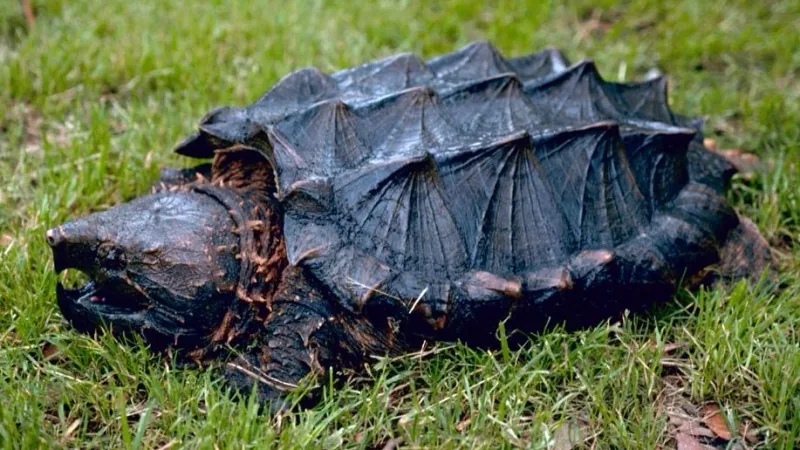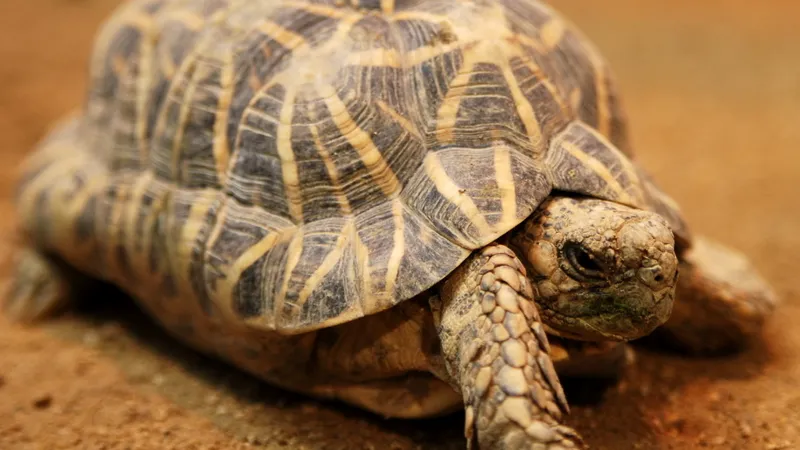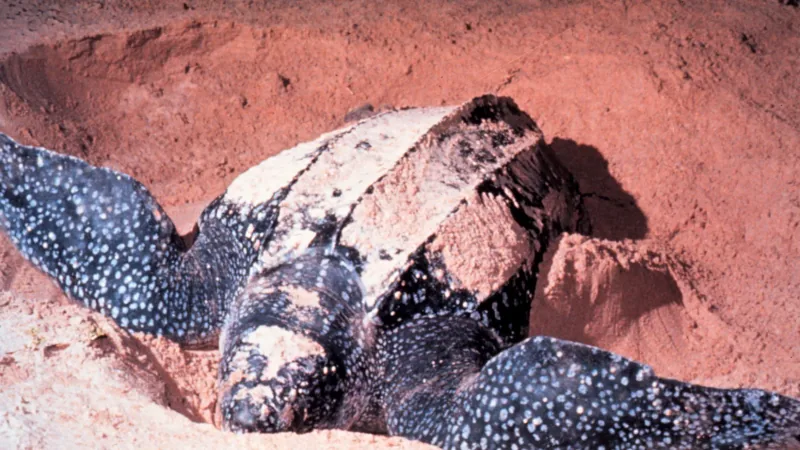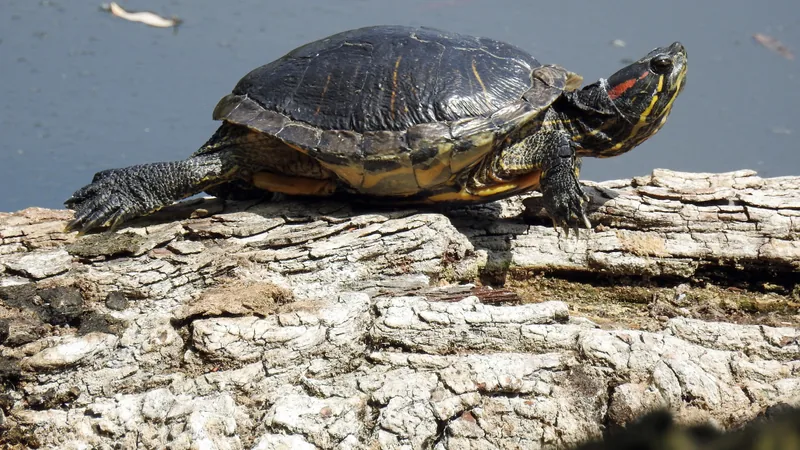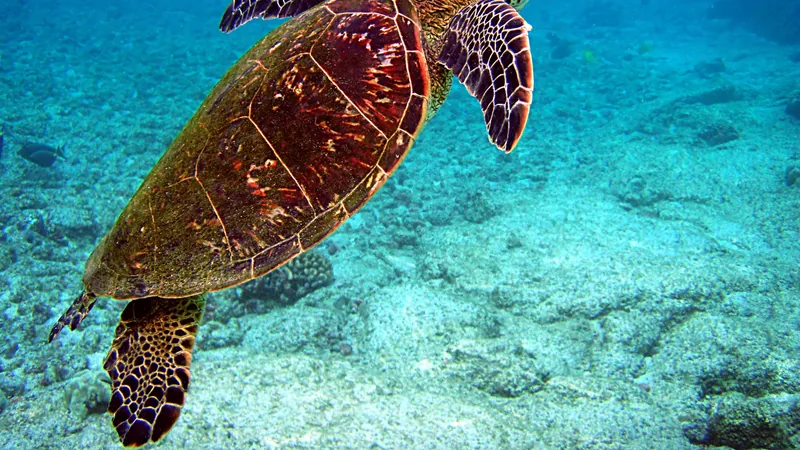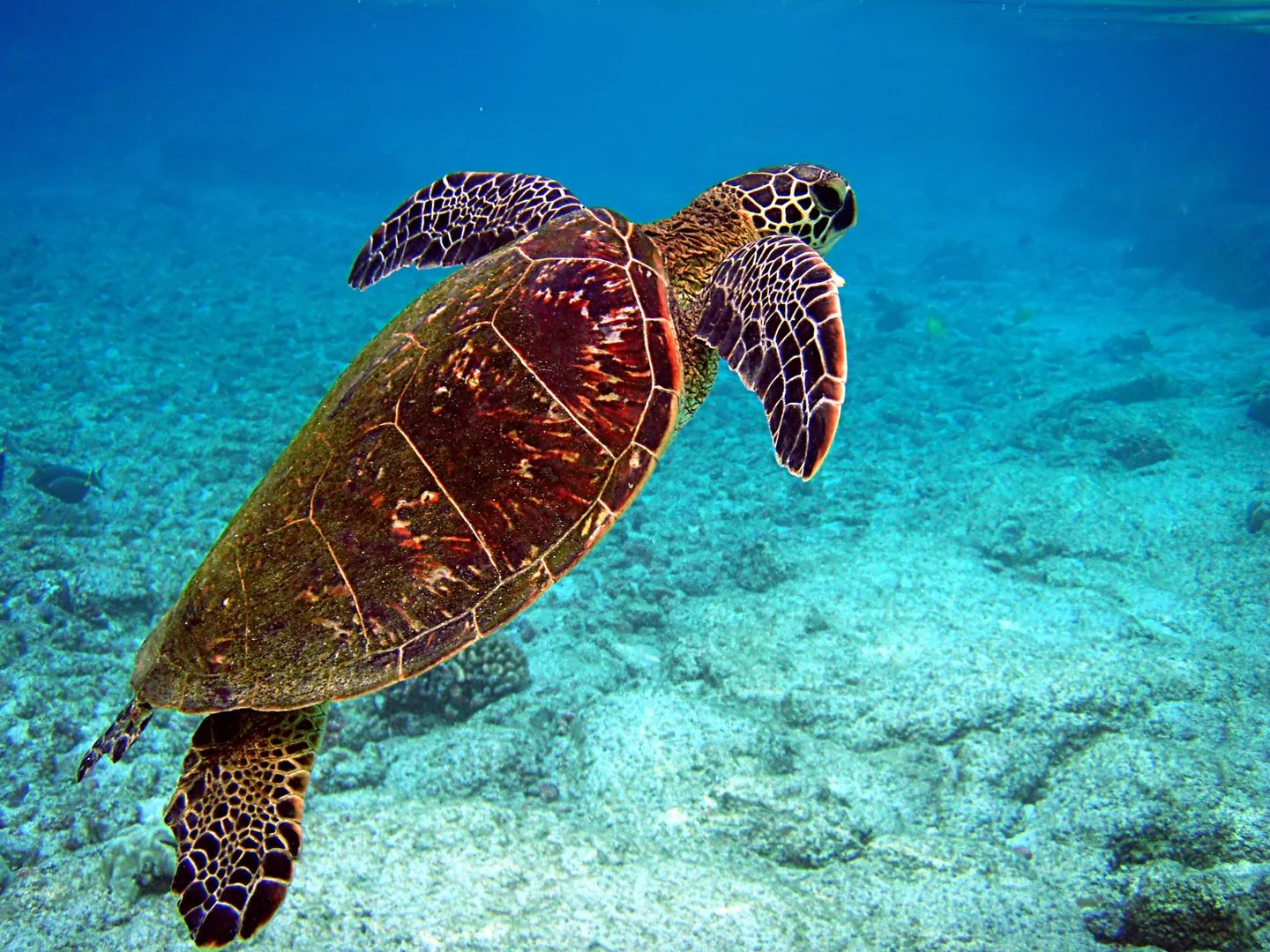
Green turtle , Chelonia mydas is going for the air.
Field
notes
A salad-eating reptile
The green sea turtle is the largest hard-shelled sea turtle. A typical adult is 3 to 4 feet long and weighs 300 to 350 pounds. Its shell is dark brown, grey or olive. The name “green” comes from the color of its fat, not its shell.
Green turtles are the only sea turtles that are mainly herbivores. Their diet is mostly algae and seagrasses, though they may also eat invertebrates and discarded fish if available. In a Texas study of gut contents from 420 dead immature green turtles, animal matter remained a frequently eaten item, and the authors suggest these young turtles are better classified as omnivores.
A very slow life
Females reach maturity at 25 to 35 years old. Green turtles are estimated to live 70 years or more. Every 2 to 5 years, adults swim hundreds to thousands of miles each way between feeding grounds and nesting beaches. The turtles are found worldwide, mostly in subtropical and temperate parts of the Atlantic, Pacific and Indian Oceans and in the Mediterranean Sea.
A female returns to a beach in the general area where she hatched, decades earlier. A study in Nature showed that the green sea turtle has a map that is at least partly based on geomagnetic cues, which are clues from Earth’s magnetic field.
Beach crowds On average, 30,000 females nest per season at Tortuguero in Costa Rica. At Raine Island on the Great Barrier Reef, up to 60,000 females nest on the island and its surrounding reef in a peak season.
Nesting and hatching
A nest holds about 110 eggs, and a female nests every 2 weeks over several months. After about two months in the warm sand, the eggs hatch. Hatchlings head for the brightest horizon, which on an undeveloped beach is the open horizon over the ocean. Hatchlings live for several years in the open ocean. Juveniles eventually travel to nearshore feeding grounds in shallow coastal habitats.
Sharks change where turtles dine
In Shark Bay, Australia, tiger sharks threaten green turtles. Researchers found that turtles in poor body condition picked rich but risky spots. Turtles in good condition chose safer spots with less food. When the risk of shark attack was low, turtles in good condition moved into the richer spots too.
Published Updated
Traits
Intel
& FAQ
Guess
first
How big is a Green Sea Turtle, really? Slide, lock in, and see what the sources say. Every answer is a figure from this page, quoted from where it came from.
Sources
- 01Green Turtle. NOAA Fisheries.
- 02Wallace & Broderick (2025). Chelonia mydas. The IUCN Red List of Threatened Species 2025: e.T4615A285108125.
- 03Lohmann et al. (2004). Geomagnetic map used in sea-turtle navigation. Nature.
- 04Heithaus et al. (2007). State-dependent risk-taking by green sea turtles mediates top-down effects of tiger shark intimidation in a marine ecosystem. Journal of Animal Ecology.
- 05Howell & Shaver (2021). Foraging Habits of Green Sea Turtles (Chelonia mydas) in the Northwestern Gulf of Mexico. Frontiers in Marine Science.
What the sources say: 36 claims checked word for word against these sources →