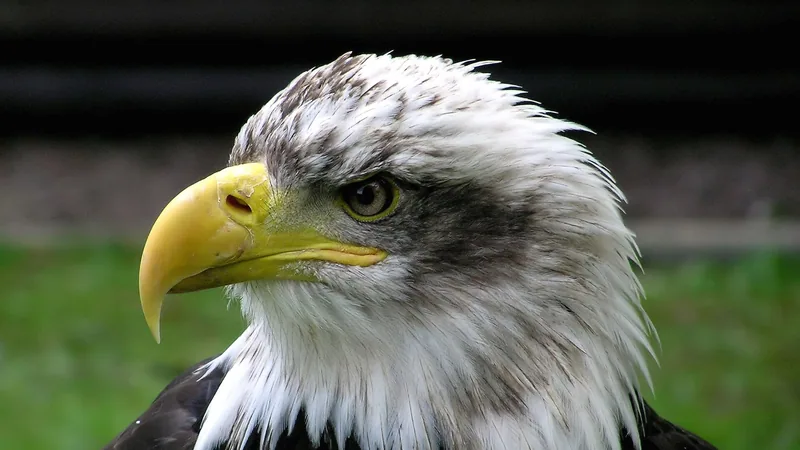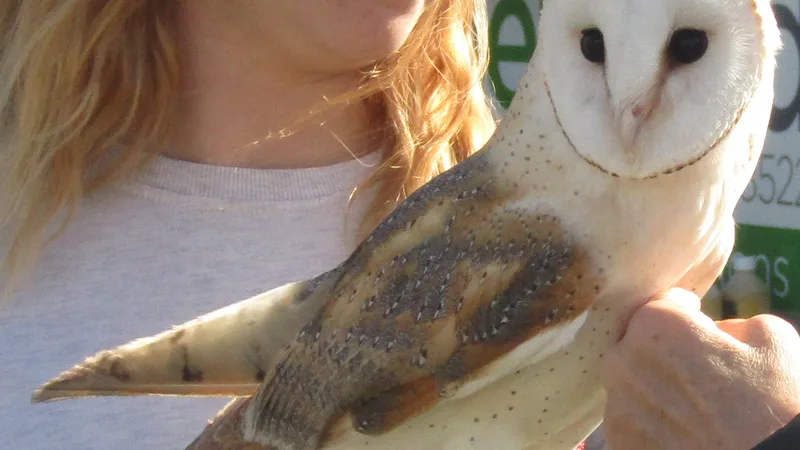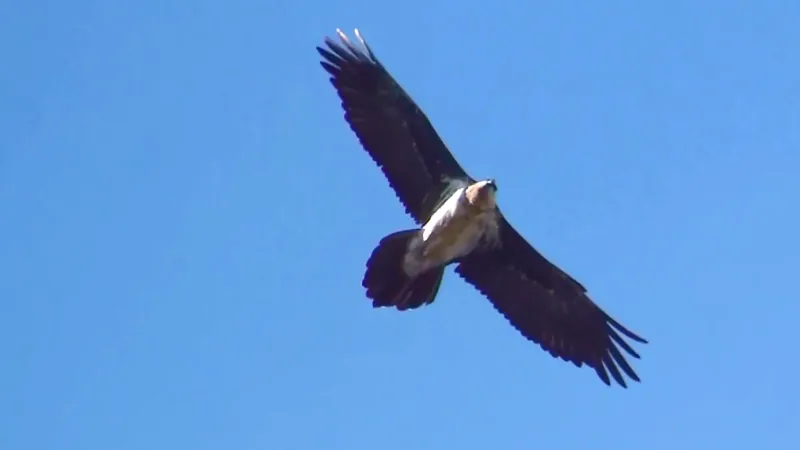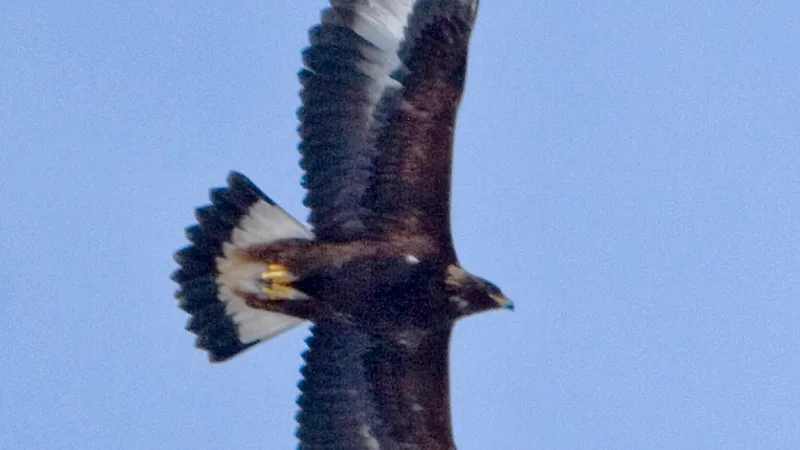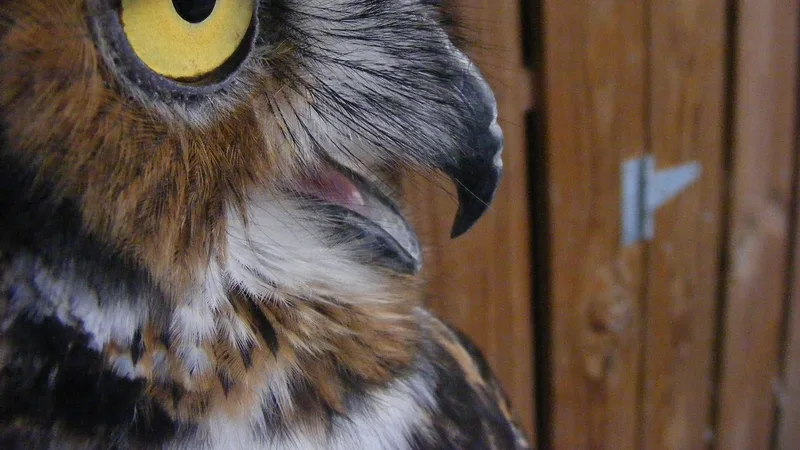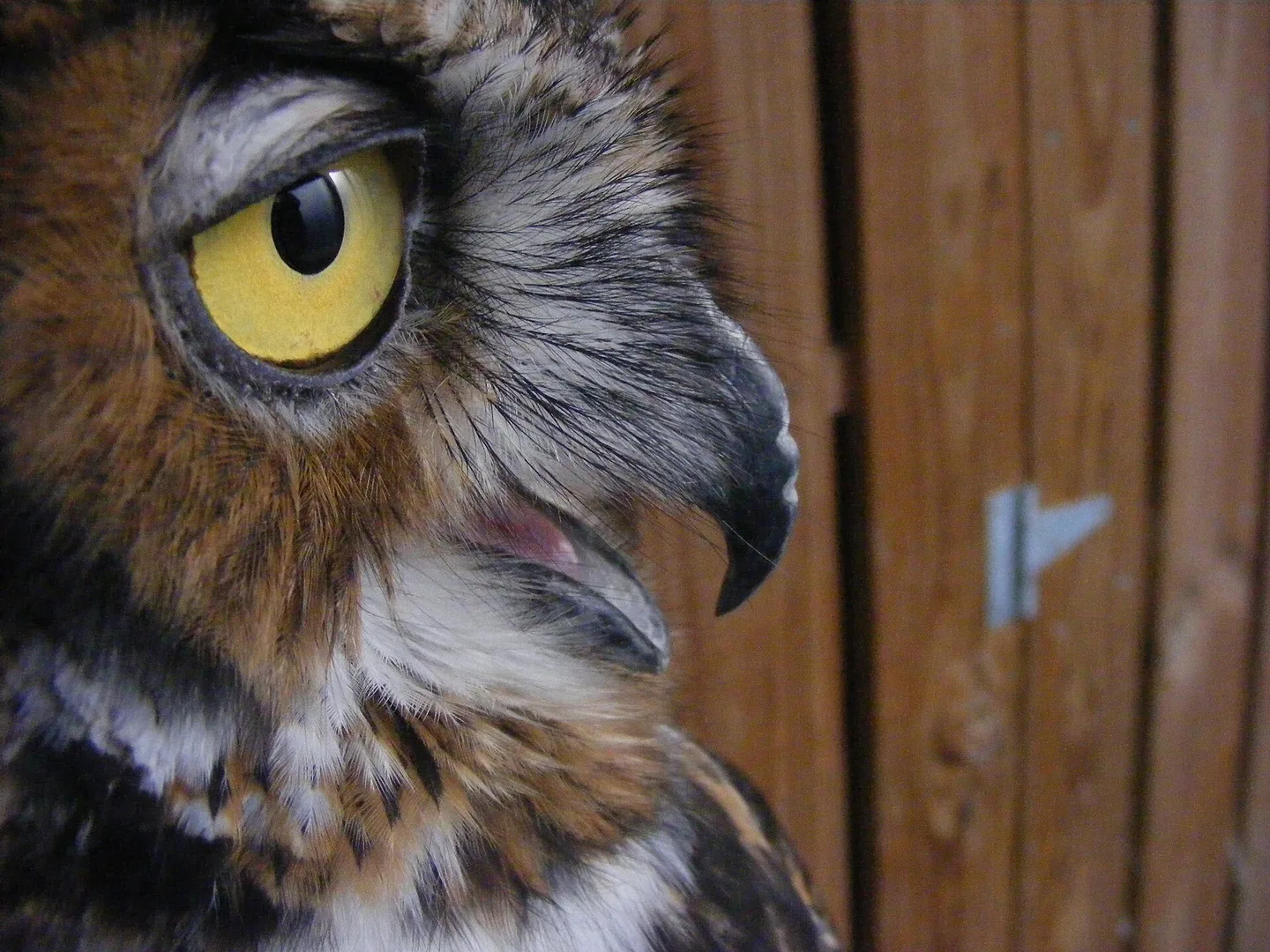
A profile shot of a male Great Horned Owl (Bubo virginianus). This bird (Zeus) no longer has motor f
Field
notes
Overview
The Great Horned Owl (Bubo virginianus), known as the “tiger of the air”, is the most formidable nocturnal raptor in the Americas. With ear-like feather tufts, piercing yellow eyes, and massive crushing talons, it rules the night canopy across deserts, forests, and mountains.
Habitat & Biology
Widespread across North and South America in almost every terrestrial habitat from Arctic treelines to tropical forests.
Musical Pairing & Sonic Spirit
Paired with Julee Cruise’s “Falling”, her hushed vocal over Angelo Badalamenti’s Twin Peaks theme: brooding synth pads, a slow-burning noir bassline, and haunting cinematic atmosphere (“The owls are not what they seem”).
Fun Facts
- One of the very few predators that routinely preys on striped skunks because owls possess virtually no sense of smell.
- Its talons take a force of 13 kg to open, and can sever the spinal column of prey larger than itself.
- It defends its nest hard: many bird banders have had clothing torn or suffered severe lacerations, so biologists working at a nest wear heavy jackets and industrial hard hats. Attacks on people are generally rare, though, and an owl may hoot repeatedly first to warn a person away.
- Their deep, booming “hoo-h’HOO–hoo-hoo” territorial calls can be heard carrying over two miles across nocturnal forests.
Published Updated
Traits
Guess
first
How big is a Great Horned Owl, really? Slide, lock in, and see what the sources say. Every answer is a figure from this page, quoted from where it came from.
Sources
- 01Artuso et al. (2020). Great Horned Owl (Bubo virginianus). Birds of the World.
- 02Bubo virginianus (great horned owl). Animal Diversity Web, University of Michigan.
- 03Great Horned Owl. Hinterland Who's Who, Environment and Climate Change Canada and Canadian Wildlife Federation, 1991.
- 04Living with wildlife: Owls. Washington Department of Fish and Wildlife.
What the sources say: 6 claims checked word for word against these sources →