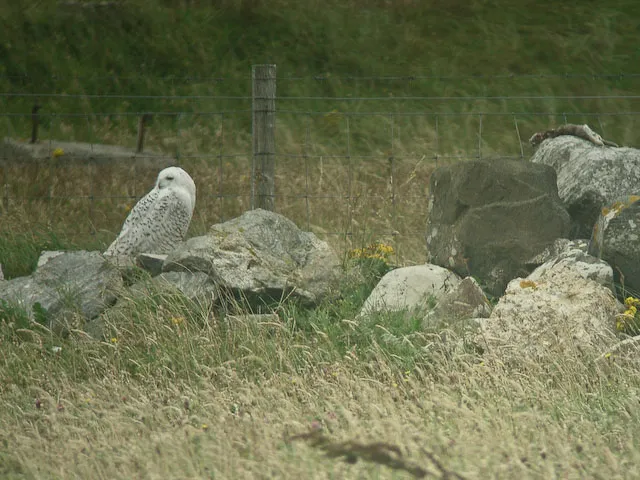
Snowy owl (Bubo scandiacus)
Field
notes
A Daylight Hunter of the Open Tundra
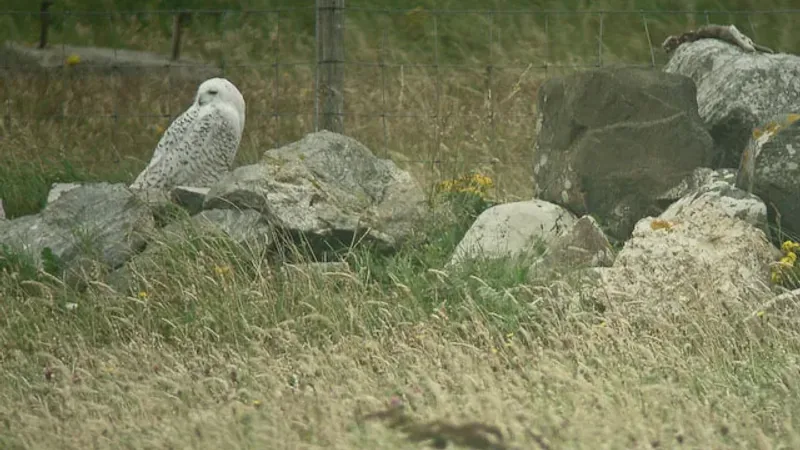
Most owls rule the night, but Animal Diversity Web calls the snowy owl “largely diurnal,” and Audubon notes that it often hunts by day. It nests on the tundra, and its breeding range runs from coastal Alaska, Canada and Greenland to northern Scandinavia, Russia and northern Siberia. In winter it often moves south to southern Canada, the northern United States and similar latitudes around the world, where it turns up on meadows, marshes and dunes.
Built for the Cold
Audubon gives an adult’s length as about 61 centimeters (24 inches), with wings spanning 1.4 meters (4 feet 7 inches). Adults weigh around 2 kilograms (4.5 pounds) on average, and females outsize males. Thick white feathers cover its legs and feet, protecting them from the cold. Adult males are pure white, while females are white with dark bars or spots. AnAge records one captive bird that lived at least 28 years.
Hunting the Tundra
A snowy owl usually hunts by watching for prey from a perch. Animal Diversity Web says it can swivel its head three-quarters of the way around, 270 degrees, to scan its hunting ground. Then it launches what the Owl Research Institute calls a “wallop”, swooping down to snatch the target in its strong talons. Its diet is mostly lemmings, voles and other rodents, but it also takes rabbits and hares, and along coasts it may feed heavily on ducks and geese.
It is one of the few owls that builds its own nest. The female picks a low, windswept rise such as a hummock or boulder, then scrapes out a shallow bowl in the turf or bare ground and leaves it unlined.
Snowy owls are also wanderers, moving nomadically and breeding where prey is abundant. During some winters, large numbers appear south of the Canadian border. In temperate North America these winter irruptions come every three to five years, and a 2016 study found that winter owl numbers rose and fell with small-mammal numbers at two Canadian tundra sites the summer before. That fits the idea that a good summer lets the owls raise more young, swelling the number of migrants heading south the following winter.
Chicks toddle before they fly. Young snowy owls may leave the nest after two to three weeks, but Audubon says they cannot fly well until about seven weeks old. The Owl Research Institute describes fledglings spending nearly a month hiding and toddling around the tundra first.
Published Updated
Traits
Intel
& FAQ
Guess
first
How big is a Snowy Owl, really? Slide, lock in, and see what the sources say. Every answer is a figure from this page, quoted from where it came from.
Sources
- 01Nyctea scandiaca (snowy owl). Animal Diversity Web, University of Michigan.
- 02Snowy Owl. Audubon Guide to North American Birds.
- 03Snowy Owl. Owl Research Institute.
- 04Bubo scandiacus. AnAge: The Animal Ageing and Longevity Database, Human Ageing Genomic Resources.
- 05Robillard et al. (2016). Pulsed resources at tundra breeding sites affect winter irruptions at temperate latitudes of a top predator, the snowy owl. Oecologia.
- 06Bubo scandiacus. The IUCN Red List of Threatened Species 2021: e.T22689055A205475036.
What the sources say: 53 claims checked word for word against these sources →