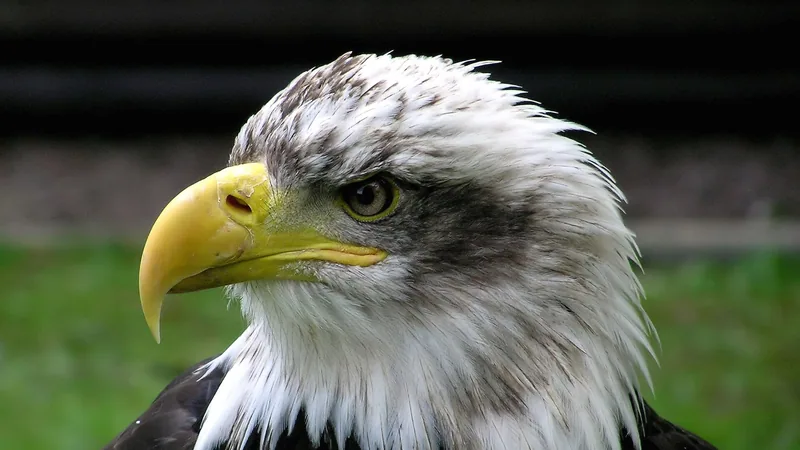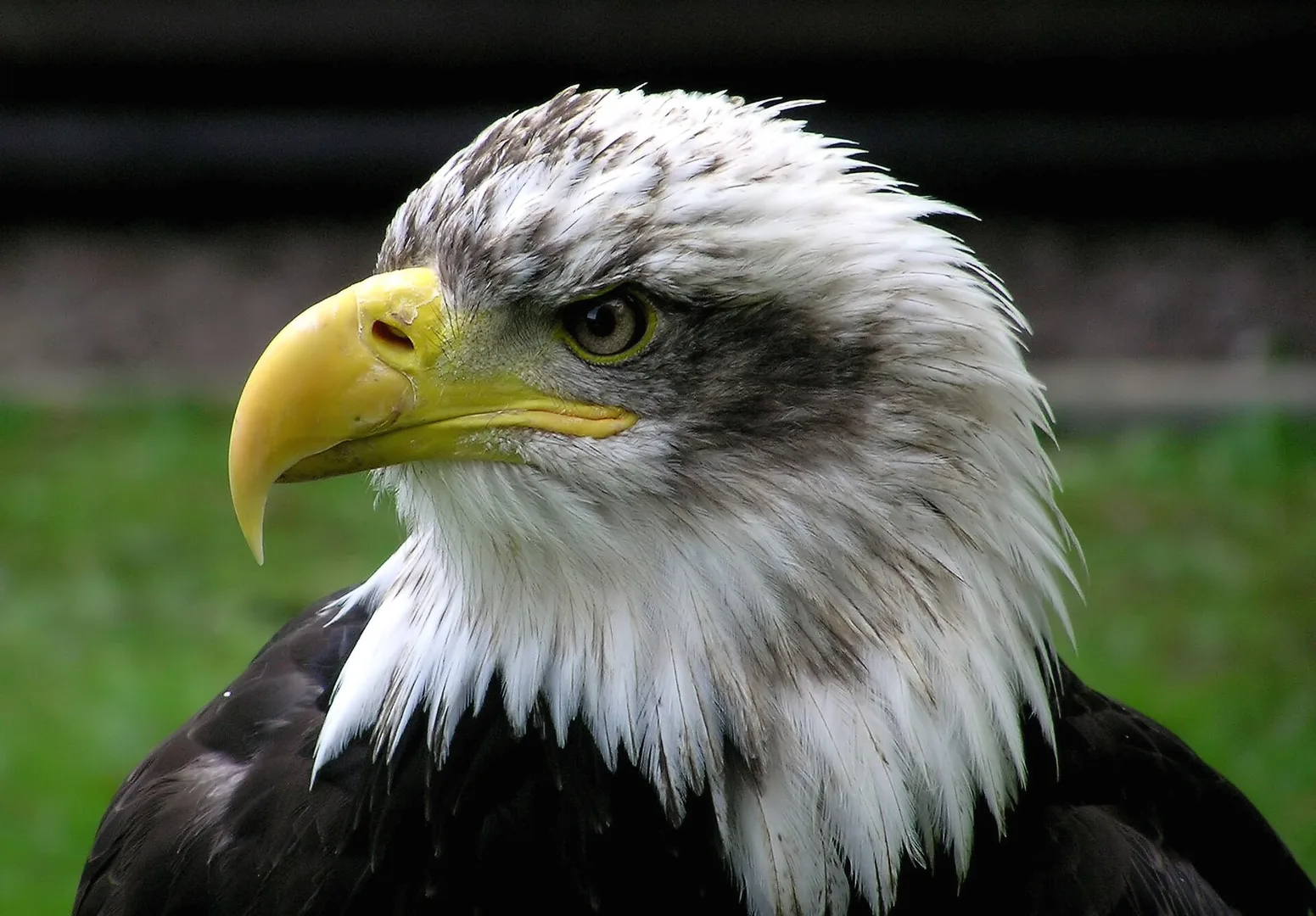
Bald eagle in Alaska
Field
notes
A Grip Ten Times an Average Human’s
The bald eagle (Haliaeetus leucocephalus) usually hunts fish without diving in. It waits on a favorite perch until it spots one near the surface, then swoops down and snatches it in its talons. Rough foot pads and spiny scales help it grip the slippery catch, and that grip is about ten times as strong as an average human’s.
Adults stand 28 to 38 inches tall with a wingspan of 5.5 to 8 feet (1.7 to 2.4 meters). Females weigh 10 to 15 pounds against a male’s 6 to 9. A bald eagle lives 16.5 years on average and can live up to 50.
An Opportunist at the Top of the Food Chain
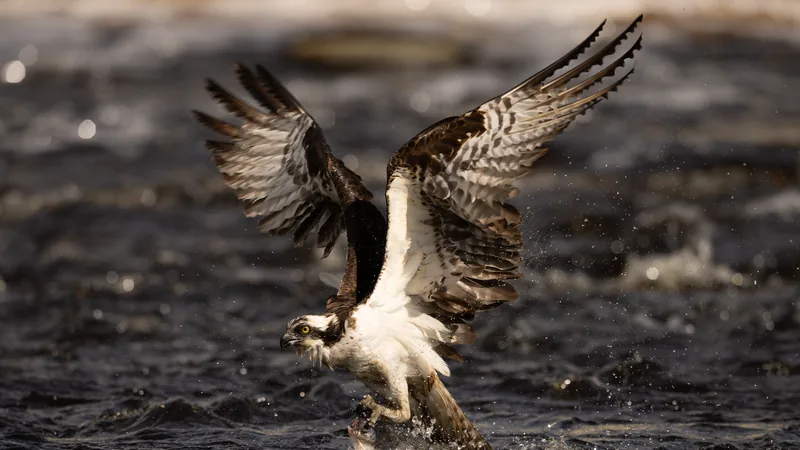
Fish are the preferred catch, but a hungry bald eagle is not picky. It also feeds on seabirds and ducks, hunts small mammals such as rabbits and squirrels, eats carrion willingly, and is notorious for robbing ospreys of fish they have already caught. Across North America it usually lives near coasts, lakes and rivers, and in many areas it is found within 3 kilometers of water.
Cartwheeling Rivals
Bald eagles are believed to mate for life. The midair move they are known for is something else: two eagles lock talons and cartwheel toward the ground, letting go before impact.
Territorial fight That talon-grappling cartwheel is an aggressive territorial dispute, not a courtship behavior.
From 417 Pairs to a New Threat
Illegal shooting, habitat destruction, lead poisoning and the pesticide DDT reduced the bald eagle to an estimated 417 pairs in the continental United States by 1963. DDT caused brittle eggshells and eggs that failed to hatch, and the United States banned most uses of it in 1972. The bald eagle was listed under the Endangered Species Act in 1978, and it came off the endangered species list in 2007.
A highly pathogenic strain of H5N1 bird flu reached North America in late 2021 and caused high rates of mortality among bald eagles. A 2022 survey found nest success on Georgia’s coast had dropped to 47%, about 30% below the region’s average. In Brevard and Hillsborough counties, Florida, 2022 nest success fell to 41.0% and 66.7%, down from averages of 86.5% and 78.3% over the previous six years.
Published Updated
Traits
Intel
& FAQ
Guess
first
How big is a Bald Eagle, really? Slide, lock in, and see what the sources say. Every answer is a figure from this page, quoted from where it came from.
Sources
- 01Bald Eagle. San Diego Zoo Wildlife Alliance.
- 02Bald eagle. Smithsonian's National Zoo and Conservation Biology Institute.
- 03Haliaeetus leucocephalus (bald eagle). Animal Diversity Web, University of Michigan.
- 04Buehler (2022). Bald Eagle (Haliaeetus leucocephalus). Birds of the World.
- 05Nemeth et al. (2023). Bald eagle mortality and nest failure due to clade 2.3.4.4 highly pathogenic H5N1 influenza a virus. Scientific Reports.
- 06Haliaeetus leucocephalus. The IUCN Red List of Threatened Species 2024: e.T22695144A264598530.
What the sources say: 53 claims checked word for word against these sources →