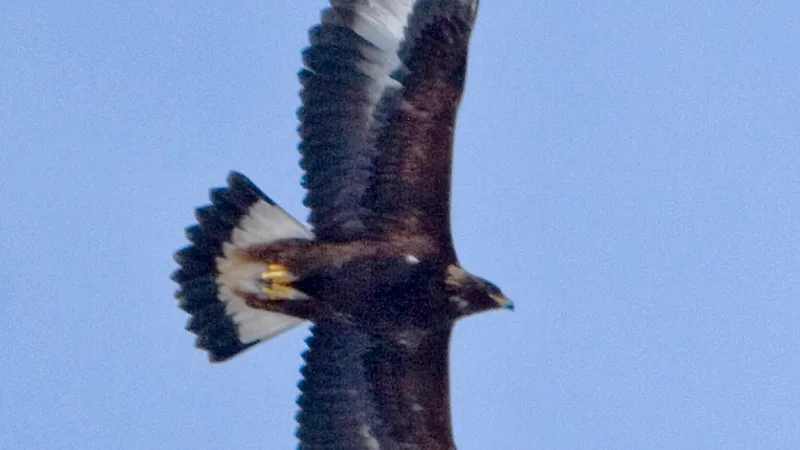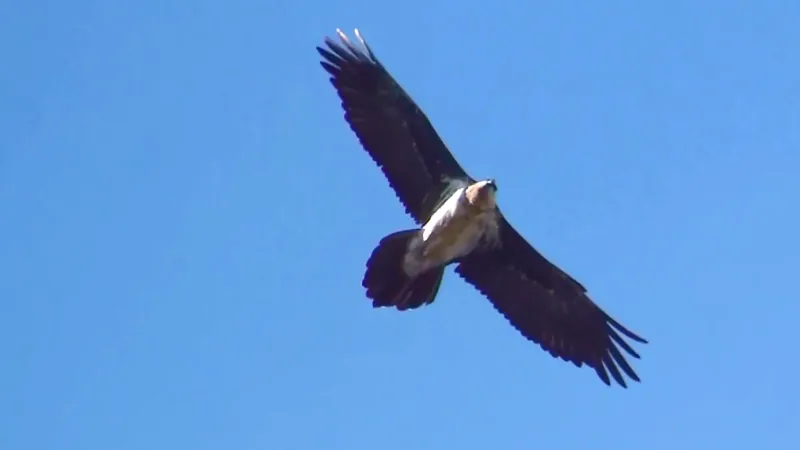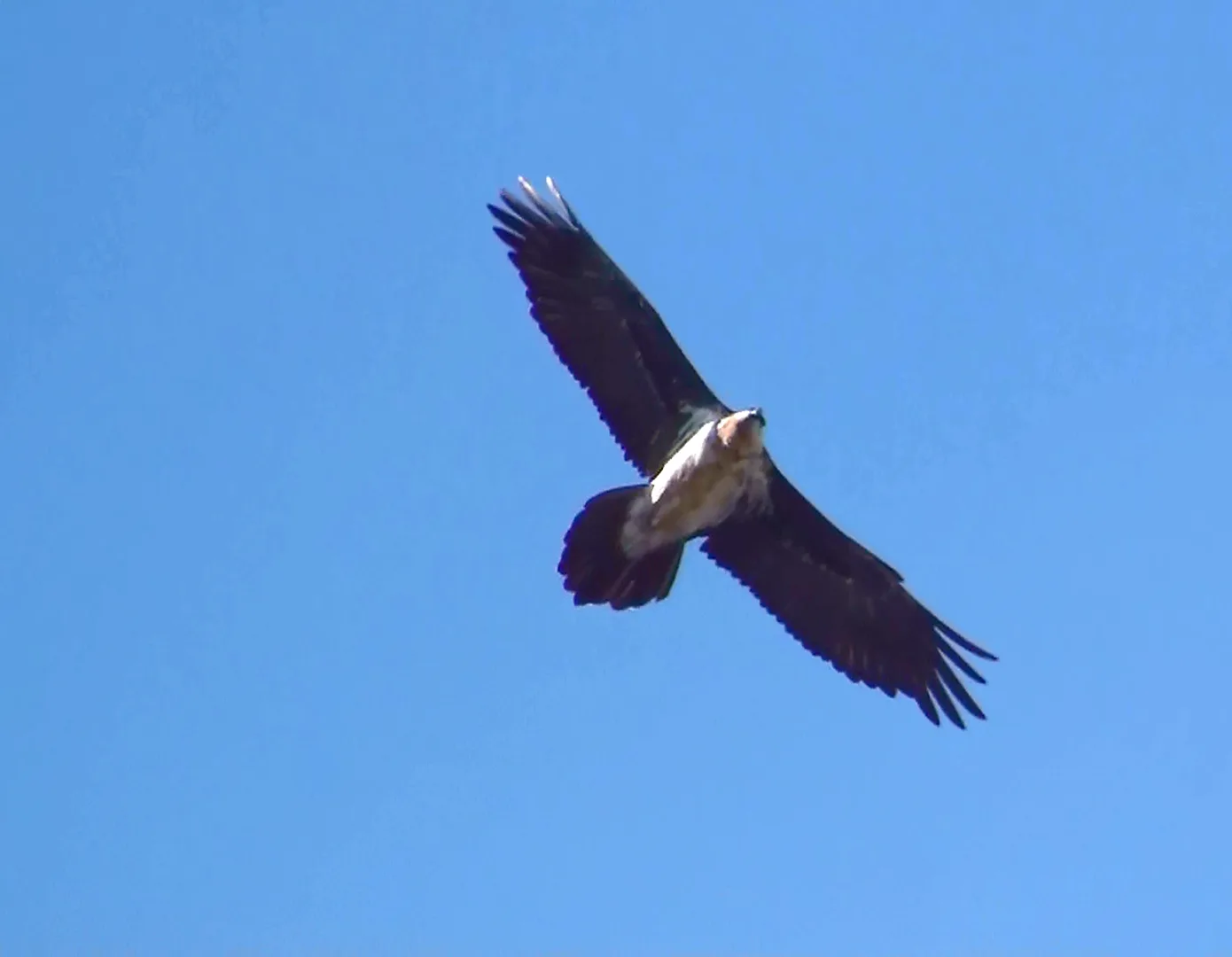
Adult Lammergeier or Bearded Vulture, Gypaetus barbatus, in flight over the pre-Pyrenees of Lleida, Catalonia, northeast Spain.
Field
notes
Breaking Bones From the Sky
The bearded vulture (Gypaetus barbatus) eats bones. Up to 90 percent of its diet is bone, and it may be the only vertebrate that lives this way. A bone too large to swallow is carried 50 to 150 meters up in its talons and dropped repeatedly onto rocky sites called ossuaries until it breaks open and the marrow, the soft fatty tissue inside, can be eaten. One study found fresh bone holds about 8 percent more energy than the same weight of fresh meat, and sheep and pig bones left in the open air for over three months kept 90 percent of the protein of fresh ones.
Acid by Estimate The bearded vulture’s stomach wall is packed with acid-secreting cells, but in 2017 its pH (the acidity scale, where lower is stronger) was still unknown. A study that year suggested it could be below pH 1, judging by a pH of 0.7 reported for the white-backed vulture. Digesting bone is estimated to take about 24 hours.
Big and Bearded
The bearded vulture is big: its body runs 94 to 125 cm (37 to 49 in) long, its wings span 231 to 283 cm (7.6 to 9.3 ft), and it weighs 4.5 to 7.1 kg (9.9 to 15.6 lb). The oldest on record lived 40 years in captivity; southern African records report wild birds reaching almost 11. Its German name, “Lammergeier,” means “sheep vulture,” from an old assumption that birds seen carrying large bones had killed livestock. Long black bristles at the base of its bill look like a beard, and unlike most vultures, its head is feathered. It lives in mountains from the Pyrenees to India, Tibet, China and southern Siberia, and in Africa from Ethiopia’s highlands to Lesotho and South Africa, between 300 and 4,500 meters up but most often above 2,000.
The IUCN Red List lists it as Near Threatened. It had died out in the Alps by the start of the 20th century, and The Peregrine Fund describes the reintroduction programs since then as successful.
What’s Actually on the Menu
A study of breeding bearded vultures in the Pyrenees during chick-rearing found their diet was 93 percent mammal, 6 percent bird and 1 percent reptile. Medium-sized hoofed animals, mainly sheep and goats, made up 61 percent. They prefer limbs and avoid the remains of cows and horses, probably because of the costs of handling, swallowing and carrying them. They let other scavengers finish eating first, so they often feed on older carcasses. Researchers have seen them drop turtles onto rocks to kill and eat them.
A Deliberate Rust-Orange Dye Job
A bearded vulture’s head is naturally cream to pale yellow. The rusty orange often seen on its neck and belly comes from bathing in iron-rich water: wild birds regularly use springs rich in iron oxides, the compounds in rust, to stain their feathers. Offered red baths, all 16 captive birds at a Spanish breeding center used them within hours and ignored clean water for weeks.
A 2019 study found no sign that the dye protects feathers from bacteria: stained feathers broke down no more slowly than unstained ones in lab tests, and breeding success did not differ between territories held by orange and pale birds. Its authors concluded that in adults the color mainly signals status at breeding sites, and secondarily helps a bird compete for a mate.
Published Updated
Traits
Intel
& FAQ
Guess
first
How big is a Bearded Vulture, really? Slide, lock in, and see what the sources say. Every answer is a figure from this page, quoted from where it came from.
Sources
- 01Bearded Vulture. The Peregrine Fund.
- 02AnAge entry for Gypaetus barbatus. AnAge: The Animal Ageing and Longevity Database, Human Ageing Genomic Resources.
- 03Gypaetus barbatus (bearded vulture). Animal Diversity Web, University of Michigan.
- 04Margalida & Villalba (2017). The importance of the nutritive value of old bones in the diet of Bearded vultures Gypaetus barbatus. Scientific Reports.
- 05Margalida, Bertran & Heredia (2009). Diet and food preferences of the endangered Bearded Vulture Gypaetus barbatus: a basis for their conservation. Ibis.
- 06Margalida et al. (2019). Cosmetic colouring by Bearded Vultures Gypaetus barbatus: still no evidence for an antibacterial function. PeerJ.
- 07Westrip et al. (2022). Gypaetus barbatus. The IUCN Red List of Threatened Species 2022: e.T22695174A210519978.
What the sources say: 54 claims checked word for word against these sources →