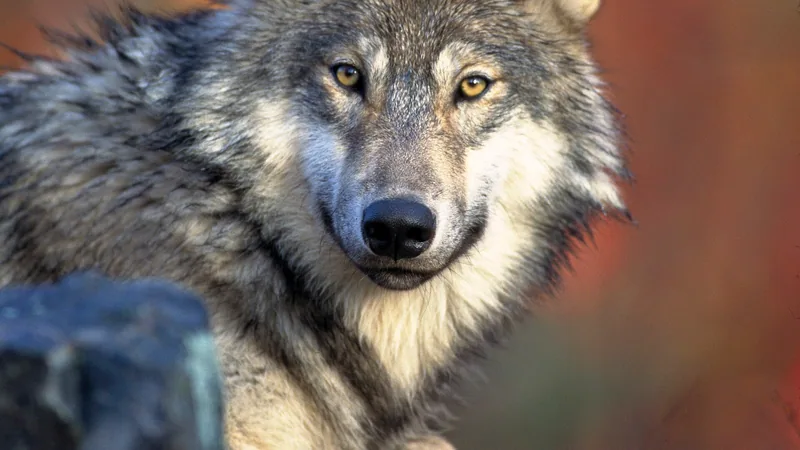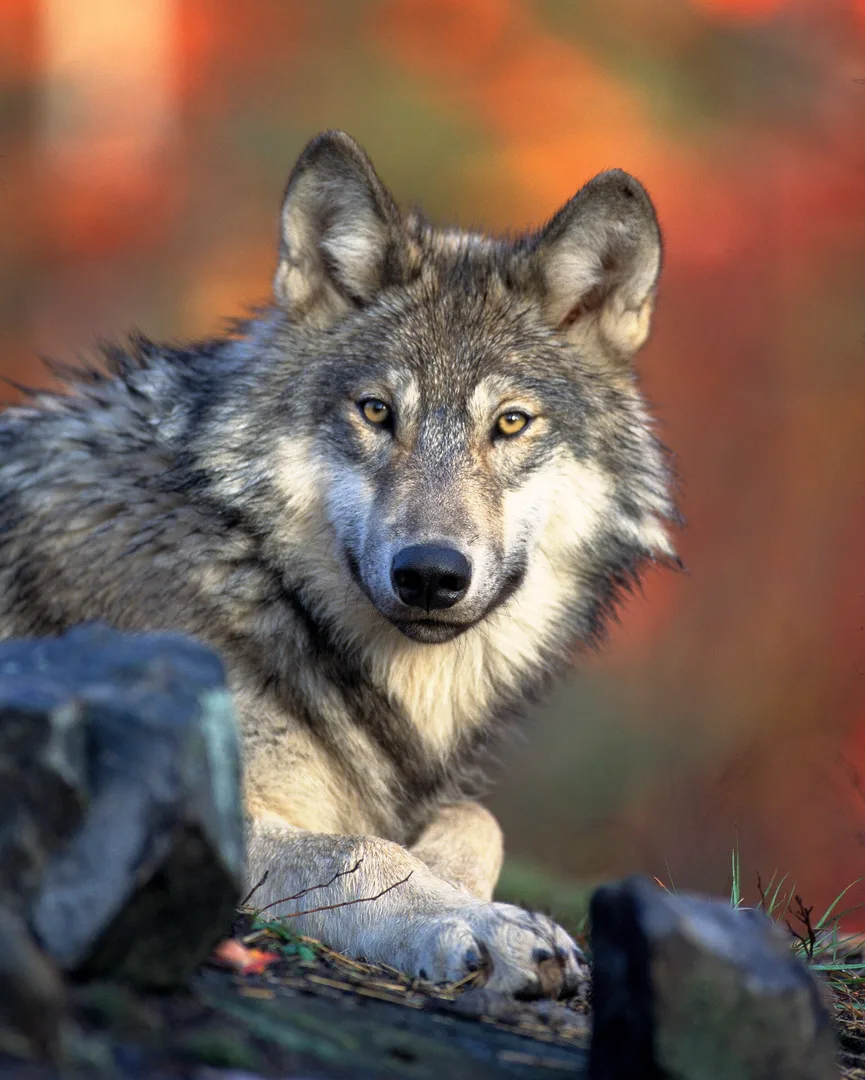
Mexican wolf (Canis lupus baileyi)
Field
notes
A Body Built to Run Far and Fast
The gray wolf (Canis lupus) is the largest wild member of the dog family, and its size shifts with geography: males run 65 to 175 pounds (30 to 80 kilograms), females 50 to 120 pounds (23 to 55 kilograms), and nose to tail an adult measures 4 feet 3 inches to 6 feet 9 inches (130 to 205 centimeters). In the wild it can live seven to eight years, and up to 20 in human care.
Size alone will not catch dinner. Hunting wolves can reach up to 38 miles per hour (61 kilometers per hour), and by working together a pack can take down prey larger than themselves, including caribou, moose, deer and bison. Packs often go after the old, young or sick in a herd, since they are easier to kill. When it finds food, a wolf can “wolf down” 20 pounds (9 kilograms) in one sitting, because the next meal might be days away.
The Pack Runs on Rank and Howls
A wolf pack is usually five to eight animals, though groups as large as 36 have been reported. Typically only the dominant pair breeds, sometimes staying together for life, while every member of the pack helps care for the pups. Depending on habitat and prey, a pack’s territory can range from 40 to 1,000 square miles (about 100 to 2,600 square kilometers), and wolves constantly patrol and scent-mark it.
A Howl Built to Travel On Arctic tundra a gray wolf’s howl can carry up to 10 miles, keeping a scattered pack together, kick-starting a hunt, and marking territory for other packs to hear.
Tundra to Desert, and a Comeback in the Rockies
Gray wolves once ranged across the majority of the Northern Hemisphere. Today the species still circles the globe through North America, Europe and Asia, in habitats from tundra and taiga to mountains, grasslands and deserts. Predator-control programs wiped wolves out of most of the contiguous United States in the early 1900s. In 1978 the government reclassified the gray wolf as endangered across the contiguous states and Mexico, with Minnesota’s wolves listed as threatened. It delisted the Northern Rocky Mountains population in 2011 (Wyoming followed in 2017). Globally, the species is now rated Least Concern. Even where wolves are common, attacks on people are extremely rare: they have happened in Eurasia, and North America has had only four reported attacks, none of them fatal.
The Wolves That Fish for Salmon
Some of Alaska’s coastal wolf packs fish for salmon. A biologist studying wolves on Prince of Wales Island watched them wade into shallow tidal streams to catch pink and chum salmon as the runs came in. Chemical analysis of wolf bone showed salmon makes up around 20 percent of the diet for wolves on the coastal mainland and the island, and about 25 percent for some of the island’s wolves, against about 10 percent for wolves in Alaska’s Interior. That bonus food is especially important for pups. In Southeast Alaska he has noticed 90 percent of pups surviving, against half dying in their first summer in places like Minnesota, and he thinks salmon may play an important part in that.
Published Updated
Traits
Intel
& FAQ
Guess
first
How big is a Gray Wolf, really? Slide, lock in, and see what the sources say. Every answer is a figure from this page, quoted from where it came from.
Sources
- 01Canis lupus (gray wolf). Animal Diversity Web, University of Michigan.
- 02Gray wolf. Smithsonian's National Zoo and Conservation Biology Institute.
- 03Wolf. San Diego Zoo Wildlife Alliance.
- 04Gray Wolf (Canis lupus). U.S. Fish & Wildlife Service, FWS Focus.
- 05Woodford, Riley (2004). Alaska's Salmon-Eating Wolves. Alaska Fish & Wildlife News, Alaska Department of Fish and Game.
- 06Boitani, Werhahn & Smith (2026). Canis lupus. The IUCN Red List of Threatened Species 2026: e.T3746A226161232.
What the sources say: 55 claims checked word for word against these sources →