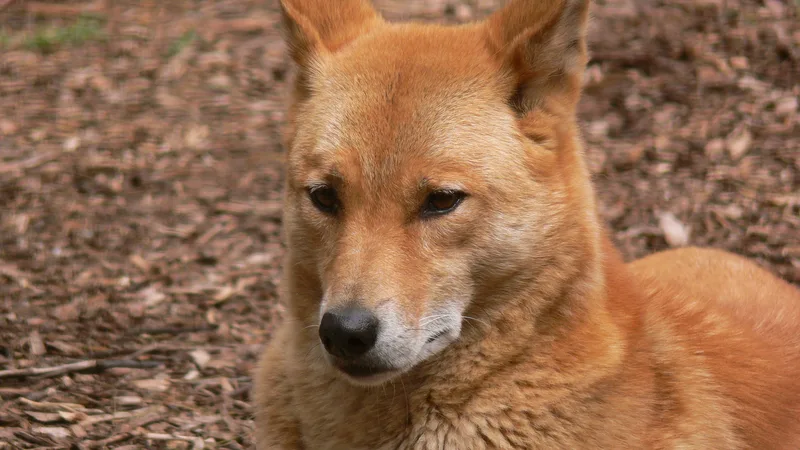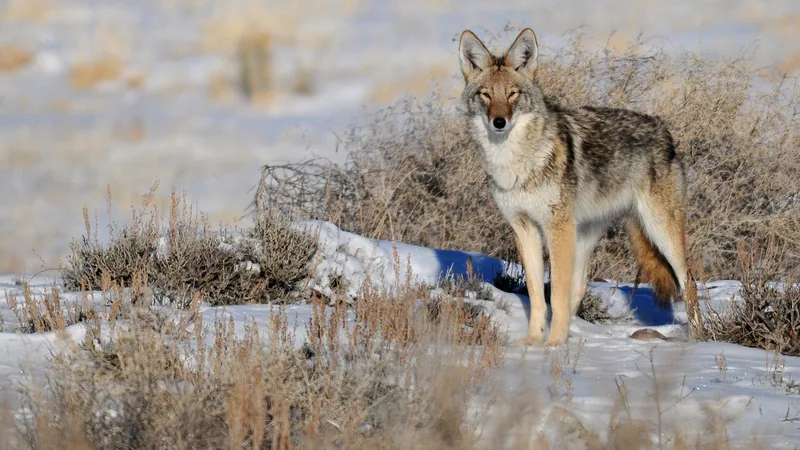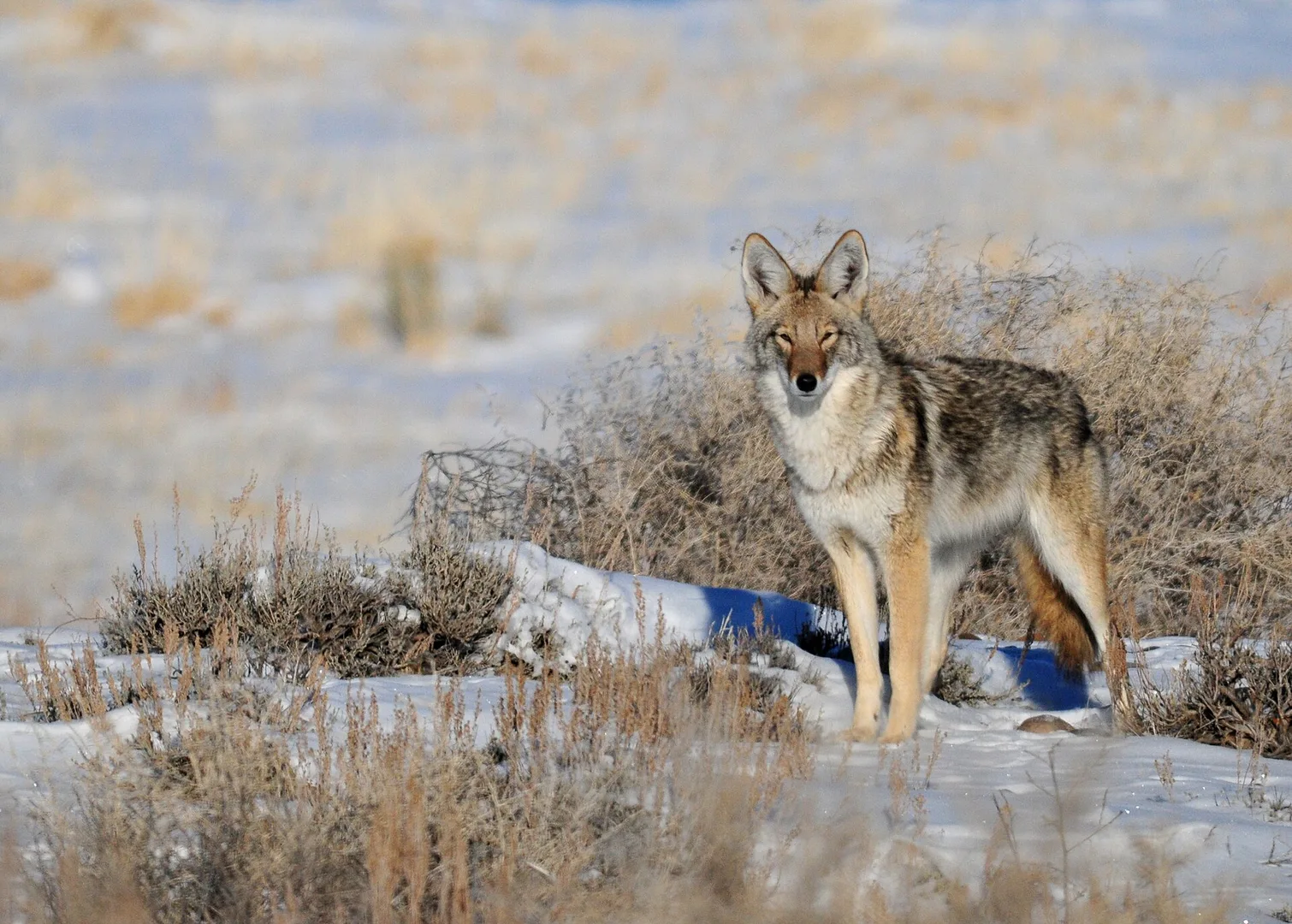
A coyote on Seedskadee National Wildlife Refuge.
Field
notes
A Third the Size of a Wolf
The coyote (Canis latrans) is North America’s mid-sized wild dog: adults weigh 20 to 35 pounds (9 to 16 kilograms), with males usually about 4 pounds heavier than females, and measure 47 to 59 inches (120 to 150 centimeters) from nose to tail tip. That puts it between a red fox and a wolf, at about a third of a wolf’s size with a slighter build. In Yellowstone National Park, coyotes live about six years on average, and up to 13.
A Menu With Few Limits, and Rules About Bigger Prey
Coyotes are carnivores that behave like omnivores: in Yellowstone they mostly eat voles, mice, rabbits and carrion, but the menu also runs to fish, insects, deer fawns, wild fruit, and whatever a suburb leaves in reach, from garden vegetables to trash cans. They rarely bother with birds or eggs. A coyote’s ideal prey is predicted to weigh about 13 to 18 pounds, just under half its own weight: for a coyote hunting alone, anything heavier may not be worth the energy it takes to catch, and brings a greater risk of injury. Team up with the rest of the pack, though, and coyotes can bring down a full-grown deer between them.
A Two-Species Hunting Team Coyotes and American badgers sometimes team up to hunt prairie dogs and ground squirrels. The coyote can chase down prey that bolts, and the badger can dig out prey that dives underground. Together, the pair outruns and outdigs the rodents it hunts.
A 150-Year War It’s Winning
People have run large-scale campaigns to cull coyotes for more than 150 years, yet the coyote has kept spreading: its range now runs from Alaska and Canada south past the Panama Canal, beyond the western deserts, mountains and plains where it historically lived. Part of that spread traces back to wolves, which can hold coyote numbers down: coyote densities ran a third lower where wolves were abundant in Grand Teton National Park, and fell 39 percent in Yellowstone once wolves were reintroduced there. A continent with fewer wolves left more room for coyotes to move into. Shooting and trapping usually dent their numbers only briefly: thin out a coyote population, and coyotes from nearby move in, more young females start breeding, litters grow larger, and numbers quickly climb back. In Yellowstone, coyotes that learn habits like roadside feeding can turn aggressive toward people, and the park has recorded a few attacks. The name coyote comes from the Aztec word coyotl, meaning “barking dog,” and its knack for learning to dodge many population-control efforts fits the trickster reputation Native Americans gave it.
Published Updated
Traits
Intel
& FAQ
Guess
first
How big is a Coyote, really? Slide, lock in, and see what the sources say. Every answer is a figure from this page, quoted from where it came from.
Sources
- 01Canis latrans (coyote). Animal Diversity Web, University of Michigan.
- 02Coyote. Yellowstone National Park, U.S. National Park Service, 2025.
- 03Spotted! A Coyote and Badger Hunting Together. U.S. Fish & Wildlife Service, Open Spaces Blog, 2016.
- 04Gese & Patterson (2025). Chapter 28: Coyote. Wild Furbearer Management and Conservation in North America.
- 05Berger & Gese (2007). Does interference competition with wolves limit the distribution and abundance of coyotes? Journal of Animal Ecology.
- 06Kays (2018). Canis latrans. The IUCN Red List of Threatened Species 2018: e.T3745A163508579.
What the sources say: 58 claims checked word for word against these sources →