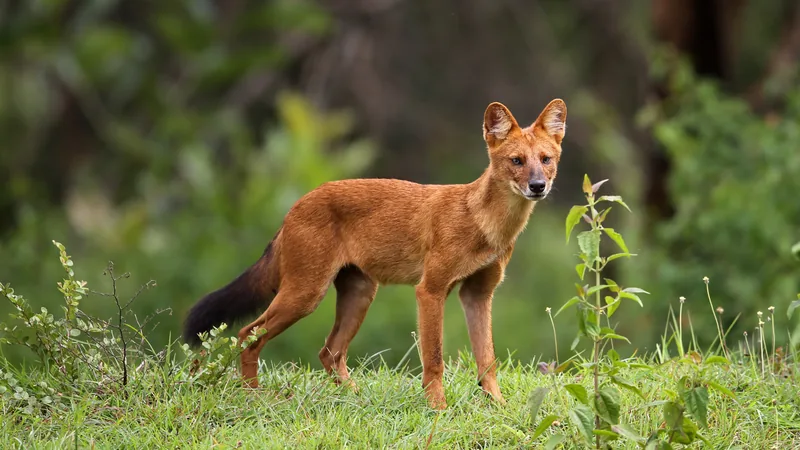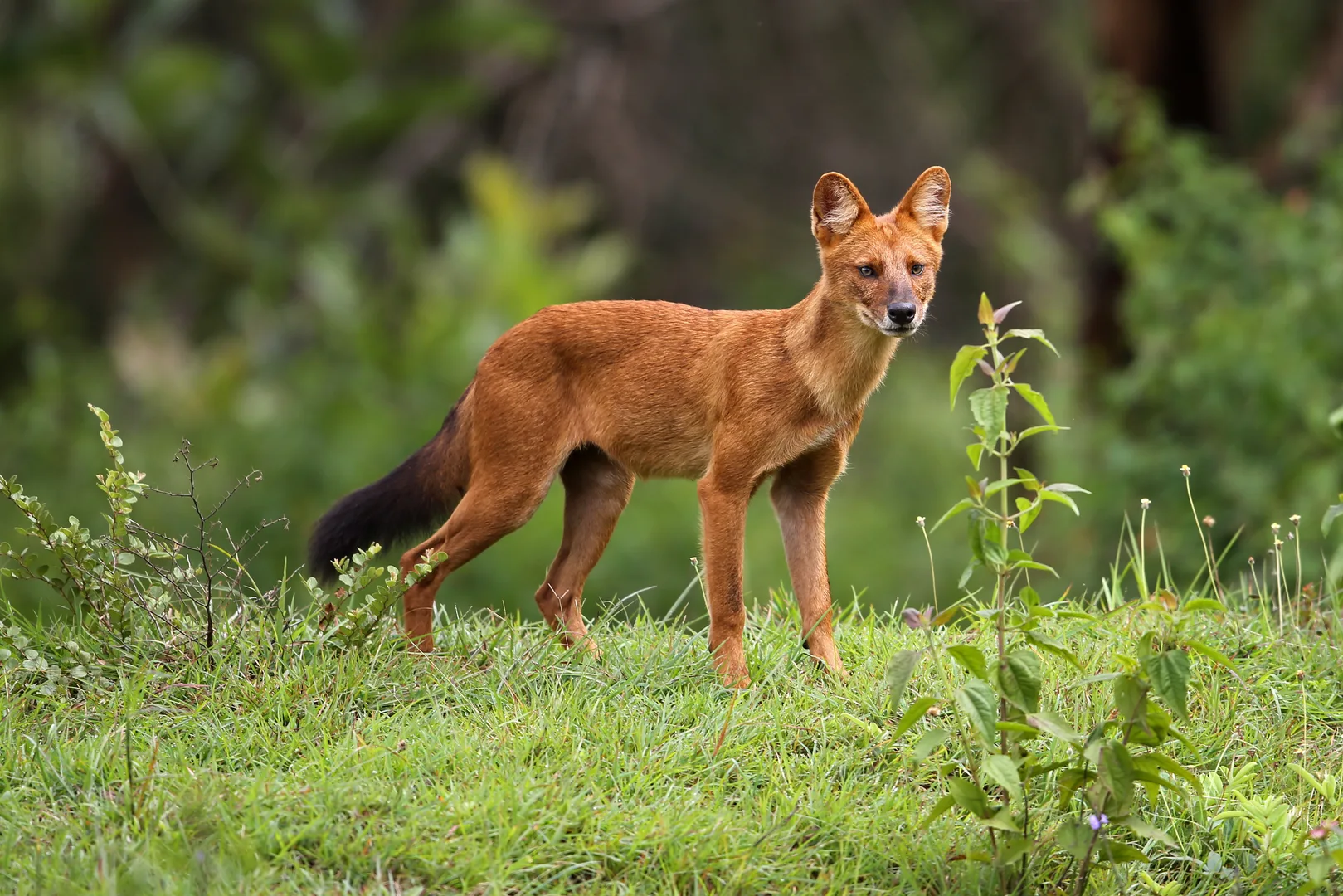
In a forest clearing
Field
notes
The Whistling Hunter
The dhole (say “dole”) is a wild dog with a very odd voice. It can whistle, scream, mew and even cluck like a chicken. Its clucks and high-pitched screams are not found anywhere else in the canid families. Its whistle is so distinct that it can be used to identify individual animals. Dholes use these sounds when they hunt together.
The pack does the work. Each pack has 5 to 12 members, and packs sometimes join into super packs of up to 30 or more to hunt and share their prey. As a pack, dholes can catch prey over 10 times their own body weight and can even fend off a tiger. They then swallow the meat in large chunks and carry it back to the rest of the pack that way. They have also been seen chasing prey into water to slow it down.
A Fox-Shaped Dog
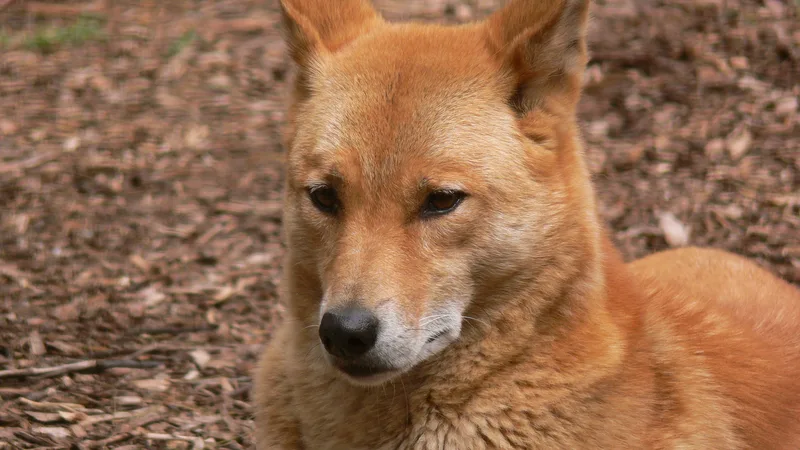
The dhole is about the size of a German shepherd but looks more like a long-legged fox. It is about 3 feet (almost 1 metre) long, with a 15 to 18 inch (40 to 45 cm) tail, and it stands 20 inches (50 cm) at the shoulder. Females weigh 10 to 13 kg and males 15 to 20 kg.
Its teeth are odd too. It has only two molars on each side of its lower jaw instead of three. In the wild a dhole lives about 10 years, and in zoos up to 16.
Standing jump A dhole can jump over 7 feet (2.1 meters) straight up into the air.
Forest Dogs of Asia
San Diego Zoo Wildlife Alliance gives the range as eastern and southern Asia, from Siberia in the north to the Malay Peninsula in the south. There dholes live in dense forests, scrub, steppes and alpine regions. A study in India’s Western Ghats calls the dhole the only Asian wild canid that primarily inhabits forested areas. In some protected areas it shares its habitat with tigers and leopards.
Dholes prey on hoofed mammals. In India they eat deer, wild pigs, buffalo and wild goats. They also eat berries, bugs, lizards and rabbits.
Running Out of Room
The dhole is Endangered on the IUCN Red List. An estimate from 2008 put the number of adults in the wild at under 2,500. The main threat is habitat loss: as dholes lose places to live and breed, so do their prey. Dholes can also catch diseases such as distemper and rabies from domestic dogs.
People have not been kind to them. In India dholes were considered vermin and bounty-hunted to the verge of extinction before they received legal protection in 1972. A 2014 study found they had been extirpated from 60% of their former range in the last century.
Published Updated
Traits
Intel
& FAQ
Guess
first
How big is a Dhole, really? Slide, lock in, and see what the sources say. Every answer is a figure from this page, quoted from where it came from.
Sources
- 01Kamler et al. (2015). Cuon alpinus. The IUCN Red List of Threatened Species 2015: e.T5953A72477893.
- 02Dhole. San Diego Zoo Wildlife Alliance.
- 03Cuon alpinus (dhole). Animal Diversity Web, University of Michigan.
- 04Srivathsa et al. (2014). On a Dhole Trail: Examining Ecological and Anthropogenic Correlates of Dhole Habitat Occupancy in the Western Ghats of India. PLoS ONE.
What the sources say: 45 claims checked word for word against these sources →