Conraua goliath ゴライアスガエル
Field
notes
Rock haulers and wrestlers
The male goliath frog builds a nest of rocks and gravel near a riverbank. He also wrestles other males to win the right to breed with females. The wrestling and rock moving may be why males are larger than females, which is unusual for frogs.
Then the female lays her eggs in the nest, and that is where the parenting stops. The adults do not wait around to see whether the eggs hatch. A goliath tadpole starts out the same size as the tadpole of an average frog, but it just keeps growing. Tadpoles are picky eaters and only eat a certain plant found near waterfalls and the banks of swift rivers.
As big as some house cats
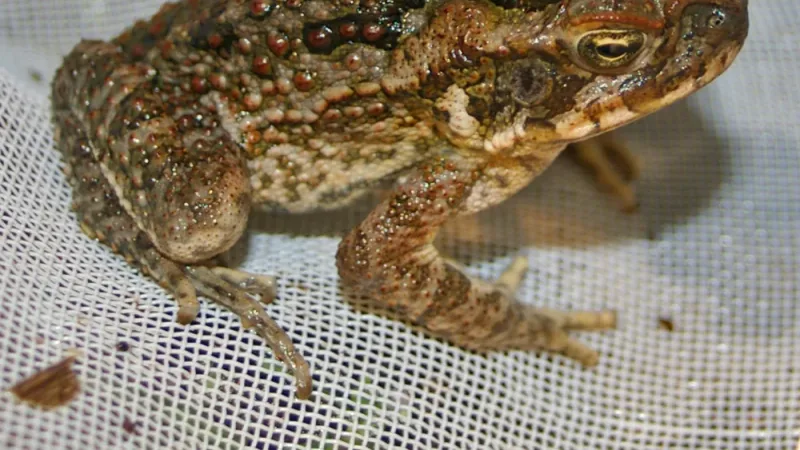
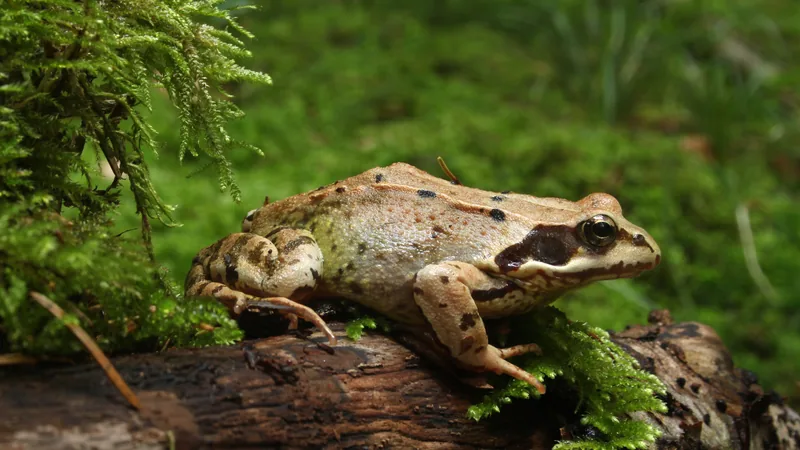
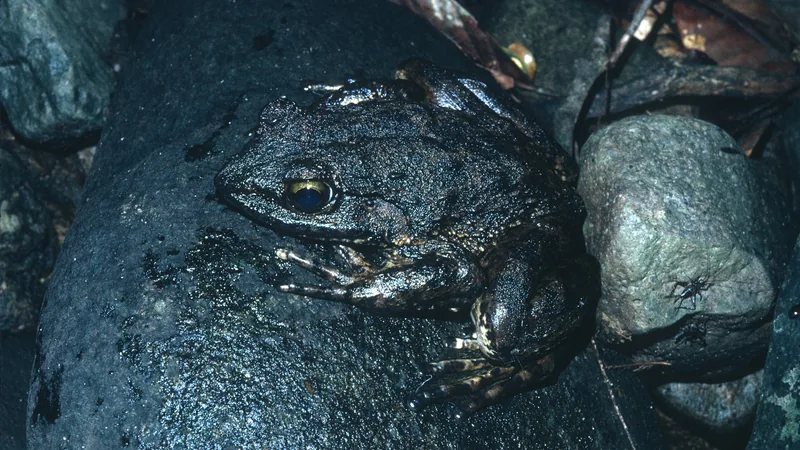
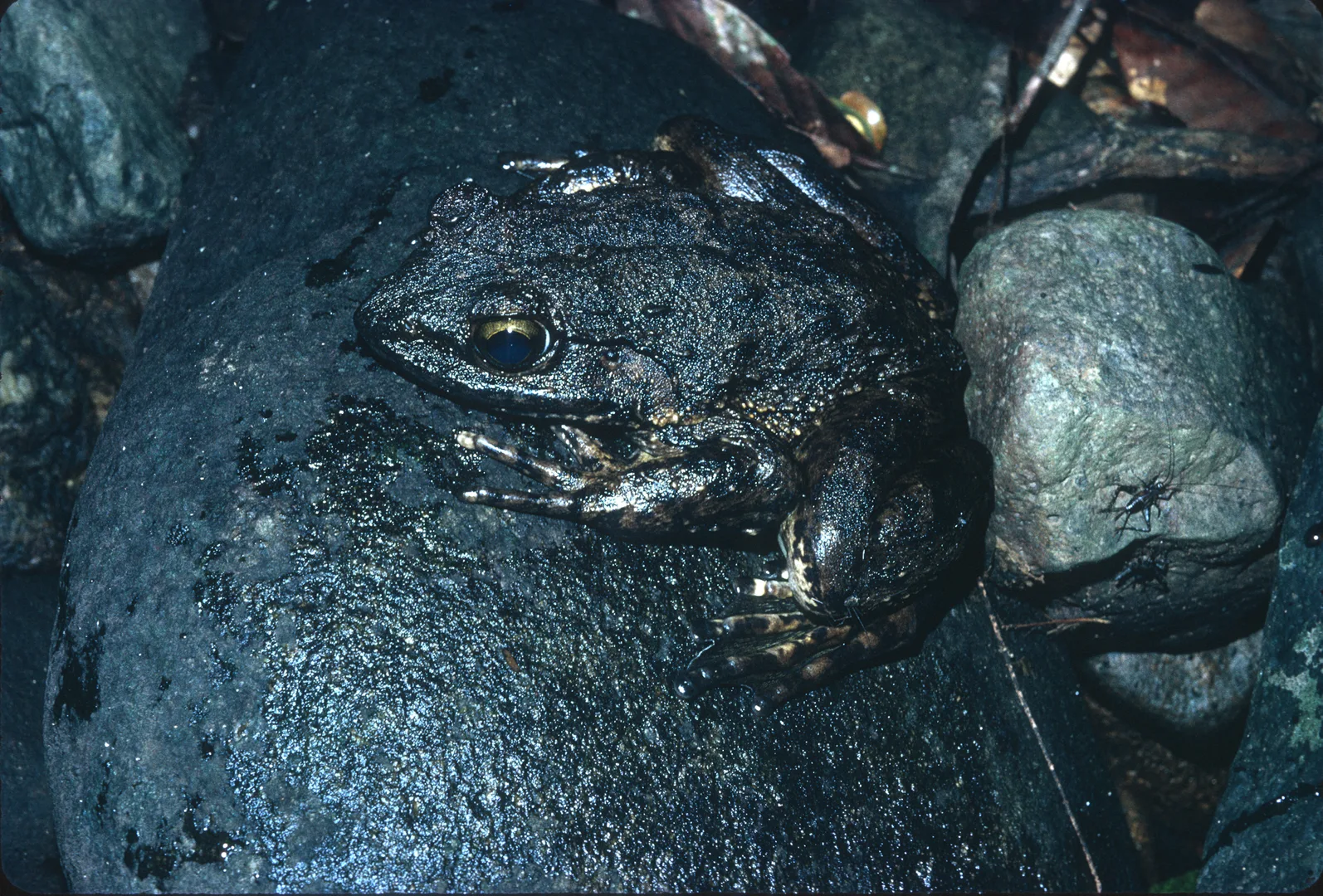
The goliath frog is the largest frog in the world. Its body is 20 to 30 centimeters long, and it stretches up to 75 centimeters when its legs are extended. The heaviest weigh up to 3.3 kilograms, as big as some house cats, though the average frog is far lighter: in a study of wild frogs in Cameroon, males averaged 1.49 kilograms and females 745 grams. It can jump almost 3 meters forward. A goliath frog may live up to 15 years.
No vocal sac For all its size, the largest frog in the world has no vocal sac.
Night shift on the rapids
This frog is endemic to Equatorial Guinea and Cameroon, which means it lives nowhere else. There it keeps to small patches of equatorial rainforest near swift-moving rivers and waterfalls. Goliath frogs come out at night and sit on river rocks to look for food.
An adult eats insects, crustaceans, fish and other amphibians. One scientist even found a bat in the stomach of a goliath frog. A study of 65 frogs from hunters in Cameroon’s Littoral region found plant leaves and stems in their stomachs as well, and its authors called the goliath frog an omnivore, an animal that eats both plants and animals.
A separate study, also in Cameroon’s Littoral region, examined blood from 78 goliath frogs and found microfilariae, a type of blood parasite, in 33 of them. Heavier frogs carried more of them.
A big meal in a shrinking forest
The IUCN Red List lists the goliath frog as Endangered. Hunting it is against the law, but poachers still do it to sell the meat. The frogs are also losing forest to farming, logging and human settlements, and that adds extra soil to their breeding streams. Scientists find that adult frogs weigh less than expected these days.
Published
Traits
Intel
& FAQ
Guess
first
How big is a Goliath Frog, really? Slide, lock in, and see what the sources say. Every answer is a figure from this page, quoted from where it came from.
Sources
- 01Goliath Frog. San Diego Zoo Wildlife Alliance.
- 02Conraua goliath. The IUCN Red List of Threatened Species 2019: e.T5263A96062132.
- 03Monthe Moumegni et al. (2021). The Feeding Regime of Goliath Frog (Conraua goliath) (Boulenger, 1906) in the Equato-guinean Zone of Cameroon. Genetics and Biodiversity Journal.
- 04Nguete Nguiffo et al. (2019). Microfilariae infestation of goliath frogs (Conraua goliath) from Cameroon. PLOS ONE.
What the sources say: 39 claims checked word for word against these sources →