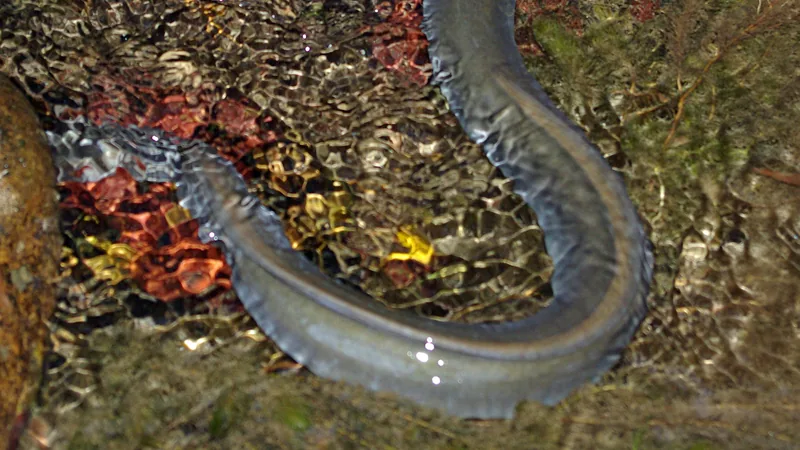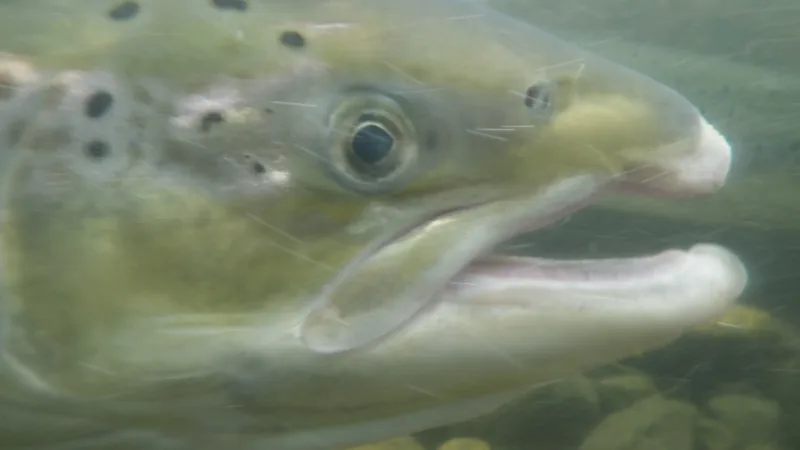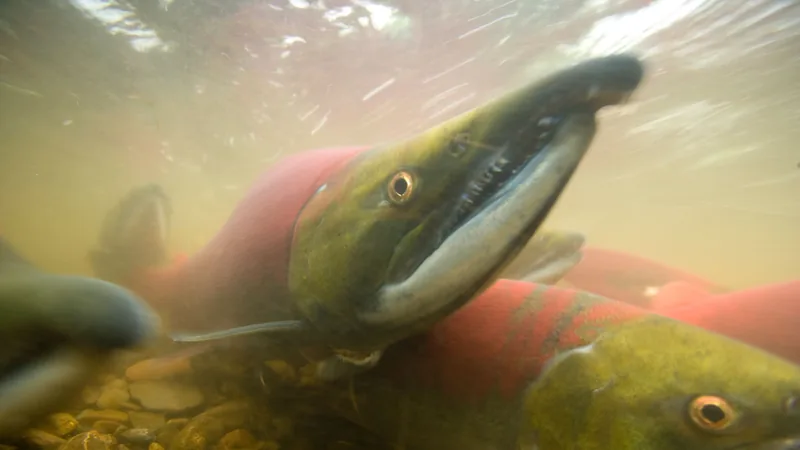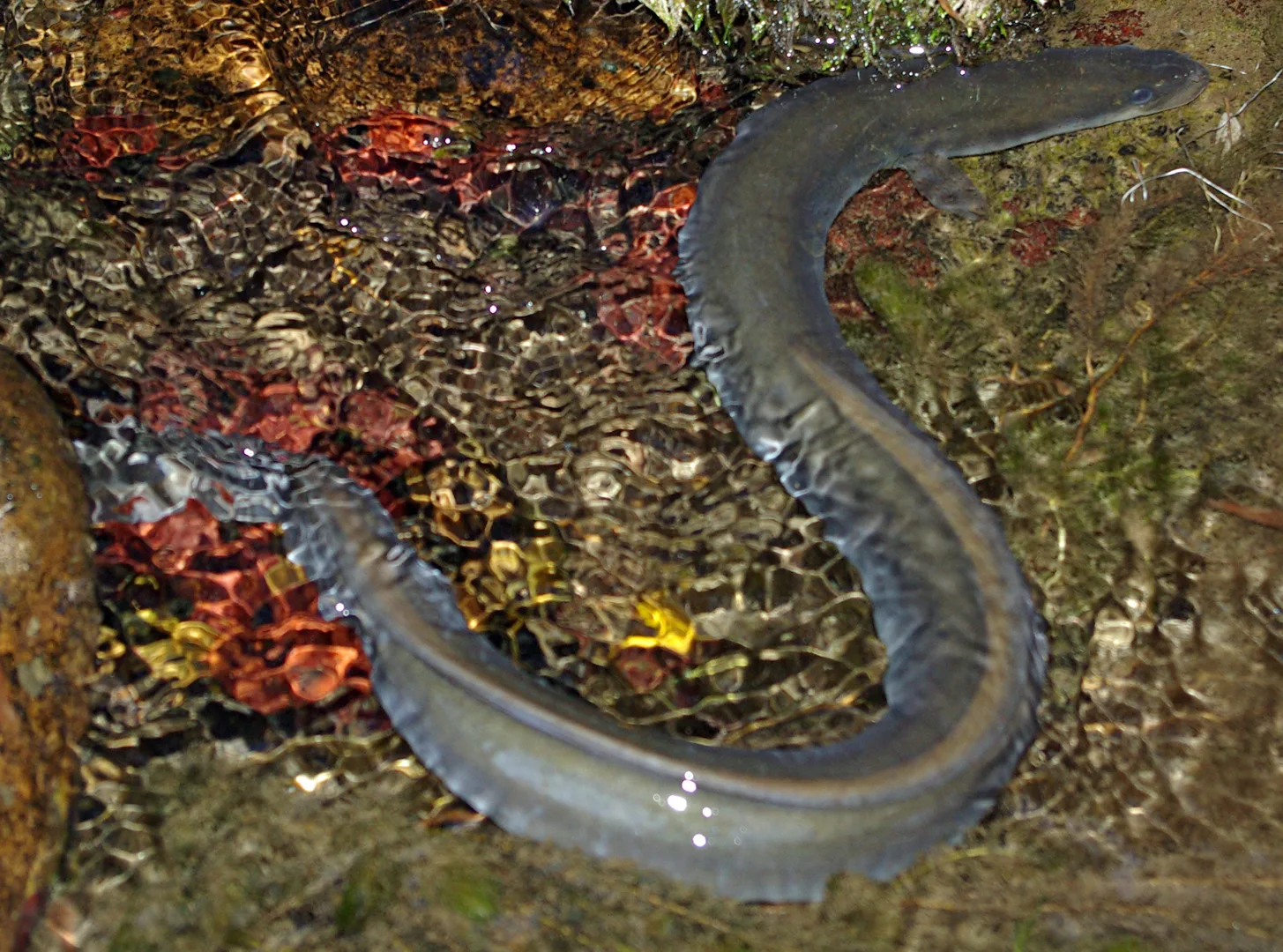
Anguila ( Anguilla anguilla ).
Field
notes
The fish nobody has seen spawn
The European eel (Anguilla anguilla) grows up in rivers, lakes and estuaries, yet it is believed to breed only in the Sargasso Sea, in the western Atlantic. As an adult it makes the longest spawning migration of any anguillid eel: 5,000 to 10,000 km across the Atlantic. Actual spawning has never been observed. A 2022 study noted that, in the almost 100 years since Johannes Schmidt proposed the Sargasso Sea as the breeding place from surveys of larvae, no eggs or spawning adults had ever been sampled there.
That study fitted satellite tags to 26 eels from rivers in the Azores. Five tags surfaced inside the Sargasso Sea’s boundaries, and one eel was located inside the presumed breeding area. It was the first direct evidence of adult European eels reaching it.
Slow and steady The tagged eels averaged 6.8 km a day. The team says the data support the idea that eels may make a long, slow trip at depth that saves energy and lowers their risk of dying.
A body that keeps changing
Eel larvae, called leptocephali, are transparent and ribbon-like. The Gulf Stream carries them to the coasts of Europe over 7 to 11 months. They turn into glass eels, 6 to 8 cm long, cylindrical and see-through or slightly coloured. These enter estuaries and colonise rivers and lakes, though some stay in estuaries and coastal waters to grow up.
A long feeding stage follows, from yellow eel to silver eel, lasting 6 to 12 years in males and 9 to 20 years in females. Yellow eels eventually turn dark on the back and silver on the belly, with a black lateral line and enlarged eyes. These silver eels do not eat on the way to the Sargasso Sea. FishBase also lists the species as a facultative air-breather, which means it can breathe air but does not have to.
How big, how old, what for dinner
A common length for females is 50 cm, and males can grow up to 50 cm. FishBase lists a maximum of 133 cm for a female and a maximum published weight of 6.6 kg.
Average life span is usually 15 to 20 years. Keeping an eel in captivity stops the migration and greatly extends its life: a female called Putte, generally assumed to be a European eel, died at a museum in Sweden at about 88.
The diet is broad. Adults mostly eat aquatic invertebrates, but they will eat essentially any food they can find, even things that are already dead. The range runs along the Atlantic coast from Scandinavia to Morocco and into the Baltic, Black and Mediterranean seas.
Critically endangered
The Red List ranks the European eel as Critically Endangered. The 2022 study put the fall in recruitment, the number of young eels joining the population, at 95% since the 1980s.
Published
Traits
Intel
& FAQ
Guess
first
How big is a European Eel, really? Slide, lock in, and see what the sources say. Every answer is a figure from this page, quoted from where it came from.
Sources
- 01Anguilla anguilla summary page. FishBase.
- 02AnAge entry for Anguilla anguilla. Human Ageing Genomic Resources, AnAge.
- 03Anguilla anguilla. Animal Diversity Web.
- 04Wright et al. (2022). First direct evidence of adult European eels migrating to their breeding place in the Sargasso Sea. Scientific Reports.
- 05Pike, Crook & Gollock (2026). Anguilla anguilla. The IUCN Red List of Threatened Species 2026: e.T60344A288387541.
What the sources say: 53 claims checked word for word against these sources →