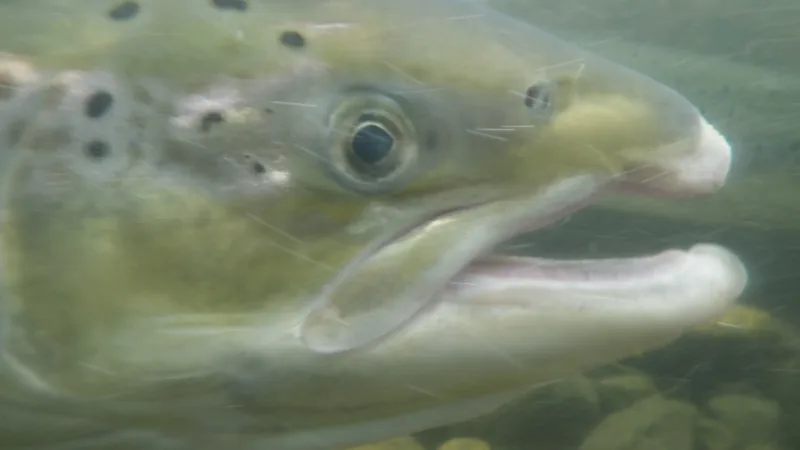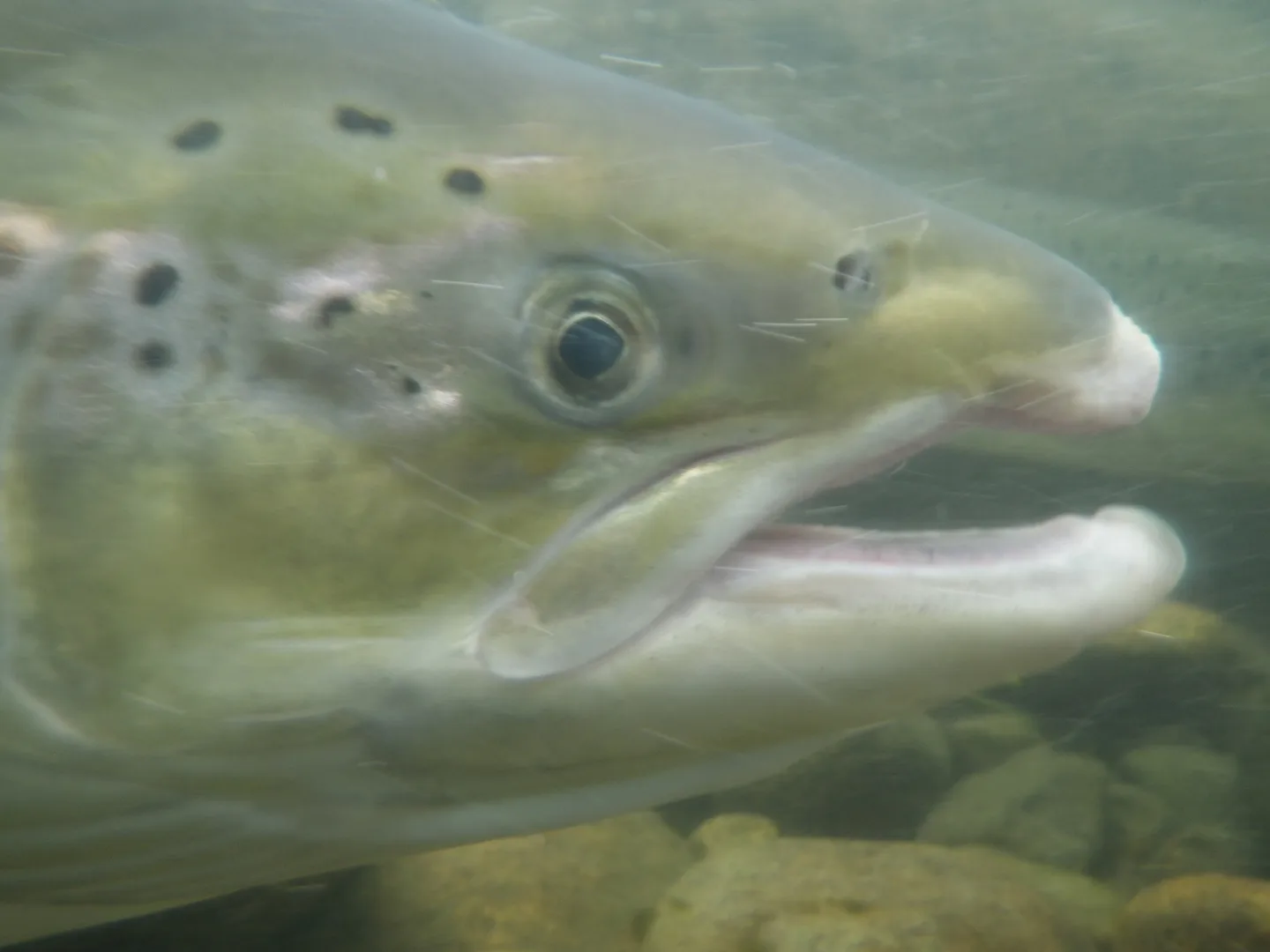
Atlantic salmon in the Lærdal river, Norway.
Field
notes
A river fish with an ocean-sized commute
An Atlantic salmon (Salmo salar) is born in a river, grows up at sea, and swims back to the river it hatched in. NOAA says the trick happens during smoltification, the change that readies a young salmon for salt water: the fish imprints on the chemical nature of its home stream to find its way back. FishBase adds that adults are known to return to the river where they were born, and even to its specific natal site.
Smell of home ADW notes that scientists are not exactly sure how salmon do it, though most think the smell of the parent stream guides them home.
The range is the North Atlantic. FishBase gives the western range as rivers from northern Quebec to Connecticut and New York, but NOAA said in 2026 that the only wild US populations left are in central and eastern Maine. In the east, their rivers run from the White Sea and Barents Sea coasts across northeastern Europe to the Baltic and North Sea, and Iceland has them too. NOAA says salmon born in Maine reach the seas off Newfoundland and Labrador by mid-summer, then spend their first winter south of Greenland.
Two lives in one fish
FishBase says young salmon stay in fresh water for 1 to 6 years, then spend 1 to 4 years in coastal seas or the open ocean. In the river, the young are called parr. NOAA says parr are about 2 inches long and wear spots and vertical bars as camouflage. Young salmon mainly eat aquatic insects, mollusks, crustaceans and fish. At sea, adults feed on squid, shrimp and fish.
Then comes a fast. ADW says salmon stop feeding before spawning and do not eat once they re-enter fresh water, despite seeming willing to take an artificial fly.
How big, how heavy, how old
Size depends on how long the fish spends at sea. NOAA says an adult that has spent 2 years at sea averages 28 to 30 inches long and 8 to 12 pounds. ADW gives a range of 2.3 to 9.1 kg for sea-run salmon. FishBase lists a maximum length of 150 cm and a maximum published weight of 46.8 kg, and ADW notes a rod-caught world record of 35.89 kg from Norway’s Tana River.
For lifespan, FishBase reports that the species lives up to 10 years, though most reach only 4 to 6. The oldest age it lists is 13 years.
Spawning, and a second chance
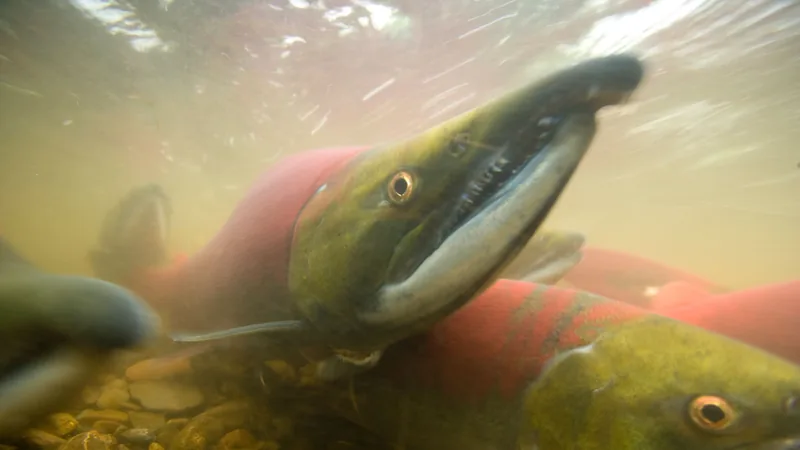
Breeding males grow elongated, hooked jaws. A female picks gravel of the right size and digs a nest, called a redd, by turning on her side and flexing her body up and down. FishBase says she releases between 8,000 and 25,000 eggs in a season.
Some salmon survive spawning. FishBase says some females survive and return to the sea, about 0.3 to 6 percent of returning females spawn a second time, and in short rivers some individuals may spawn for up to six seasons.
The IUCN Red List lists the species as Near Threatened, in an assessment published in 2024.
Published
Traits
Intel
& FAQ
Guess
first
How big is a Atlantic Salmon, really? Slide, lock in, and see what the sources say. Every answer is a figure from this page, quoted from where it came from.
Sources
- 01Sayer (2024). Salmo salar. The IUCN Red List of Threatened Species 2024: e.T19855A212864916.
- 02Salmo salar (Atlantic salmon). FishBase.
- 03Atlantic Salmon. NOAA Fisheries.
- 04Salmo salar (Atlantic salmon). Animal Diversity Web, University of Michigan.
What the sources say: 42 claims checked word for word against these sources →