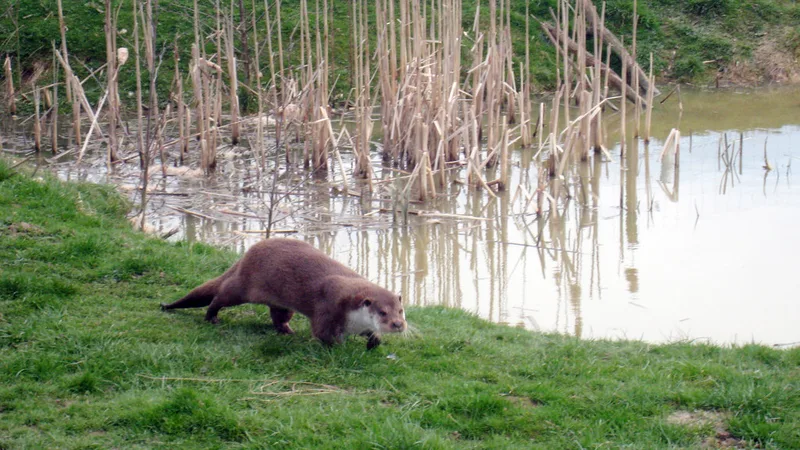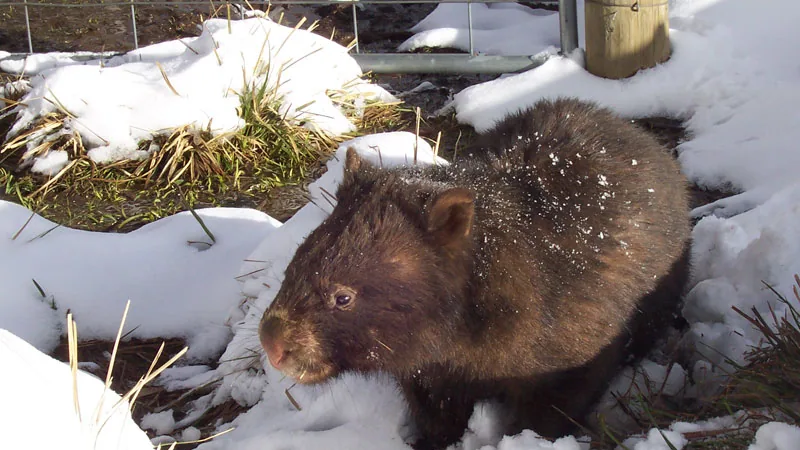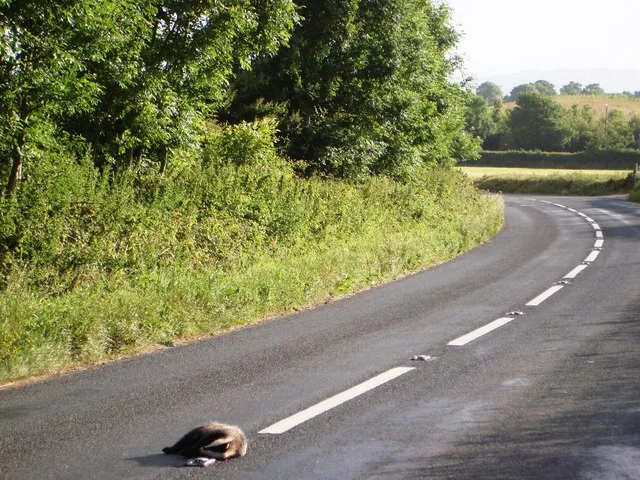
European badger in Drenthe, Netherlands
Field
notes
Digging In For Good
The European badger (Meles meles) is the UK’s biggest land predator, typically weighing 10 to 12 kg with a body length of about 90 cm. Across its range, from Ireland and Spain to Russia, China and Japan, females weigh 6.6 to 13.9 kg and males 9.1 to 16.7 kg. Its sharp claws are ideal for digging setts, communal burrows excavated in soft earth, sometimes at the base of a tree. The main sett generally holds many of a group’s adults, while younger badgers tend to live in smaller outlying setts. A badger keeps house too, dragging old bedding of hay, bracken and grass out under its chin, which prevents a build-up of fleas and lice. The oldest known wild badger reached 14, though few exceed 6. In captivity, one lived 18.6 years.
An Earthworm Habit
Roughly 80 percent of a badger’s diet is earthworms, and it can eat hundreds of them in a single night. When worms are scarce it turns to voles and rabbits, and it is the main predator of hedgehogs in the UK. It also eats beetles, caterpillars and wasp nests, mice and rats, and carrion, occasionally taking birds and frogs, along with fruit such as pears, plums, blackberries and elderberries, plus acorns, cereals and, occasionally, fungi.
Family Politics, Underground
Social groups can hold anywhere from 2 to 23 badgers, though around four to seven is typical in the UK. Usually a single dominant female breeds, and she has been known to kill cubs born to other females in the group. Mating can happen in any month, but after mating comes delayed implantation, governed partly by day length and temperature, so UK cubs are not born until January or February regardless of when mating happened.
Pregnant and Pregnant Again A pregnant female badger can conceive again, an ability called superfetation. As a result, litters with more than one father are not uncommon.
Badgers defecate, urinate and scent mark at latrines, and use them to mark territorial boundaries. In one study, boundary latrines were larger and more consistently used than those nearer the middle, differences that could be explained by visits from more than one social group. Males visited boundary latrines considerably more often than females, which the authors suggest works at least partly as mate-guarding, deterring neighbouring males from entering the territory to mate.
Nights, Winters and a Cattle Feud
In Poland’s Białowieża Forest, radio-collared badgers were nocturnal with one long bout of activity, emerging on average at 19:00 and returning at 03:42, for about 8.2 hours a night. They built fat reserves in autumn, nearly doubling their spring body mass, and stayed inactive for an average of 96 days each winter. A 2000 review concluded that badgers are well adapted as the primary host of bovine tuberculosis in parts of Britain and much of Ireland. England introduced licensed badger culling in 2013 to control TB in cattle, and a study of the first cull zones found its effect varied between areas. Historical persecution means badgers are now fully protected by law in the UK, which has helped the population roughly double since the 1980s.
Published Updated
Traits
Intel
& FAQ
Guess
first
How big is a European Badger, really? Slide, lock in, and see what the sources say. Every answer is a figure from this page, quoted from where it came from.
Sources
- 01Badger (Meles meles). Woodland Trust.
- 02Meles meles (European badger). AnAge: The Animal Ageing and Longevity Database, Build 15.
- 03Meles meles (Eurasian badger). Animal Diversity Web, University of Michigan.
- 04Abramov (2025). Meles meles. The IUCN Red List of Threatened Species 2025: e.T29673A215859004.
- 05Roper et al. (1993). Territorial Marking With Faeces in Badgers (Meles Meles): a Comparison of Boundary and Hinterland Latrine Use. Behaviour.
- 06Kowalczyk, Jȩdrzejewska & Zalewski (2003). Annual and circadian activity patterns of badgers (Meles meles) in Białowieża Primeval Forest (eastern Poland) compared with other Palaearctic populations. Journal of Biogeography.
- 07Gallagher & Clifton-Hadley (2000). Tuberculosis in badgers; a review of the disease and its significance for other animals. Research in Veterinary Science.
- 08Downs et al. (2019). Assessing effects from four years of industry-led badger culling in England on the incidence of bovine tuberculosis in cattle, 2013–2017. Scientific Reports.
What the sources say: 57 claims checked word for word against these sources →