Eurasian Beaver foraging in spring meadow buttercups
Field
notes
Second-Largest Rodent on the Planet
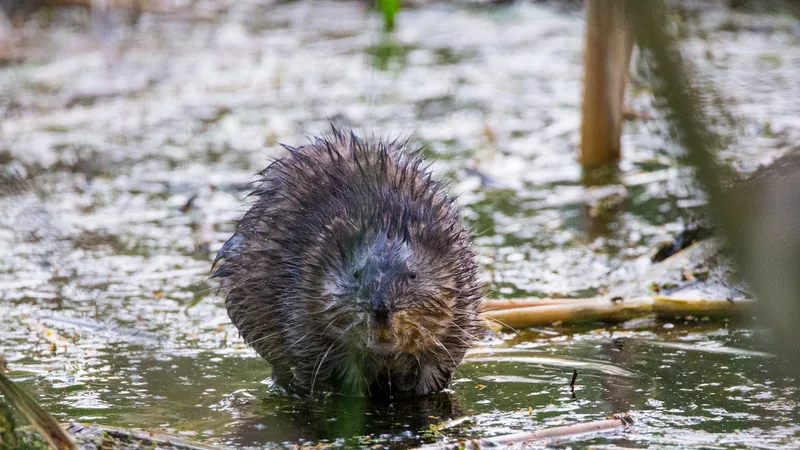
The Eurasian beaver (Castor fiber) shares the title of the world’s second-largest rodent with its North American cousin. An adult weighs 13 to 35 kilograms (29 to 77 pounds) and measures 73 to 135 centimeters (29 to 53 inches) long. Animal Diversity Web says it can live 10 to 17 years, though in the wild few live past 7 or 8. In winter it eats mostly woody plants, preferring willow, aspen, and birch; in summer it feeds heavily on aquatic plants, shoots, leaves, and roots.
Built to Work Underwater
A beaver’s ears and nostrils have valves and its eyes have nictitating membranes, inner eyelids, closing when it goes under water. A fold of skin inside its mouth lets it gnaw on branches underwater without getting water in its mouth, and it can stay submerged for 4 to 5 minutes at a time. Its two large incisors carry hard, orange-colored enamel on the front surface.
A Fitness Tracker for a Beaver Researchers glued accelerometers, the same kind of motion sensor built into a fitness tracker, to the fur of 12 free-ranging Eurasian beavers in Norway. A computer model fed the motion data told seven behaviours apart, from swimming and grooming to sleeping, with 95% accuracy.
Dams, Colonies and Scent Mounds
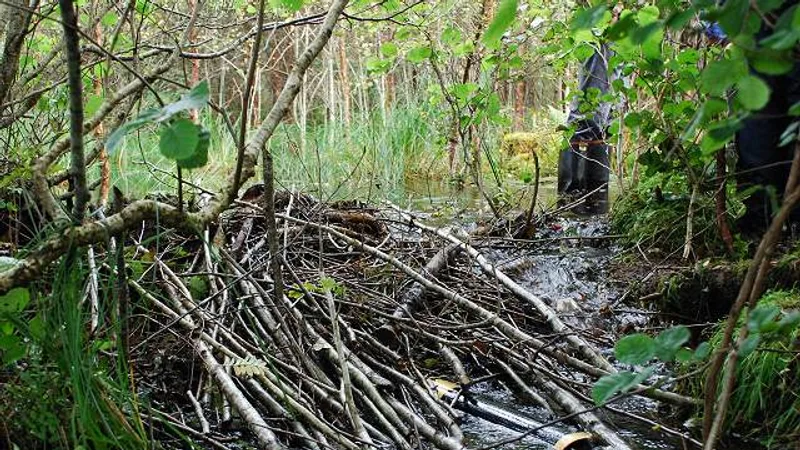
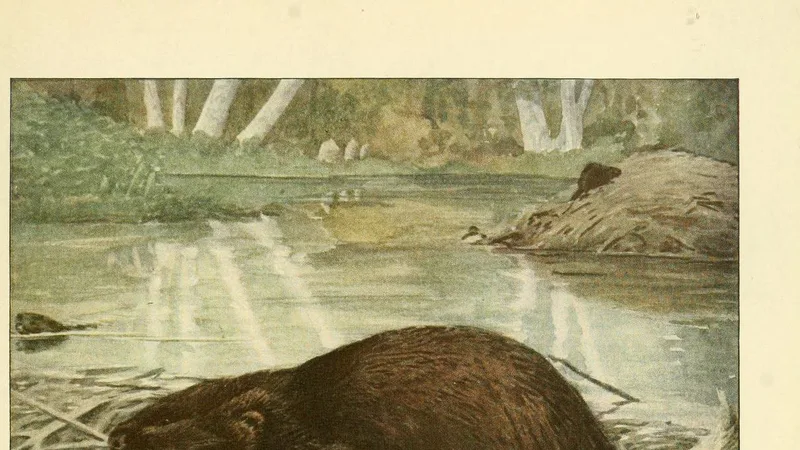
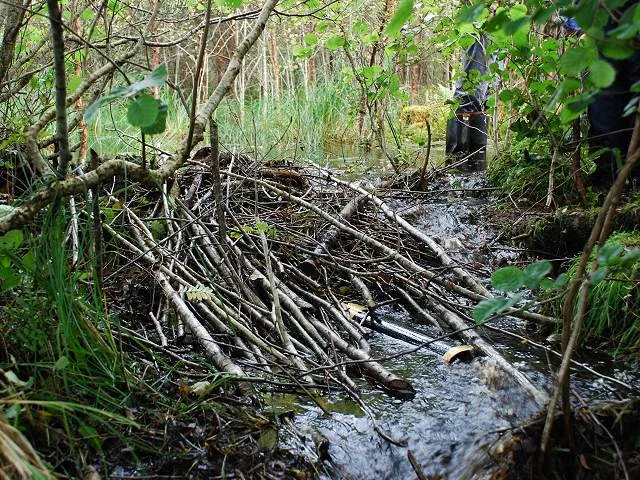
Eurasian beavers were long thought to build smaller dams and lodges than North American beavers, but a 2015 study found that under the same conditions the two species build alike. Their dams alter a stream’s flow and flood former uplands, and the new water draws in new species of birds, fish, and amphibians. They live in colonies of up to 12 with one dominant breeding pair, and mark their territory with castoreum, a pungent scent from glands near the tail, which they put on mounds of mud piled up on the shore.
Hunted to the Edge, and Back
Eurasian beavers once lived across Europe and Asia, but overhunting for fur and castoreum, along with habitat loss, left most countries there with none by the 19th century; Great Britain lost its last wild beavers about 400 years ago. In recent decades, reintroductions followed by natural spread have returned the species to much of its Eurasian range, and a review published in 2012 put Europe’s population at over 1.5 million. In Spain, where new sites have been reported in recent years, a beaver was sighted in the Tagus river in June 2024 and its presence confirmed from signs on the banks: the first report of the species in that river basin, more than 100 kilometers from the nearest beaver area reported before. In England, the Eurasian beaver is a European protected species, and releasing beavers requires a licence.
Published Updated
Traits
Intel
& FAQ
Guess
first
How big is a Eurasian Beaver, really? Slide, lock in, and see what the sources say. Every answer is a figure from this page, quoted from where it came from.
Sources
- 01Castor fiber (Eurasian beaver). Animal Diversity Web, University of Michigan.
- 02Gazzard (2024). Castor fiber. The IUCN Red List of Threatened Species 2024: e.T4007A218566456.
- 03Brazier et al. (2020). Beaver: Nature's ecosystem engineers. WIREs Water.
- 04Puttock et al. (2017). Eurasian beaver activity increases water storage, attenuates flow and mitigates diffuse pollution from intensively-managed grasslands. Science of The Total Environment.
- 05Graf et al. (2015). The Use of Acceleration to Code for Animal Behaviours; A Case Study in Free-Ranging Eurasian Beavers Castor fiber. PLOS ONE.
- 06Horn et al. (2011). Mitochondrial Genomes Reveal Slow Rates of Molecular Evolution and the Timing of Speciation in Beavers (Castor), One of the Largest Rodent Species. PLoS ONE.
- 07Ansón & García-Prendes (2024). A beaver in the Tagus river: a new location in Spain. Galemys, Spanish Journal of Mammalogy.
- 08Approach to beaver management in England. Department for Environment, Food & Rural Affairs / Natural England.
What the sources say: 51 claims checked word for word against these sources →