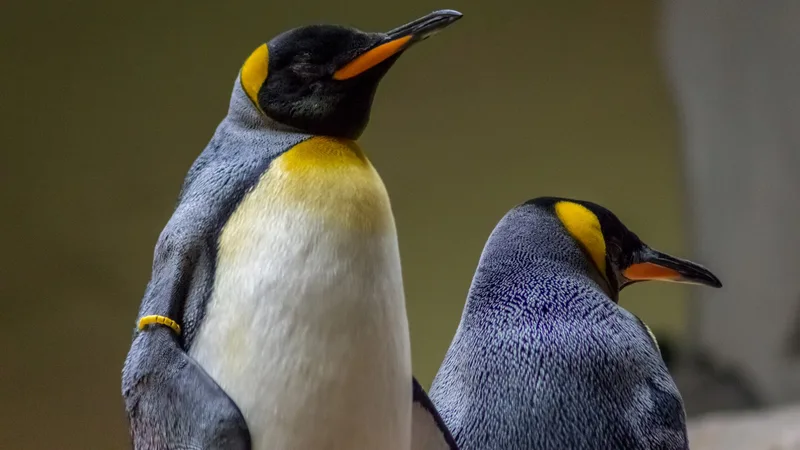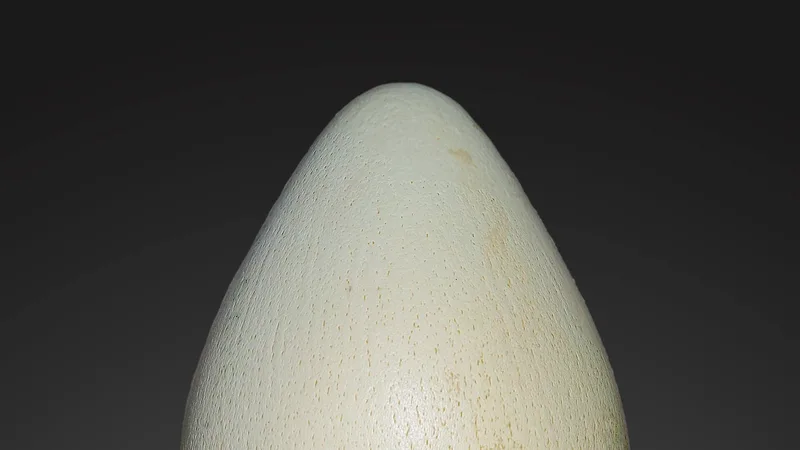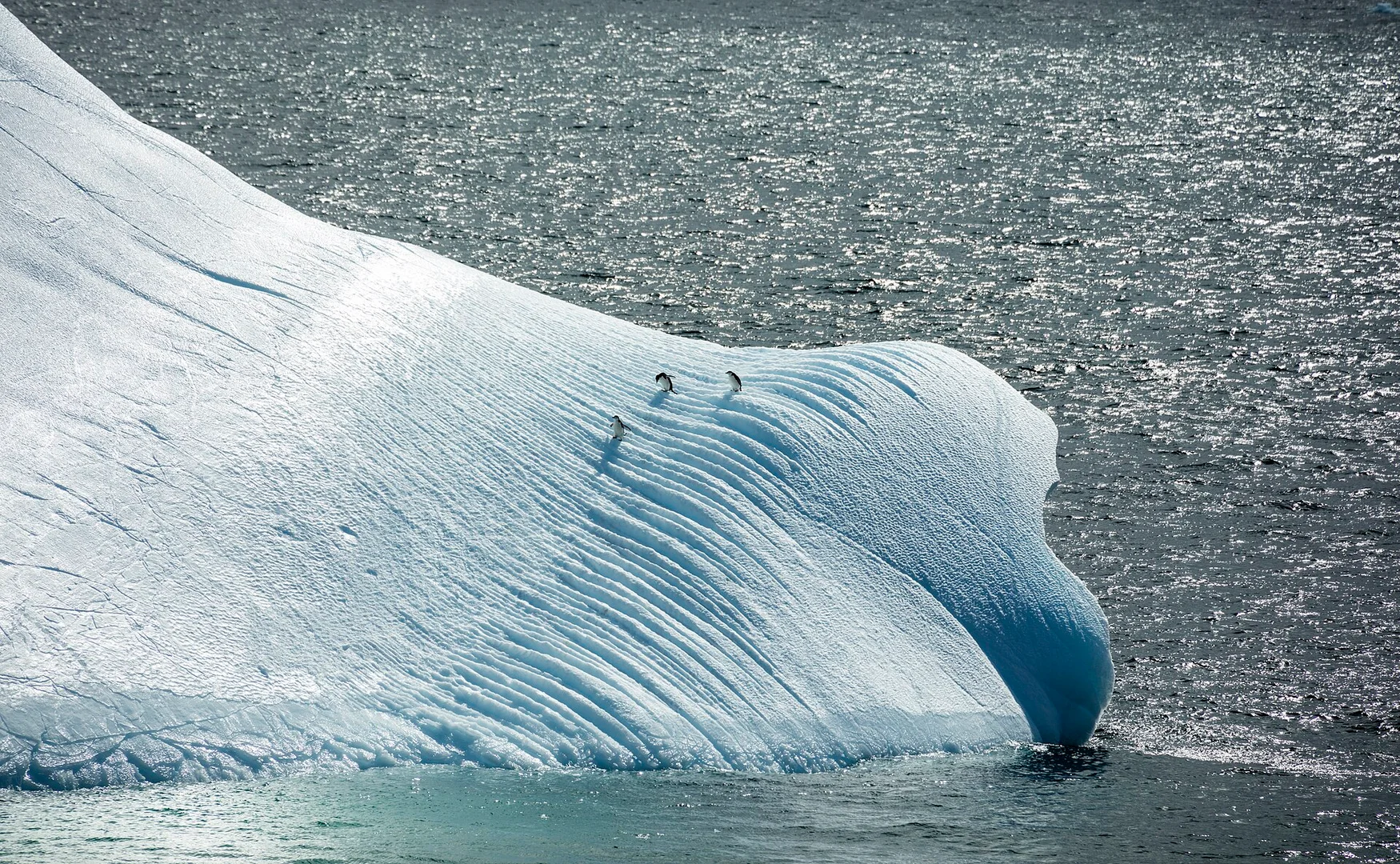
Chinstrap penguins (Pygoscelis antarctica), Deception Island, South Shetland Islands, on an iceberg.
Field
notes
Sleeping With Its Eyes (Half) Closed
Instead of sleeping in one long stretch, a nesting chinstrap penguin takes about three-quarters of its slow-wave sleep in bouts under ten seconds long. While one parent is off at sea on a foraging trip that can last several days, the other has to guard the egg or chick against the brown skua, a predatory bird that preys on eggs left exposed at the edge of the colony. A 2023 study that recorded the brain waves of wild, nesting chinstraps found their solution: the birds nod off more than 10,000 times a day, in naps that average four seconds. Some of those naps shut down both sides of the brain together. Others are one-sided, and video recordings showed each hemisphere’s naps lining up with its opposite eye closing. A penguin can doze with half its brain while the other half keeps an eye open. Strung together, those seconds-long naps let each hemisphere bank more than 11 hours of slow-wave sleep across a day, and the bird almost 15 hours of it in total.
Sleep in Fragments Nesting chinstraps rack up over 10,000 microsleeps a day, each averaging about four seconds, and still bank more than 11 hours of sleep for each half of the brain while they guard the egg from skuas.
Small, Sleek, and Built for Krill
At about 72 centimeters tall and 3.5 to 5.5 kilograms, the chinstrap is closely related to the Adélie and gentoo penguins, and roughly the same size as the Adélie. Roughly 95 percent of its diet is krill, topped up with small fish and other crustaceans, caught on pursuit dives that use its flippers to “fly” through the water. Feeding dives generally stay shallow, under 40 meters, and tend to run deeper in daylight than at night, though birds tracked at a Deception Island colony have logged maximum dives near 110 meters. Leopard seals are the main danger in the water, while on land sheathbills, skuas and southern giant petrels take chicks and eggs.
Loud Colonies on Bare Ground
Chinstraps breed mainly on snow and ice-free ground on the Antarctic Peninsula and on islands in the South Atlantic, including the South Shetlands, South Orkneys and South Sandwich Islands. A 2020 assessment put the global population at 3.42 million breeding pairs across 375 colonies, and more than a third of that population is concentrated in a handful of large colonies in the South Sandwich Islands. Chinstraps often toboggan on land, lying flat on their bellies, and they climb using all four limbs, jumping large distances between footholds. Their colonies are loud and combative: males pump their chests and screech during courtship, and territorial disputes bring stares, pointing and charging. The stone nests are typically about 40 centimeters across. Pairs share incubation of two eggs in shifts of five to ten days at first, and chicks fledge at about seven to eight weeks. A wild chinstrap can live 16 to 20 years, and the species as a whole is Least Concern, but Chinstrap and Adélie penguin populations on the western Antarctic Peninsula have declined for the past half century. The Australian Antarctic Program links the fall in chinstrap numbers to reductions in krill, their main food.
Published Updated
Traits
Intel
& FAQ
Guess
first
How big is a Chinstrap Penguin, really? Slide, lock in, and see what the sources say. Every answer is a figure from this page, quoted from where it came from.
Sources
- 01Pygoscelis antarcticus (chinstrap penguin). Animal Diversity Web, University of Michigan.
- 02Chinstrap penguin. Australian Antarctic Program.
- 03Pygoscelis antarcticus. The IUCN Red List of Threatened Species 2020: e.T22697761A184807209.
- 04Libourel et al. (2023). Nesting chinstrap penguins accrue large quantities of sleep through seconds-long microsleeps. Science.
- 05Strycker et al. (2020). A global population assessment of the Chinstrap penguin (Pygoscelis antarctica). Scientific Reports.
- 06Masello et al. (2021). How animals distribute themselves in space: energy landscapes of Antarctic avian predators. Movement Ecology.
What the sources say: 45 claims checked word for word against these sources →