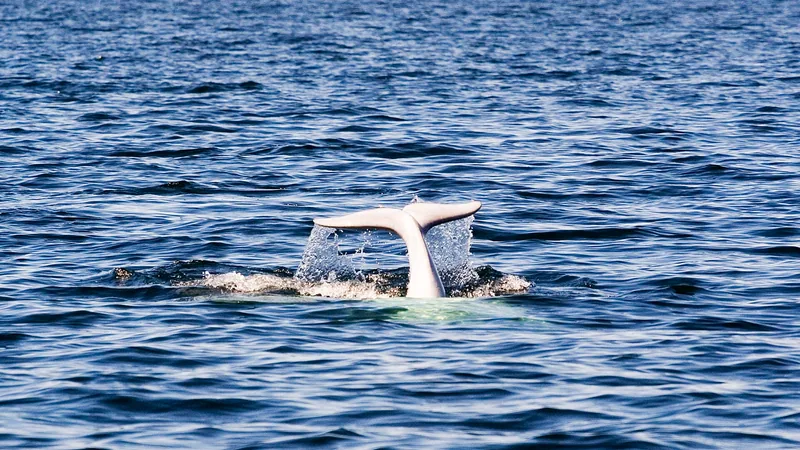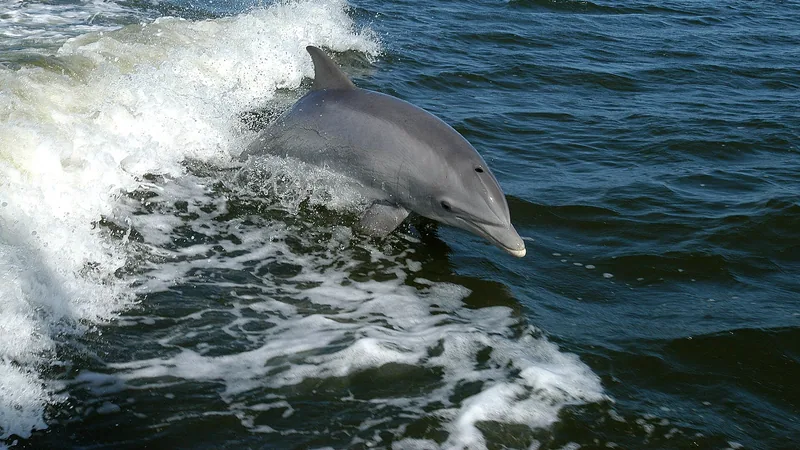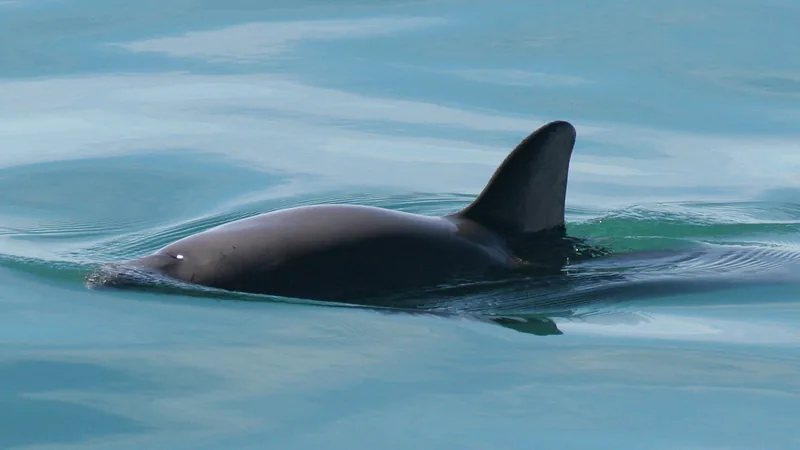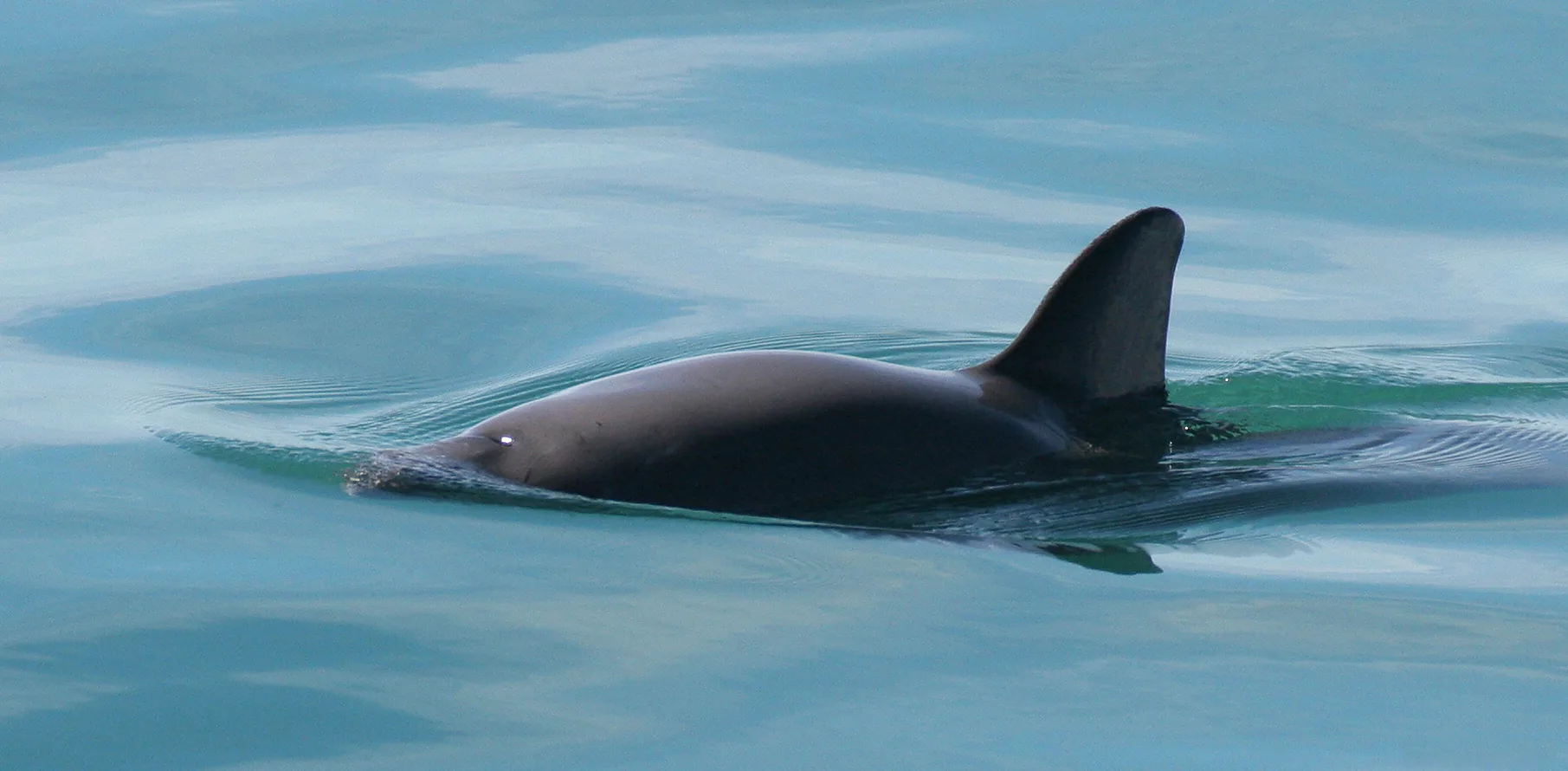
Surfacing in the northern Gulf of California.
Field
notes
A Porpoise With Almost Nowhere to Live
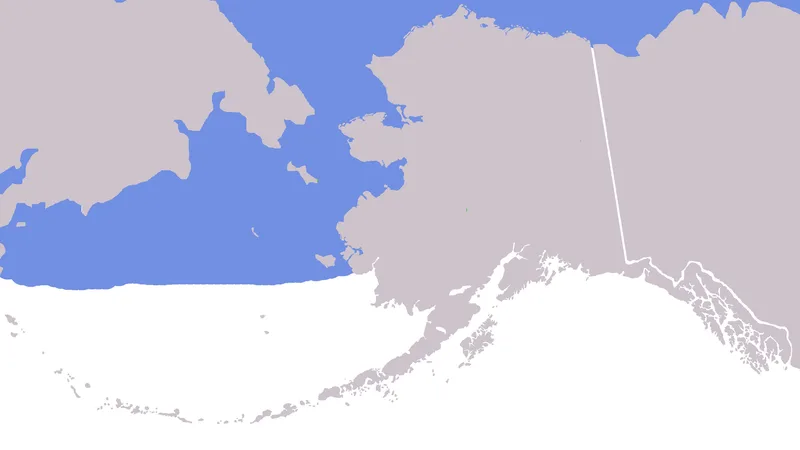
The vaquita (Phocoena sinus) lives in one small corner of the ocean. NOAA says it has the smallest range of any whale, dolphin or porpoise: only the northern part of the Gulf of California in Mexico. Most vaquitas live east of the town of San Felipe, in a 1,519-square-mile area.
Small, Shy and Hard to Spot
An adult weighs 65 to 120 pounds and is 4 to 5 feet long, one of the smallest members of the dolphin, whale and porpoise family. It has black patches around its eyes and lips, a rounded head with no beak, and small spade-shaped teeth. Its triangular dorsal fin is taller and wider than other porpoises have, and NOAA says that fin might help it lose heat in warm water.
Vaquitas are often alone or in pairs and usually avoid boats with active engines. Their small size and slow, inconspicuous surface rolls make them hard to observe. They eat small fish, crustaceans such as shrimp, and cephalopods such as squid and octopuses. A vaquita can live for at least 21 years.
Counting by Ear Vaquitas are difficult to observe, so scientists listen. Vaquitas are readily detectable by sound because they produce a nearly continuous series of echolocation clicks, the sound pulses they use to find their food.
Caught in the Wrong Net
Vaquitas can drown when they become entangled in gillnets, a kind of fishing net. From 1997 to 2008, legal fishing, largely for shrimp, cut their numbers from around 600 to about 200. Then, from around 2011, illegal fishing for totoaba, a large fish prized for its swim bladder, drove a decline of close to 50 percent of the population per year.
Mexico announced a two-year emergency gillnet ban in 2015, and in July 2017 a federal agreement permanently banned all gillnets except those for two fish species, but NOAA notes the illegal use continues. A 2019 study estimated fewer than 19 vaquitas remained as of summer 2018, and a 2022 study in Science worked from a figure of about 10 in 2019. The IUCN assessed the vaquita as Critically Endangered in 2022.
A Small Spark of Hope
A 2022 genome study suggests that the vaquita’s long history of being rare has left it with a low burden of harmful gene variants, which lowers the risk of inbreeding depression, the health cost of a tiny population breeding among relatives. Its simulations suggest the vaquita can recover if bycatch deaths are halted immediately.
Published Updated
Traits
Intel
& FAQ
Guess
first
How big is a Vaquita, really? Slide, lock in, and see what the sources say. Every answer is a figure from this page, quoted from where it came from.
Sources
- 01Vaquita. NOAA Fisheries.
- 02Rojas-Bracho, Taylor & Jaramillo-Legorreta (2022). Phocoena sinus. The IUCN Red List of Threatened Species 2022: e.T17028A214541137.
- 03Jaramillo-Legorreta et al. (2019). Decline towards extinction of Mexico's vaquita porpoise ( Phocoena sinus ). Royal Society Open Science.
- 04Robinson et al. (2022). The critically endangered vaquita is not doomed to extinction by inbreeding depression. Science.
What the sources say: 41 claims checked word for word against these sources →