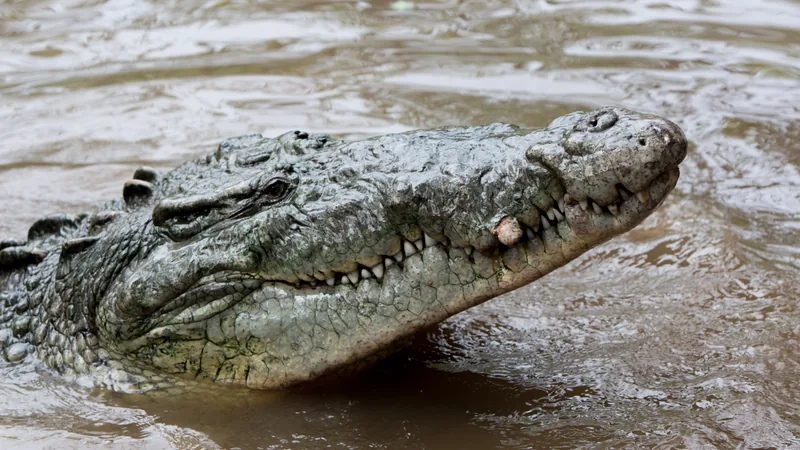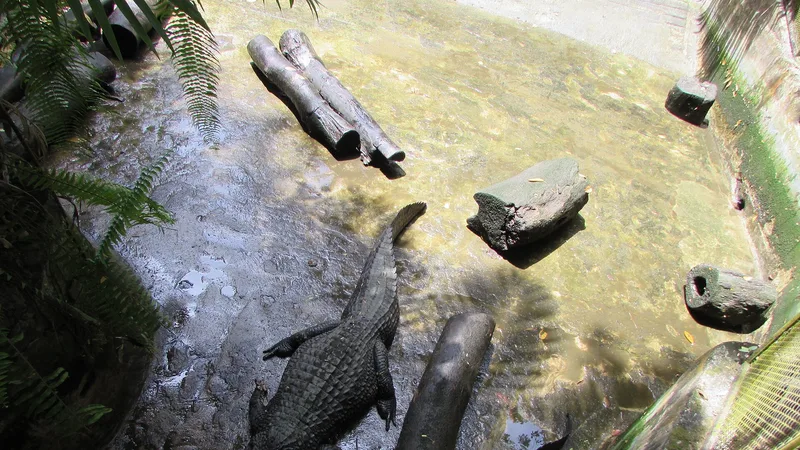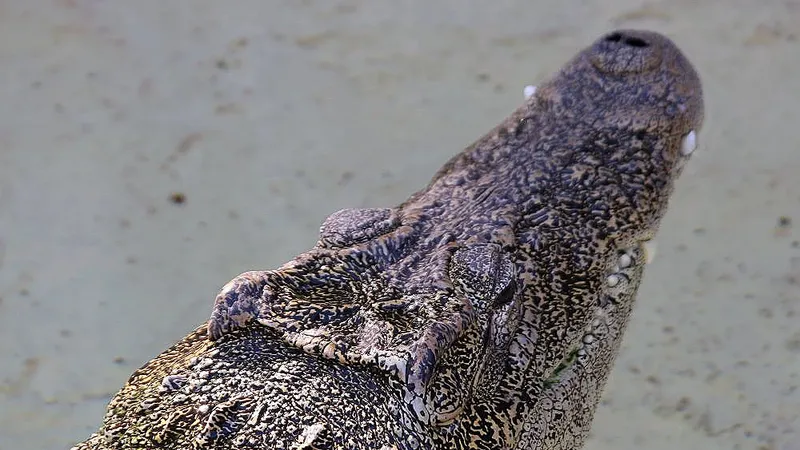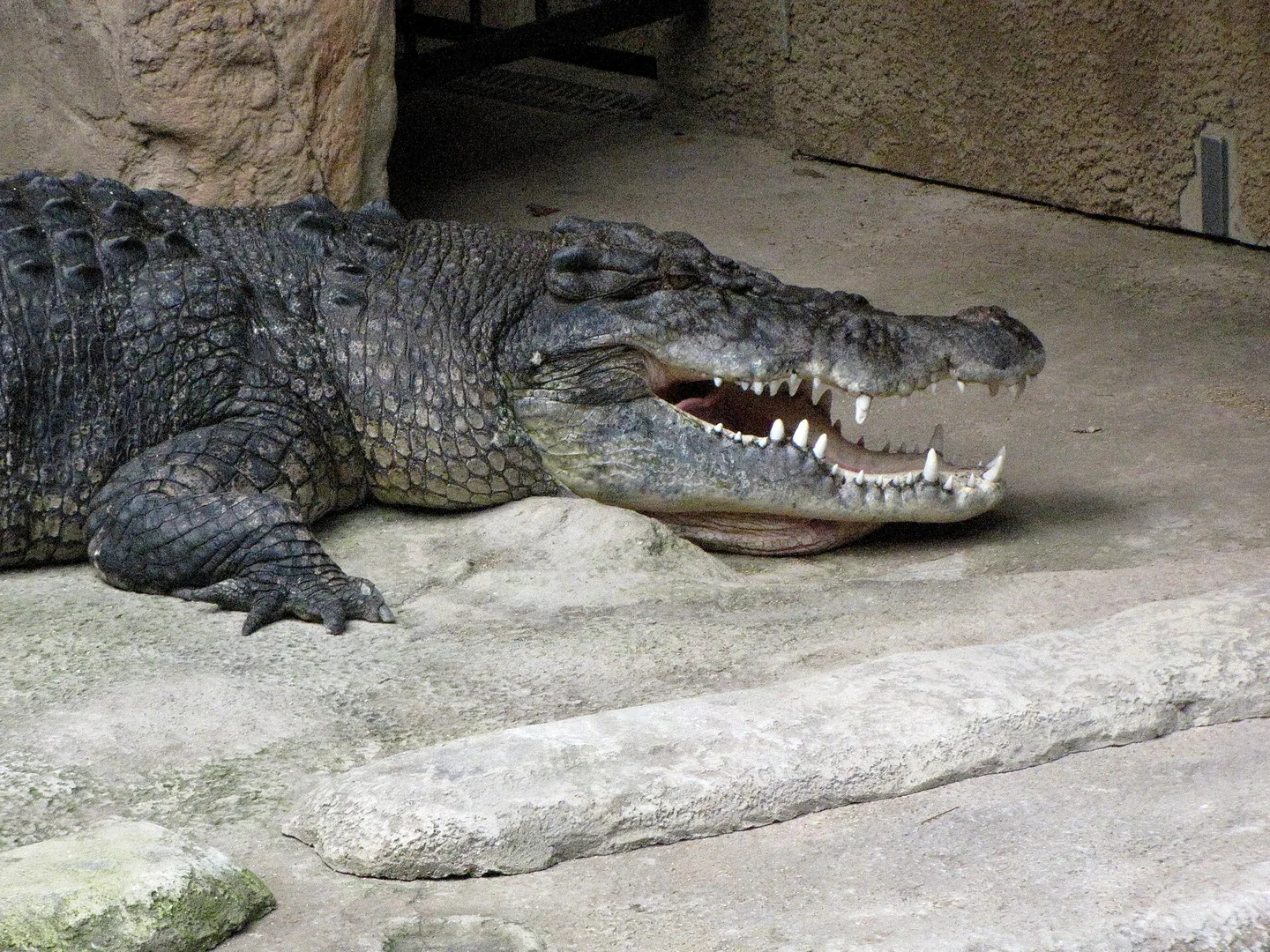
Taken at Sydney Wildlife World, Darling Harbour.
Field
notes
Overview
The Saltwater Crocodile (Crocodylus porosus) is the largest living reptile on Earth, with adult males reaching up to 7 meters (23 feet) and 1,000 to 1,200 kilograms (over 2,200 pounds). It belongs to the crocodilians, a group that has dominated predatory niches at the water’s edge for over 85 million years. Critical to that success was a skull-and-muscle system built for high bite forces: once it evolved, its relative force capacity went essentially unchanged as the group diversified. It usually hunts by ambush, hiding in the water with only its nostrils, eyes and part of its back showing, then lunging out when prey comes close.
Habitat & Biology
Inhabits estuaries, rivers, and coastal waters across Northern Australia, Southeast Asia, and the eastern Indian subcontinent.
Musical Pairing & Sonic Spirit
Matched with Meshuggah’s “Bleed”: the crushing mechanical polyrhythms, relentless double-bass drive, and unrelenting technical aggression mirror the crocodile’s calculated ambush and devastating death roll.
Fun Facts
- Delivers the highest bite force measured in any animal: one individual in a 2012 study bit down with 16,414 newtons of force, about 3,689 pounds.
- It lives in both fresh water and waterways saltier than the sea, and keeps its body’s salt balance steady by pushing excess sodium and chloride out through salt glands on its tongue.
- At sea, the direction satellite-tagged crocodiles travelled closely matched the direction of the surface current. Riding currents lets them move quickly and efficiently over long distances.
- Sense organs packed into its jaws and body scales pick up water movements, including the ripples prey make at the surface, and help tell it when to bite on direct contact with prey.
Published Updated
Traits
Intel
& FAQ
Guess
first
How big is a Saltwater Crocodile, really? Slide, lock in, and see what the sources say. Every answer is a figure from this page, quoted from where it came from.
Sources
- 01Erickson et al. (2012). Insights into the Ecology and Evolutionary Success of Crocodilians Revealed through Bite-Force and Tooth-Pressure Experimentation. PLoS ONE.
- 02Crocodylus porosus (saltwater crocodile). Animal Diversity Web, University of Michigan.
- 03Fish et al. (2007). Death roll of the alligator: mechanics of twist feeding in water. Journal of Experimental Biology.
- 04Campbell et al. (2010). Estuarine crocodiles ride surface currents to facilitate long-distance travel. Journal of Animal Ecology.
- 05Cramp et al. (2008). Functional and morphological plasticity of crocodile (Crocodylus porosus) salt glands. Journal of Experimental Biology.
- 06Leitch & Catania (2012). Structure, innervation and response properties of integumentary sensory organs in crocodilians. Journal of Experimental Biology.
- 07Conservation Status. IUCN SSC Crocodile Specialist Group.
What the sources say: 1 claim checked word for word against these sources →