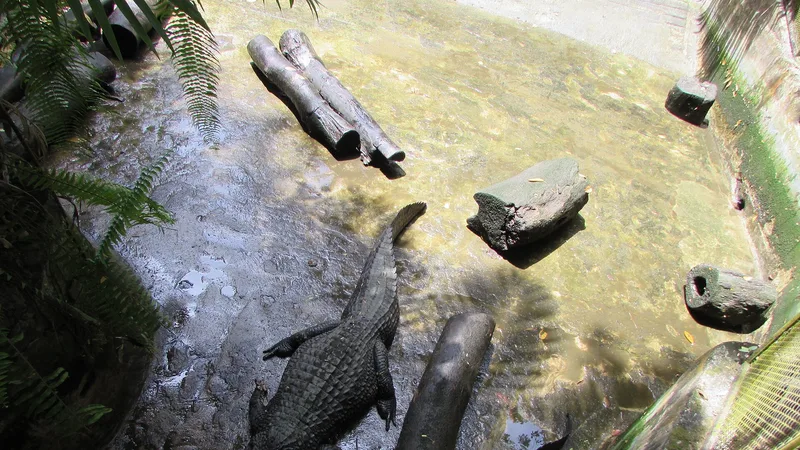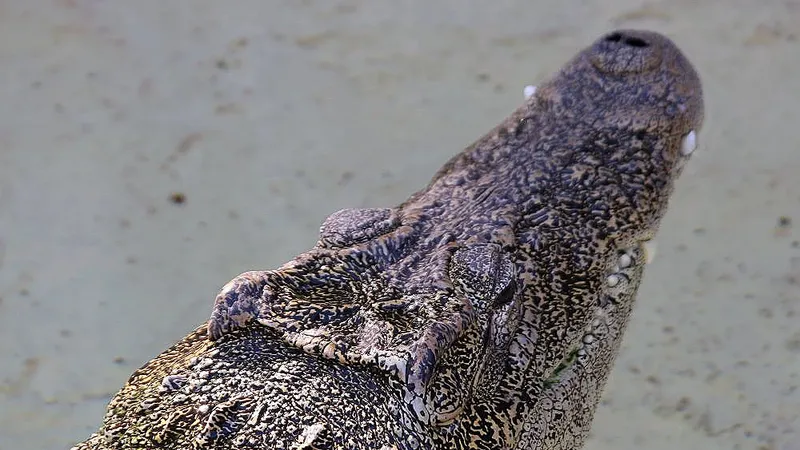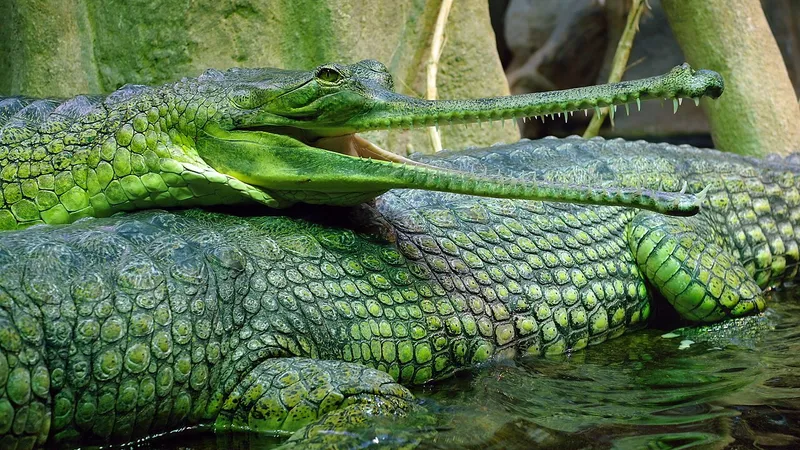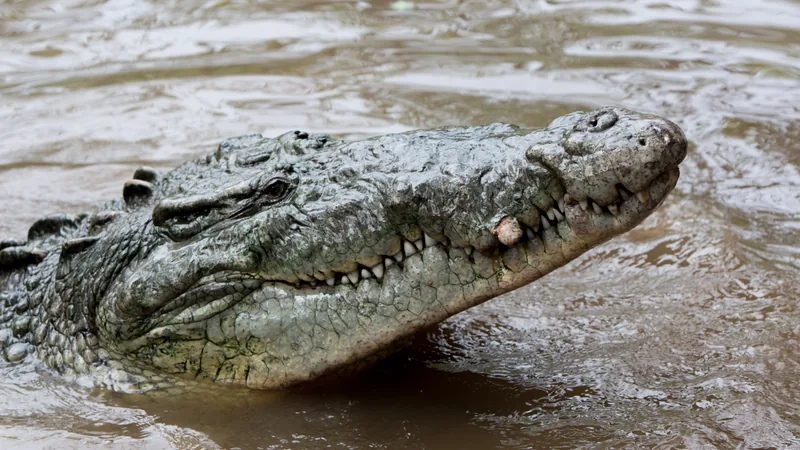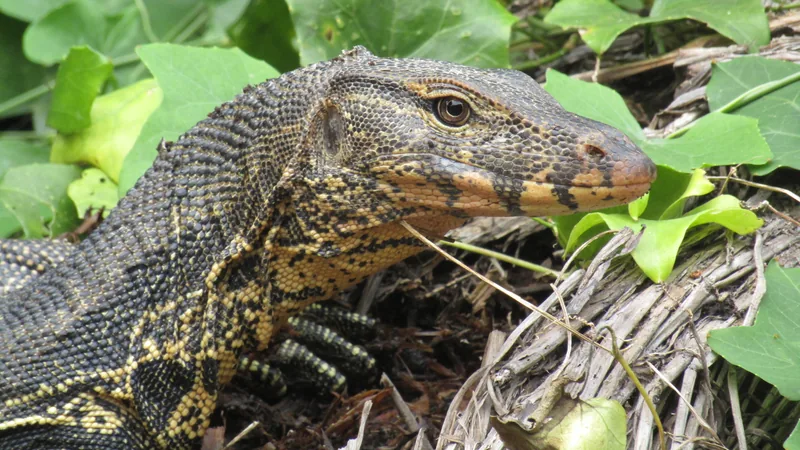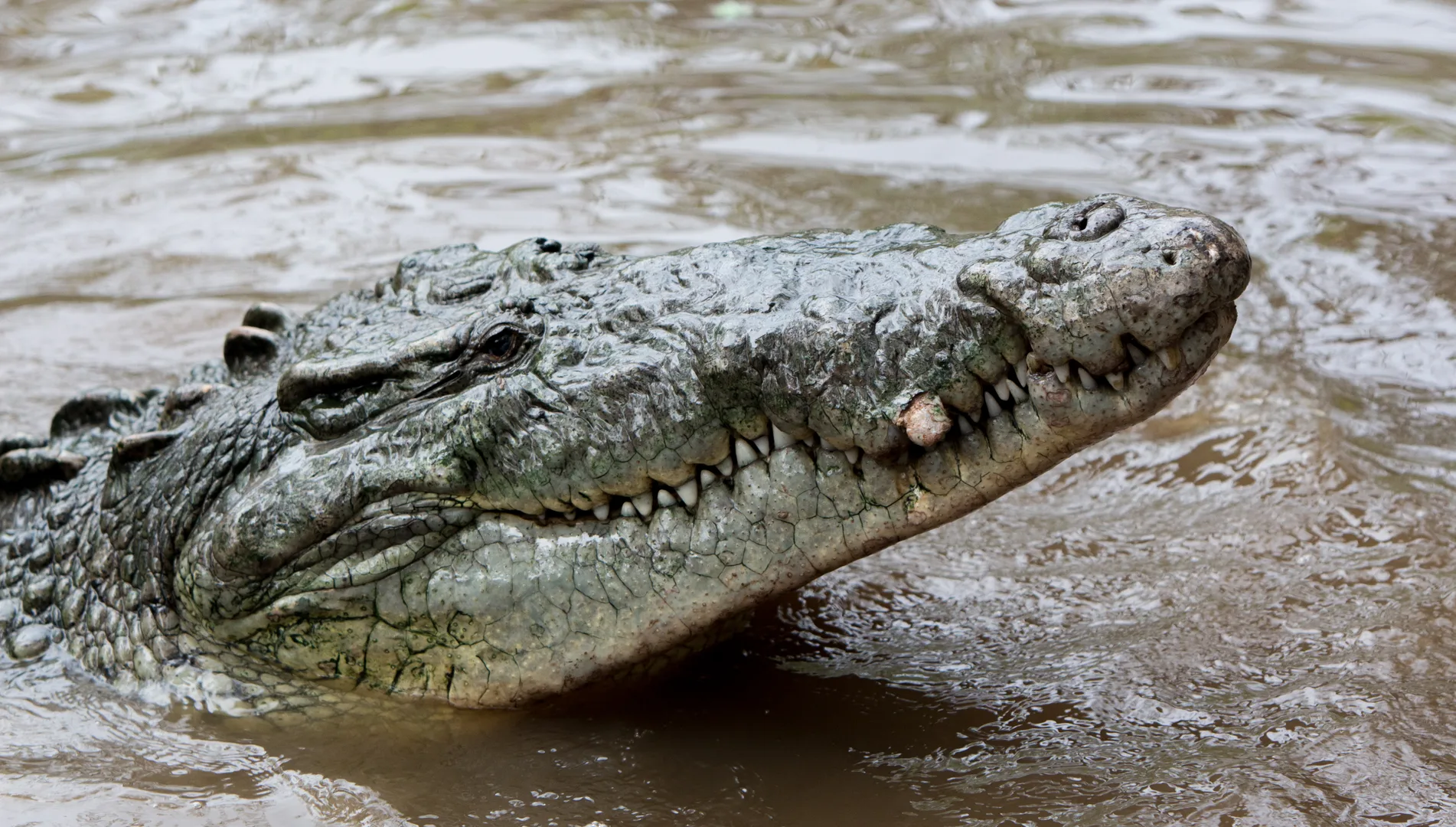
American crocodile in La Manzanilla, Jalisco, Mexico in its natural environment.
Field
notes
Eggs with no father
In 2018, keepers at a park in Costa Rica found 14 eggs in the enclosure of an 18-year-old female American crocodile, Crocodylus acutus. She was obtained at 2 years old and kept away from other crocodilians for her entire life. Seven of the eggs looked fertile. After three months of incubation the eggs had failed to hatch, and one held a fetus that could not have survived. Its DNA showed no contribution from a father. The scientists reported the first evidence of facultative parthenogenesis in a crocodilian. That unusual way of reproducing was already known in birds, lizards, snakes and elasmobranch fishes (sharks and rays).
No sex chromosomes Unlike every vertebrate previously documented reproducing this way, crocodilians lack sex chromosomes. Temperature controls whether an egg becomes a male or a female.
How big, how old
Hatchlings are about 23 centimeters long. Adults may grow to 4.5 meters or larger, and Animal Diversity Web gives an average length of 3.5 meters. The AnAge ageing database lists an average adult weight of 76.7 kilograms.
A male in captivity lived at least 47 years and could have been 65 or older. In a Florida capture study, the oldest crocodile recaptured was 22 years old. Early life is the dangerous part. In South Florida 25 percent of hatchlings survive their first year, but survival climbs to nearly 90 percent by age six.
A coast dweller that handles salt
Owing to its saltwater tolerance, the crocodile ranges from Florida, its northern limit, through the Greater Antilles, Mexico and Central America to northern South America. It also lives in freshwater rivers and lakes, but in Florida it is typically found in ponds, coves and creeks in mangrove swamps. One population lives in a hypersaline lake in the Dominican Republic.
Salt still has a cost. In a Florida study, crocodiles exposed to hypersaline water (above 40 on the salinity scale) in the dry season grew 13 percent slower after one year.
Jaws, stones and sunbathing
Adults eat fish, crabs, birds, turtles, snakes and small mammals. Young crocodiles feed chiefly on aquatic invertebrates and small fish. A crocodile grabs prey in its powerful jaws and swallows it whole. It also swallows small stones, which help grind up its food.
It often basks with its mouth open. Animal Diversity Web calls this gaping and says it helps regulate body temperature. The IUCN Red List rates the species Vulnerable.
Published
Traits
Intel
& FAQ
Guess
first
How big is a American Crocodile, really? Slide, lock in, and see what the sources say. Every answer is a figure from this page, quoted from where it came from.
Sources
- 01Crocodylus acutus. Animal Diversity Web, University of Michigan.
- 02AnAge entry for Crocodylus acutus. AnAge: The Animal Ageing and Longevity Database, Build 15, Human Ageing Genomic Resources.
- 03American Crocodile (Crocodylus acutus). U.S. Fish and Wildlife Service.
- 04American Crocodile, Crocodylus acutus. Florida Natural Areas Inventory, June 2001.
- 05Moller, Cherkiss & Mazzotti. The American Crocodile: A Story of Recovery. The Croc Docs.
- 06Booth et al. (2023). Discovery of facultative parthenogenesis in a new world crocodile. Biology Letters.
- 07Briggs-Gonzalez et al. (2021). American crocodiles (Crocodylus acutus) as restoration bioindicators in the Florida Everglades. PLOS ONE.
- 08Rainwater et al. (2022). Crocodylus acutus. The IUCN Red List of Threatened Species 2022: e.T5659A212805700.
What the sources say: 58 claims checked word for word against these sources →