Campos dos Goytacazes, Rio de Janeiro, Brazil
Field
notes
Dinner is mom
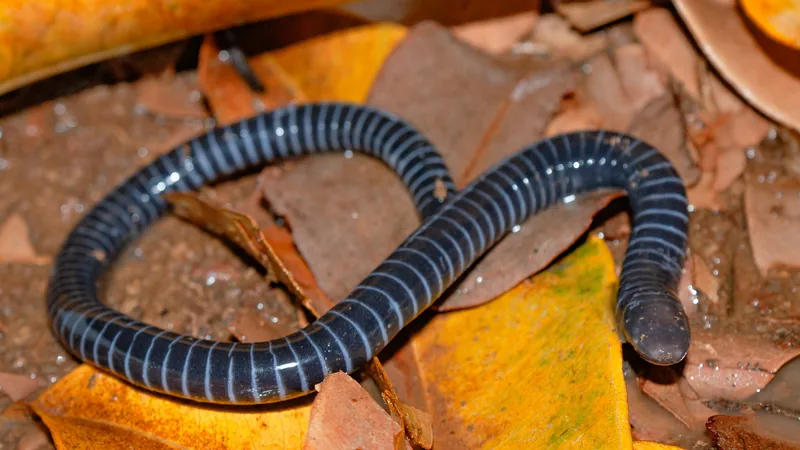
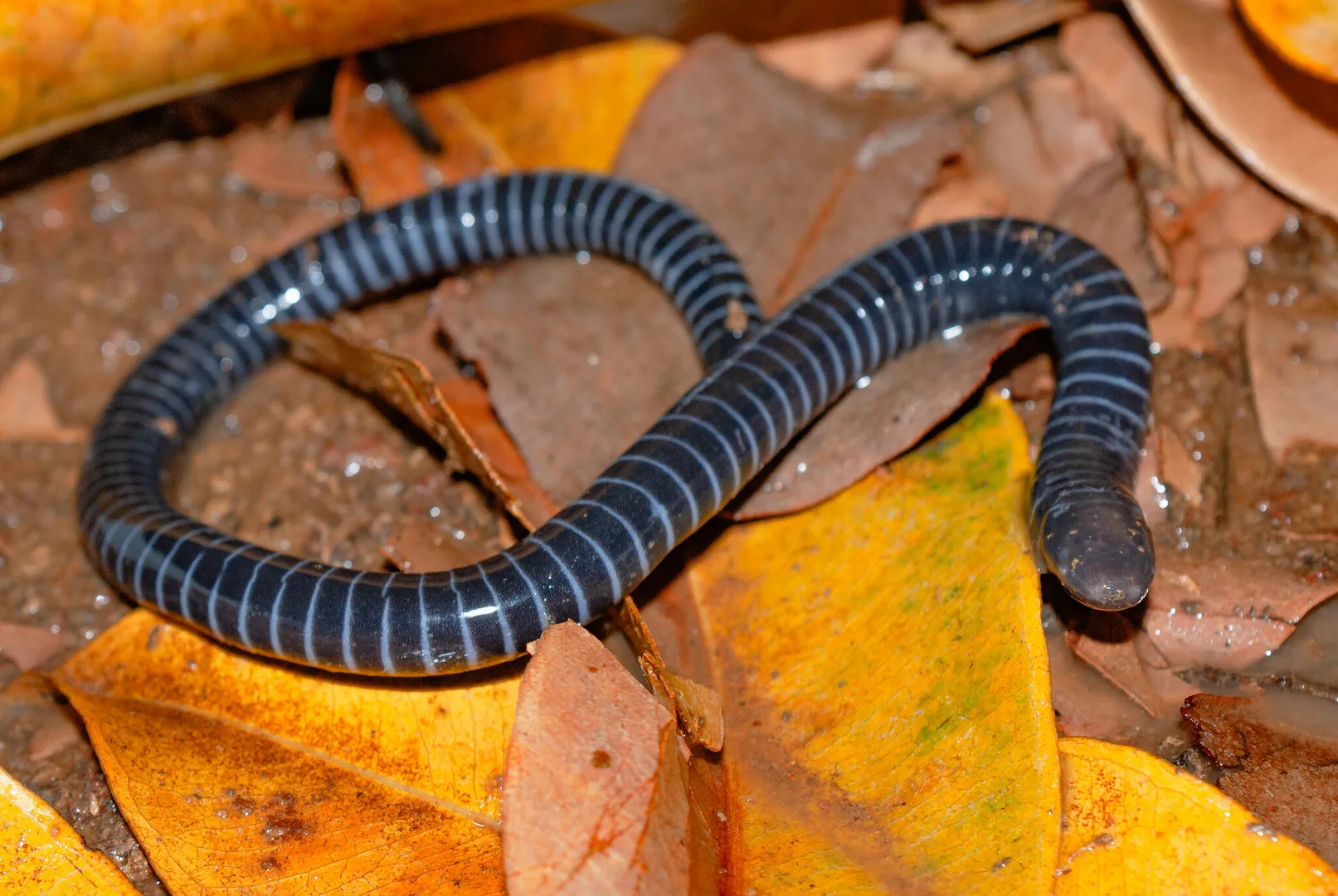
A ringed caecilian’s babies dine on their mother. The hatchlings are altricial, meaning helpless at birth, and they feed on her specially modified skin. Biologists call this maternal dermatophagy, which just means skin eating by offspring. Both sides are specialised: the mother’s skin changes, and the hatchlings carry “fetal” teeth in three rows on the lower jaw. Researchers think this kind of skin feeding has probably persisted in several caecilian lineages for more than 100 million years.
Milk from an egg-layer For about two months the young drink milk that the mother lets out through her vent, the opening at the rear of the body, apparently prompted by the babies touching her and making sounds. The milk is mostly lipids and carbohydrates.
In the studied population, pairs mate from late August to early October, and females lay eggs in November and December, at the peak of the rains. They hatch around the turn of the year. From laying to independent young, the mother’s care lasts about three months.
A living drill
Eight adults collected in Bahia, Brazil measured 375 to 452 millimetres, averaging 410. A species description gives a body 17 to 26 times longer than wide, with 78 to 98 ring-shaped grooves called annuli.
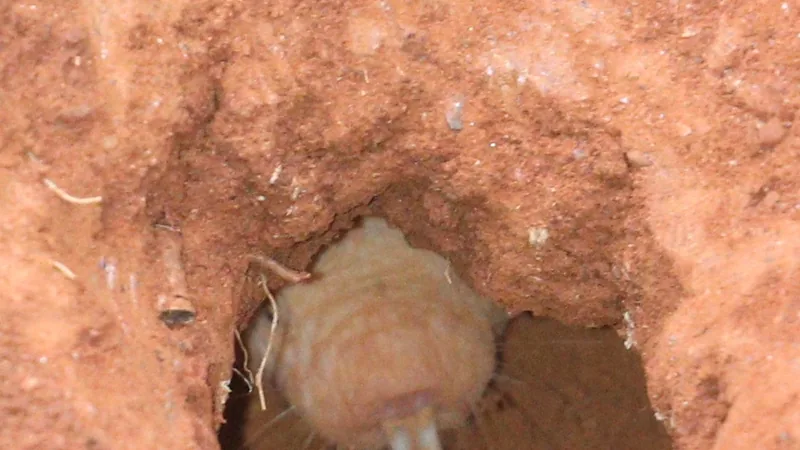
It lives underground, and its funnel-shaped head forces a way through the soil. In the head region, enlarged mucous glands, which make slippery goo, sit inside honeycomb walls of collagen, and that collagen anchors the skin into tiny pits in the skull bones. The authors suggest the glands, together with the head’s shape, lubricate the body and help it push into soil. Its tunnels are always coated in a shiny, slippery film.
Poison and a huge range
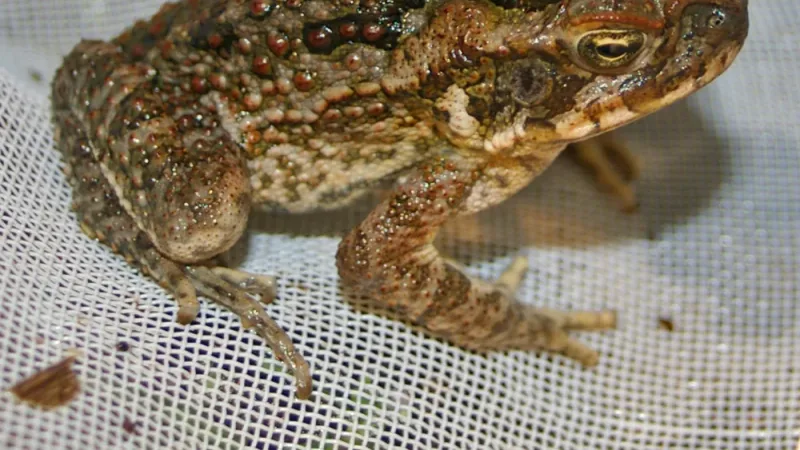
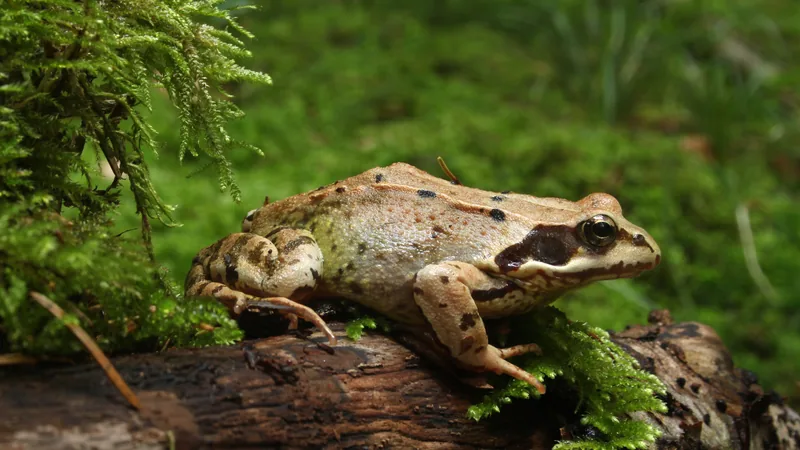
The poison is packed into the rear end. Near the vent the poison glands are much enlarged, about 2.2 millimetres tall, and fill practically the whole dermis, the skin layer under the surface. The blunt rear end may serve in chemical defence, or by blocking a tunnel against invaders. Earlier experiments showed the skin secretions, from the head and from the rear, were toxic to a toad, a frog, a rat and even the caecilian itself.
A 2011 taxonomic study called it the caecilian with the largest reported distribution: South America east of the Andes. In Brazil it turns up in the Caatinga, Atlantic forest, Cerrado and Amazonia. Its moisture needs are lower than those of many other caecilians, and it has been found under rotting oil palm trunks even in grazed pastures. In captivity, researchers fed it weekly on earthworms and ground beef or chicken. The IUCN Red List rates it Least Concern.
Published
Traits
Intel
& FAQ
Guess
first
How big is a Ringed Caecilian, really? Slide, lock in, and see what the sources say. Every answer is a figure from this page, quoted from where it came from.
Sources
- 01Siphonops annulatus. The IUCN Red List of Threatened Species 2023: e.T59593A180649042.
- 02Wilkinson et al. (2008). One hundred million years of skin feeding? Extended parental care in a Neotropical caecilian (Amphibia: Gymnophiona). Biology Letters.
- 03Mailho-Fontana et al. (2024). Milk provisioning in oviparous caecilian amphibians. Science.
- 04Jared et al. (2018). Life history and reproduction of the neotropical caecilian Siphonops annulatus (Amphibia, Gymnophiona, Siphonopidae), with special emphasis on parental care. Acta Zoologica.
- 05Jared et al. (2018). Skin gland concentrations adapted to different evolutionary pressures in the head and posterior regions of the caecilian Siphonops annulatus. Scientific Reports.
- 06Mauricio et al. (2021). Morphology of the Cutaneous Poison and Mucous Glands in Amphibians with Particular Emphasis on Caecilians (Siphonops annulatus). Toxins.
- 07Siphonops annulatus Mikan 1820 (taxonomic treatment from Maciel and Hoogmoed 2011, Zootaxa 2984). Biodiversity Literature Repository, Plazi.
What the sources say: 49 claims checked word for word against these sources →