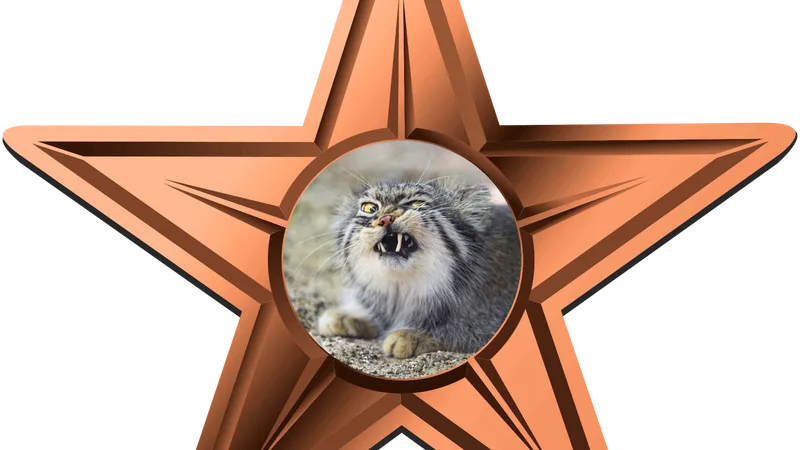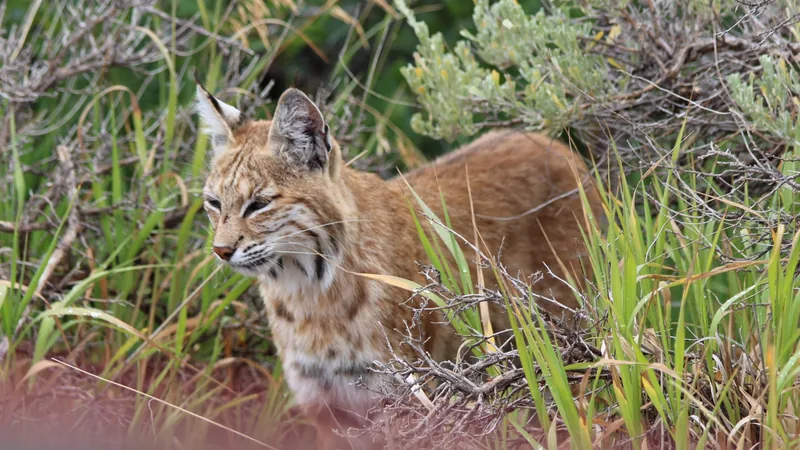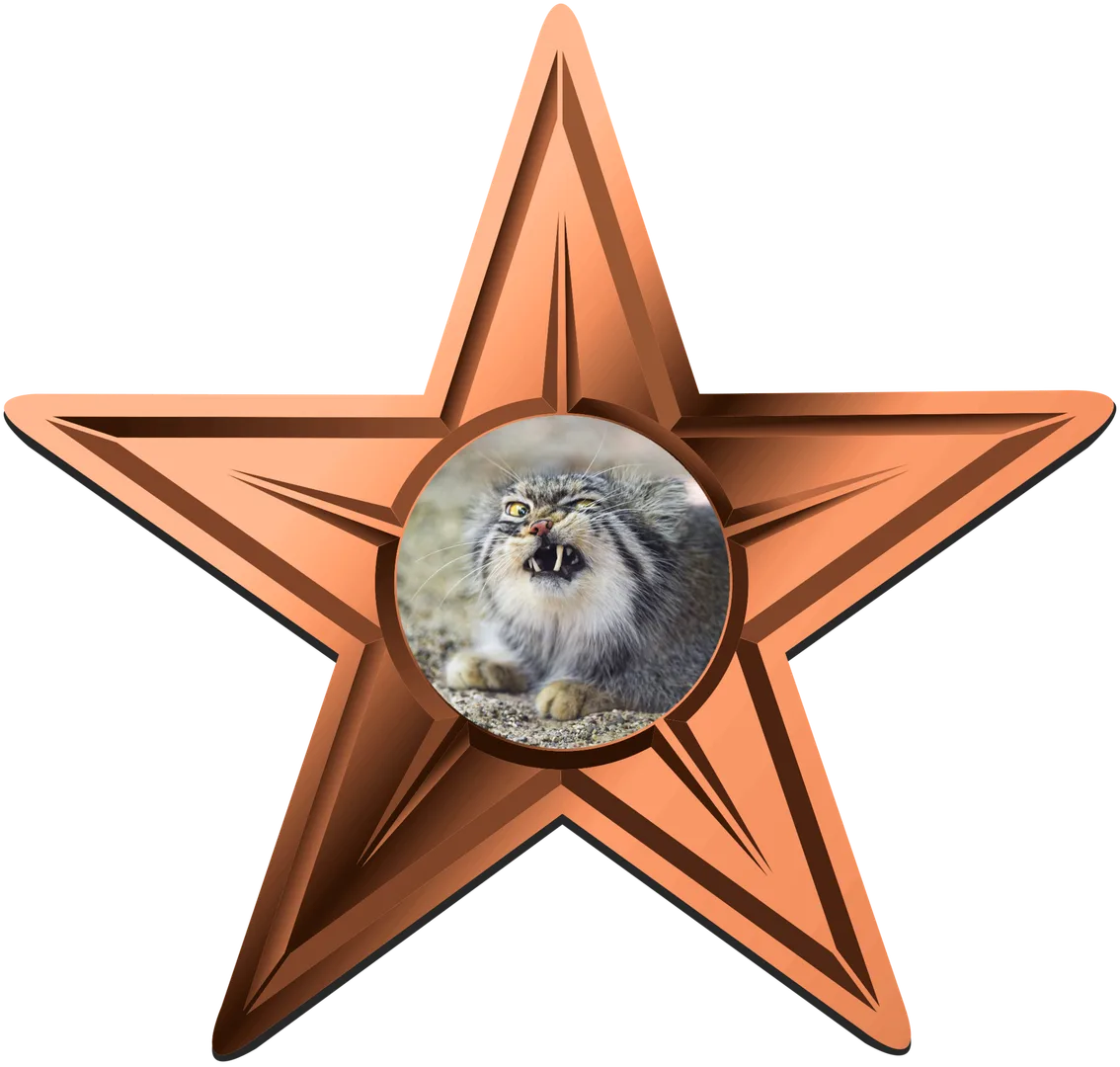
Close-up of a Pallas's cat at Edinburgh Zoo
Field
notes
A Face Built to Disappear
The Pallas’s cat, or manul (Otocolobus manul), is a small wild cat native to the mountain grasslands and shrubby steppes of Central Asia. Its body is 50 to 65 cm long and it weighs 2 to 5 kg, with a thick, bushy tail about half the length of its head and body combined. Under all that fur, it’s actually about the size of a house cat.
Its head is flat and its short ears sit low on either side, so it can peer over boulders without being seen while stalking prey where there is very little cover. Its eyes are unusual too: instead of narrowing to vertical slits like most cats’, a manul’s pupils contract into small circles.
Rocks, Pikas and Old Marmot Burrows
It ranges across Central Asia from western Iran to western China, and its core populations are in Mongolia and China. A 2023 genome study also counts the Caucasus Mountains and the Tibetan Plateau within its wide range. It keeps to rocky steppes and stony outcrops with sparse shrubs. Where it lives in Russia, temperatures range from 38°C to -43°C. It is poorly suited to moving through deep snow, so it only lives where winter snow cover stays under 10 cm. It can’t dig its own burrow either, so it relies heavily on abandoned marmot burrows for winter dens, and on rock crevices and caves in summer.
Most of its diet is pikas and small rodents. A study of 146 scat samples found that the small mammals it ate most often were Daurian pikas, Mongolian gerbils and mountain voles, with small amounts of perching birds, carrion and insects too. In winter, when prey is harder to find, it switches to a wider range of food. It hunts by stalking, by flushing prey out of undergrowth, or by waiting outside a burrow for prey to come out. It may be a poor runner, so outrunning a fox, wolf or large bird of prey is unlikely; instead, a threatened cat freezes low against rock or vegetation, or bolts for a rock crevice or den.
In the wild it can live 8 to 10 years. One captive Pallas’s cat lived to at least 15.9 years.
A Genus of One
The manul is the only living species in its genus, Otocolobus. Where it sits on the cat family tree was still an open question in 2023: one genetic study placed it beside the group that includes the leopard cat and fishing cat, while another put it nearer the genus Felis, which includes the house cat. Its large eyes and squashed face give it a distinctly grumpy look, and the BBC documentary series Frozen Planet II called it “the grumpiest cat in the world.”
The Toxoplasmosis Problem
In captivity, Pallas’s cats are highly susceptible to the parasite Toxoplasma gondii. In a 2005 study, only 2 of 15 wild Pallas’s cats caught in Mongolia had antibodies to it, which suggested that wild cats have little chance of meeting the parasite in their natural habitat and usually aren’t infected until they are brought into captivity.
About 60% of Pallas’s cat kittens in North American zoos died as newborns, mostly from toxoplasmosis, the 2005 study reported. Why the species was so susceptible was unknown.
That held back the zoos’ efforts to build a genetically viable captive population. By 2023, a genome study reported that a successful captive breeding program had made manuls widespread in zoos around the world.
Published Updated
Traits
Intel
& FAQ
Guess
first
How big is a Pallas's Cat (Manul), really? Slide, lock in, and see what the sources say. Every answer is a figure from this page, quoted from where it came from.
Sources
- 01Felis manul (Pallas' cat). Animal Diversity Web, University of Michigan, 2013.
- 02Pallas's Cat. Elmwood Park Zoo.
- 03Pallas's Cat. Felidae Conservation Fund, 2021.
- 04Felis manul. AnAge: The Animal Ageing and Longevity Database, Human Ageing Genomic Resources.
- 05Pallas' Cat. Columbus Zoo and Aquarium.
- 06Brown et al. (2005). EXPLORING THE ECOLOGIC BASIS FOR EXTREME SUSCEPTIBILITY OF PALLAS' CATS (OTOCOLOBUS MANUL) TO FATAL TOXOPLASMOSIS. Journal of Wildlife Diseases.
- 07Flack et al. (2023). Chromosome-level, nanopore-only genome and allele-specific DNA methylation of Pallas's cat, Otocolobus manul. NAR Genomics and Bioinformatics.
- 08Ross et al. (2020). Otocolobus manul. The IUCN Red List of Threatened Species 2020: e.T15640A180145377.
What the sources say: 48 claims checked word for word against these sources →