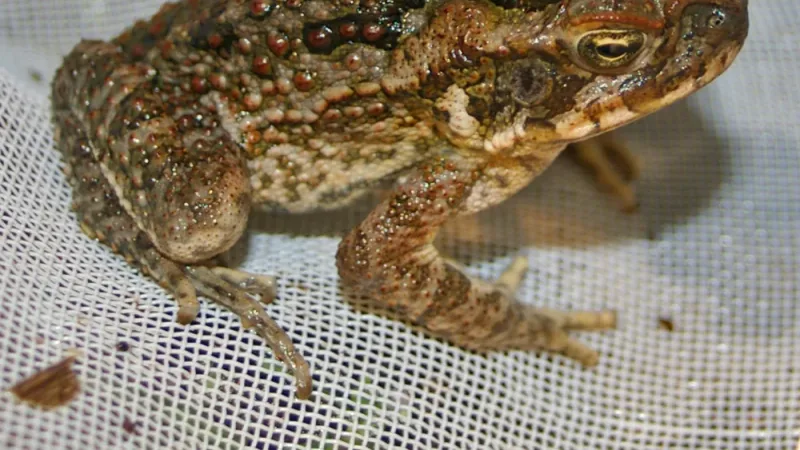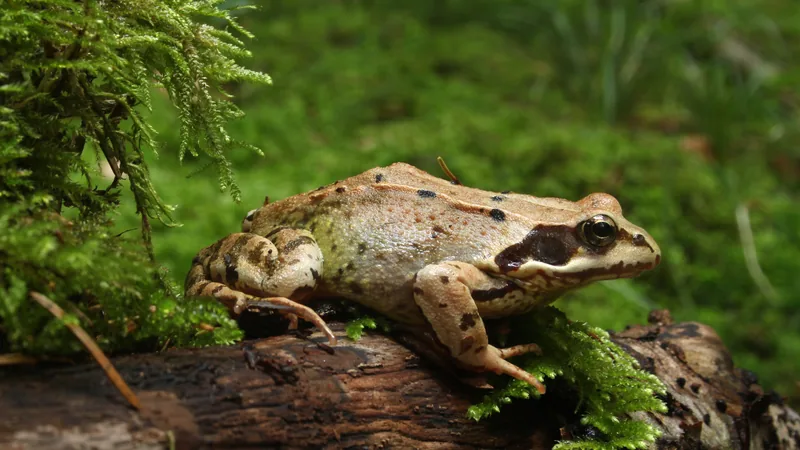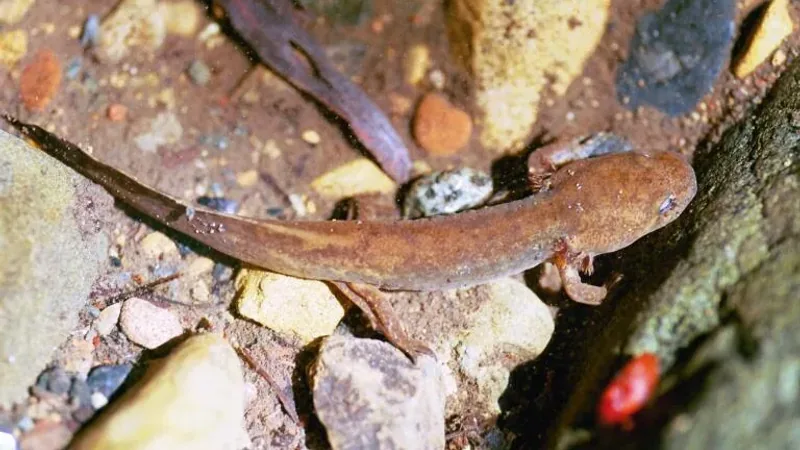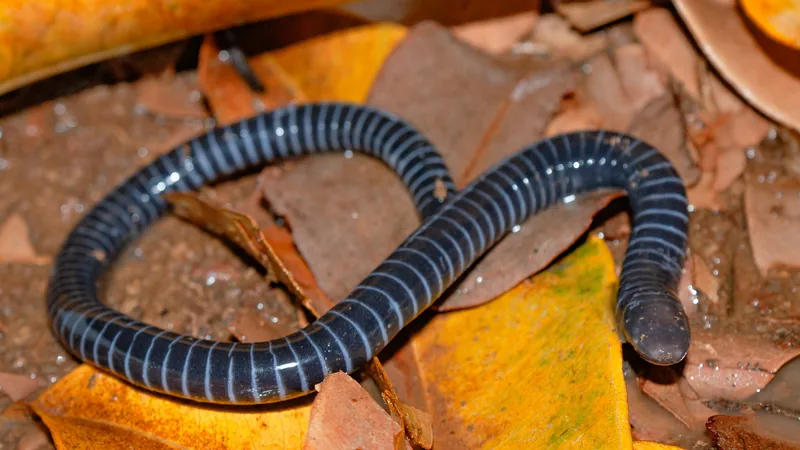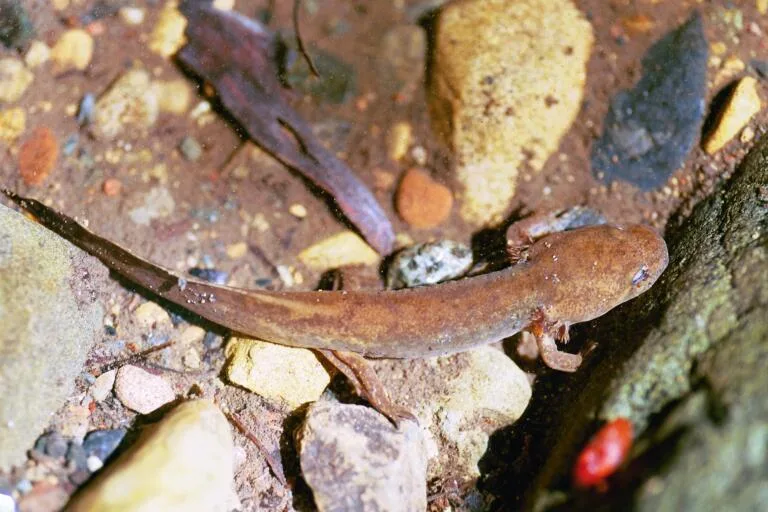
Dicamptodon tenebrosus, the coastal giant salamander
Field
notes
The Biggest Land Salamander in North America
Along the coast from northern California through Oregon and Washington into southwestern British Columbia lives the biggest land salamander in North America. The Pacific Giant Salamander (Dicamptodon tenebrosus), also called the coastal giant salamander, reaches up to 6.7 inches (17 cm) from snout to vent and 13.4 inches (34 cm) nose to tail, and adults weigh between 22 and 114 grams. By day its stream forms usually hide under rocks and woody debris in cold, low-silt mountain streams, and in rainy spells it can turn up beneath leaf litter in the moist conifer forest nearby. It lives from sea level up to about 1,830 meters and is mostly active at night.
A Bark, Then a Bite
Grab one from under a rotting log, and it will not just squirm. Disturbed salamanders arch their backs, sometimes thrash their tails, and let out an audible growl or bark. They can also secrete a noxious substance from the tail to ward off predators, and adults will also head-butt and bite viciously. Weasels, river otters, water shrews and garter snakes are among its documented predators.
Built to Ambush
Eggs take up to seven months to hatch into larvae about 3 centimeters long, which live off a large yolk sac for two to four months, then start hunting for themselves. Larvae spend 18 months to two years in the stream, working through insects, amphipods, mollusks and crayfish, with larger larvae sometimes adding fish and other salamanders to the menu before some of them transform. The species hunts by sitting and waiting, then lunging a short distance, and large adults on land can take mice, shrews and even snakes.
Gills for Life
Not every coastal giant salamander bothers finishing the job. In British Columbia, nearly all of them keep their external gills for life instead of completing metamorphosis, yet they still become sexually mature. Even these gilled adults sometimes move out of the stream in rainy, wet weather. Whichever body plan it ends up with, maturity comes at around 4.5 inches (11 cm) from snout to vent and takes five or six years.
Eaten by Its Own Kind The species is one of its own predators. Cannibalism among coastal giant salamanders is well documented in males, and it may be why a female stands guard over her eggs for six or seven months.
Published Updated
Traits
Intel
& FAQ
Guess
first
How big is a Pacific Giant Salamander, really? Slide, lock in, and see what the sources say. Every answer is a figure from this page, quoted from where it came from.
Sources
- 01Dicamptodon tenebrosus (Coastal Giant Salamander). Animal Diversity Web, University of Michigan.
- 02Pacific giant salamander (Dicamptodon tenebrosus). Washington Department of Fish and Wildlife.
- 03Dicamptodon tenebrosus. The IUCN Red List of Threatened Species 2022: e.T59081A196338656.
What the sources say: 50 claims checked word for word against these sources →