2013-12-06 in Istanbul
Field
notes
The jelly that recycles its own swimming
A moon jellyfish swims in cycles: a power stroke, then a recovery stroke. The clever part comes as the bell refills. A vortex ring of spinning water underneath it creates positive pressure, extra thrust the jellyfish gets passively. Researchers measured the payoff: it travels 30% further each swimming cycle, which cuts the energy its swimming muscles need.
Weigh energy against distance and the moon jellyfish has a cost of transport lower than other animals’, which the researchers say makes it one of the most energetically efficient swimmers on the planet. Dye tests on wild jellies showed a second payoff. The swirls from each cycle merge and send water both toward the feeding surfaces under the bell and downstream.
A bell, arms and stinging cells
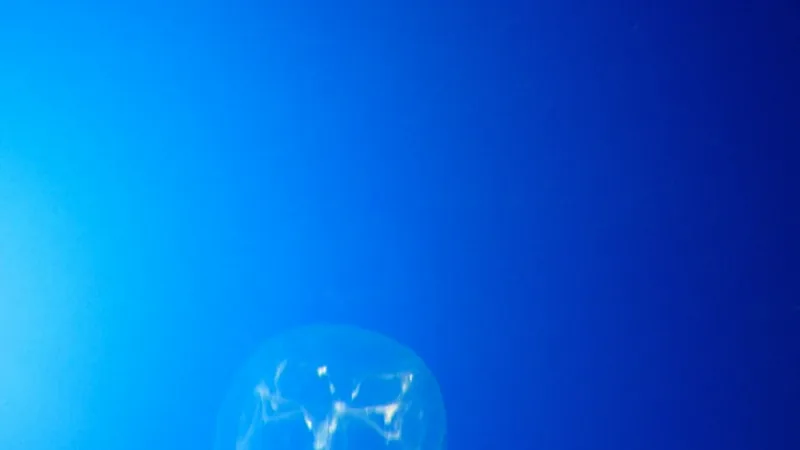
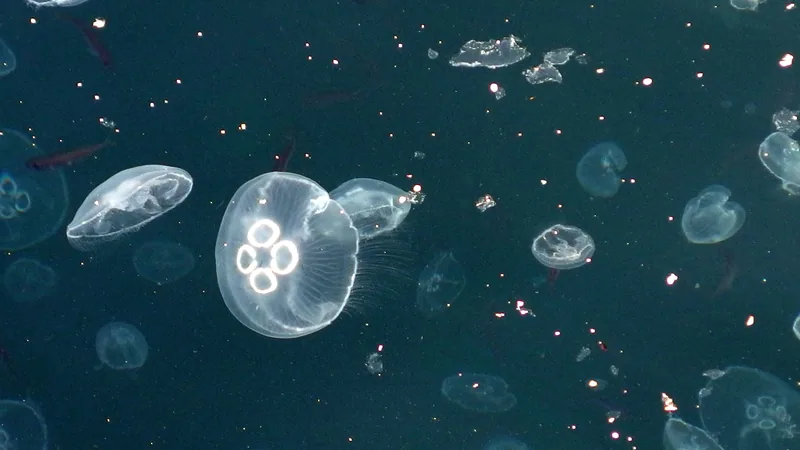
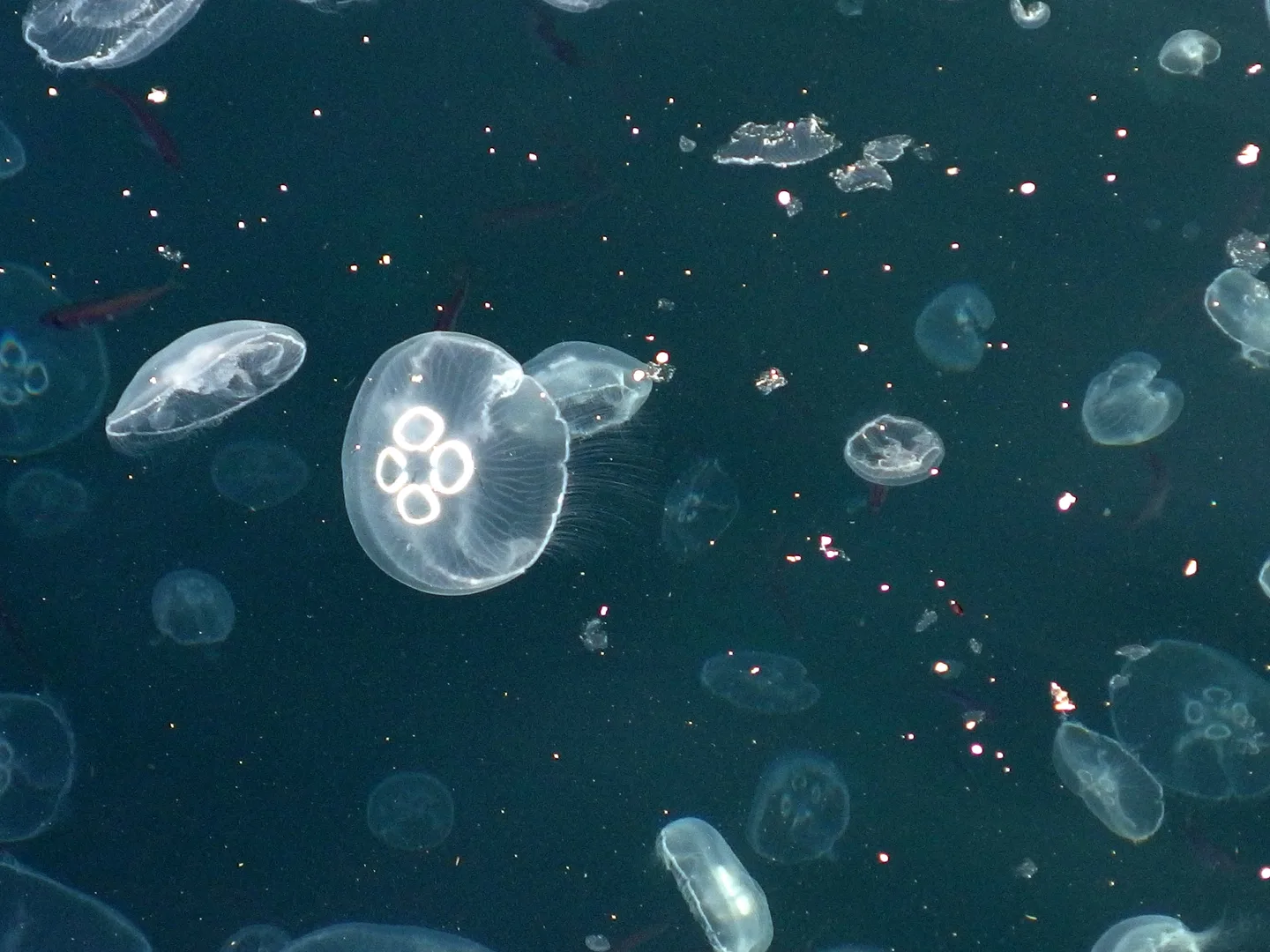
The bell is see-through and 10 to 35 cm across. Short tentacles, 1 to 5 cm long, fringe the edge. Four oral arms hang below it, and they carry stinging cells called nematocysts. Inside the bell sits a second dome with blue veins running through it, shaped like horseshoe rings: those are its gonads, the reproductive organs.
Moon jellies are carnivores known to eat most creatures small enough to get tangled on the bell or tentacles: plankton, copepods (tiny shrimp-like crustaceans), mollusks, fish eggs and smaller jellyfish. The oral arms then move the catch toward the stomach under the bell.
Sting science In a lab comparison of four jellyfish venoms, moon jellyfish venom damaged cultured cells less than two of its relatives’ venoms did and more than the third.
It does sting people. Animal Diversity Web lists stings to swimmers among the ways it affects tourism.
From larva to bell
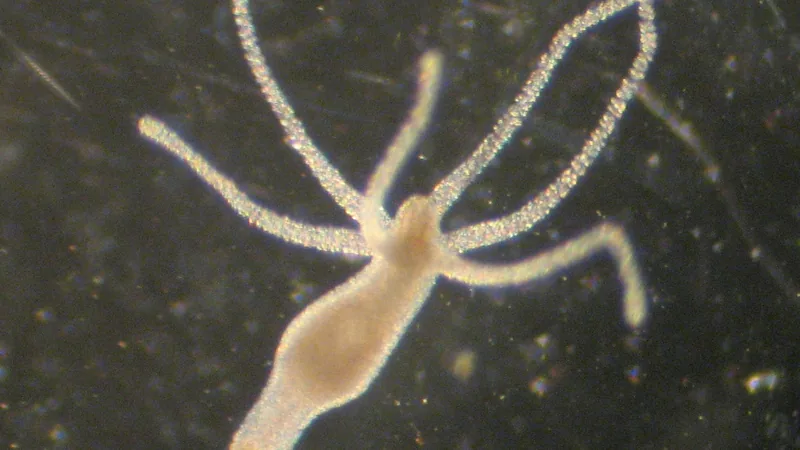
A moon jellyfish does not start as a jellyfish. Fertilized eggs become larvae called planulae, which spend 10 days on average swimming with tiny hairs called cilia before they attach to a hard surface and turn into polyps. A polyp stays fixed in place and buds off a number of disc-shaped segments. Each disc breaks free as a floating ephyra, which grows into a young medusa. Under suitable conditions the climb from ephyra to mature adult takes 4 to 6 months, and sexual maturity arrives somewhere between 4 and 12 months. In British seas the adult is unlikely to live past 6 months in the wild, and a little over a year in captivity.
Moon jellyfish live in coastal waters of three of the four main oceans, all but the Arctic, and they can handle brackish water, which is part-salt, part-fresh. The IUCN Red List has not evaluated the species.
One name, many lookalikes
Not long ago scientists recognized just two moon jelly species, and one of them, Aurelia aurita, was treated as one coastal jelly found worldwide. DNA changed that. A 2021 study, working mostly from genetic data, recognized 28 species in the genus, and showed that their body features overlap between jellies from very distant coasts. Every other source on this page was published before that split, under the old, broad name, so its figures describe moon jellies in that wide sense rather than one exact species.
Published
Traits
Intel
& FAQ
Sources
- 01Aurelia aurita (moon jellyfish). Animal Diversity Web, University of Michigan.
- 02Gemmell et al. (2013). Passive energy recapture in jellyfish contributes to propulsive advantage over other metazoans. Proceedings of the National Academy of Sciences.
- 03Dabiri et al. (2005). Flow patterns generated by oblate medusan jellyfish: field measurements and laboratory analyses. Journal of Experimental Biology.
- 04Lee et al. (2011). Scyphozoan jellyfish venom metalloproteinases and their role in the cytotoxicity. Toxicon.
- 05Lawley et al. (2021). The importance of molecular characters when morphological variability hinders diagnosability: systematics of the moon jellyfish genus Aurelia (Cnidaria: Scyphozoa). PeerJ.
- 06Moon jellyfish. Kent Wildlife Trust.
What the sources say: 40 claims checked word for word against these sources →