Komodo Dragon (Varanus komodoensis)
Field
notes
Armored Island Giant
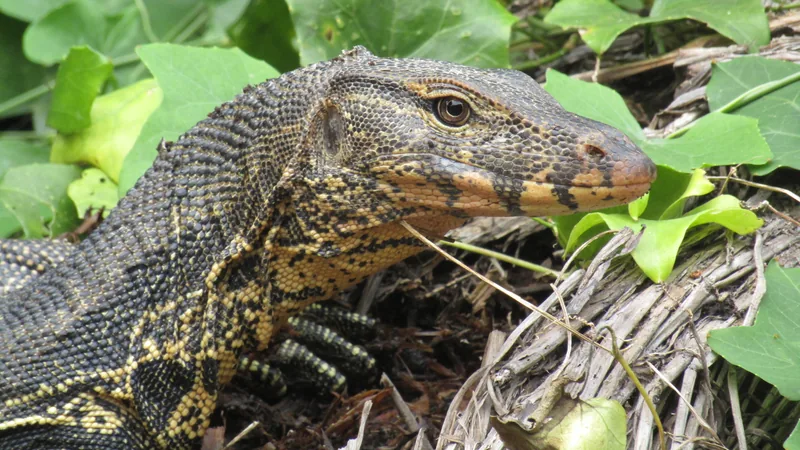
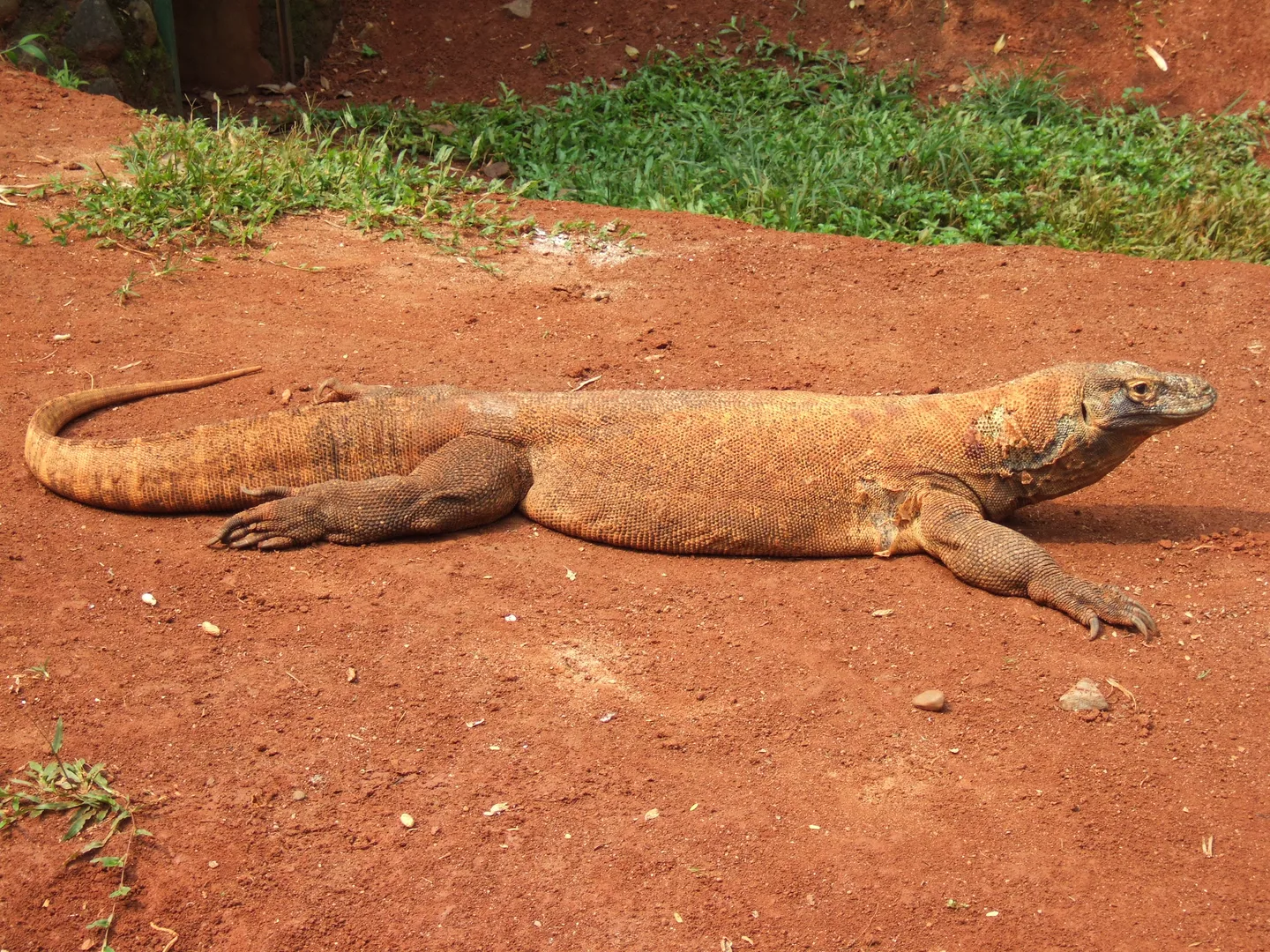
The Komodo Dragon (Varanus komodoensis) is the largest living lizard on Earth. Adults grow 6 to 10 feet long and weigh 154 to 300 pounds, and the heaviest one verified weighed 366 pounds. Its skin is reinforced with bony plates called osteoderms, often compared to chain mail, which protect it from scratches and bites. It is built like an armored medieval tank.
Iron on the edges A 2024 study found that Komodo dragon teeth carry a microscopic iron-rich coating along their serrations and tips, which may help the cutting edges resist wear between tooth replacements.
Venom That Prevents Blood Clotting
Contrary to the popular idea that Komodo dragons rely on dirty mouth bacteria, they have many-lobed venom glands in their lower jaw. The venom carries toxic proteins that stop blood from clotting and cause a drop in blood pressure, which can send the victim into collapse and shock.
Published Updated
Traits
Intel
& FAQ
Guess
first
How big is a Komodo Dragon, really? Slide, lock in, and see what the sources say. Every answer is a figure from this page, quoted from where it came from.
Sources
- 01Komodo Dragon. San Diego Zoo Wildlife Alliance.
- 02Komodo dragon. Smithsonian's National Zoo and Conservation Biology Institute.
- 03Komodo Dragon (Varanus komodoensis) Fact Sheet: Physical Characteristics. San Diego Zoo Wildlife Alliance Library.
- 04Varanus komodoensis. Animal Diversity Web, University of Michigan.
- 05Fry et al. (2009). A central role for venom in predation by Varanus komodoensis (Komodo Dragon) and the extinct giant Varanus (Megalania) priscus. Proceedings of the National Academy of Sciences.
- 06Janeczek et al. (2025). Histological and histochemical characterisation of the salivary glands of the palatine fold and the mandibular venom gland of the Komodo dragon (Varanus komodoensis). Veterinary Research Communications.
- 07D'Amore et al. (2011). The Effects of Biting and Pulling on the Forces Generated during Feeding in the Komodo Dragon (Varanus komodoensis). PLoS ONE.
- 08LeBlanc et al. (2024). Iron-coated Komodo dragon teeth and the complex dental enamel of carnivorous reptiles. Nature Ecology & Evolution.
What the sources say: 40 claims checked word for word against these sources →