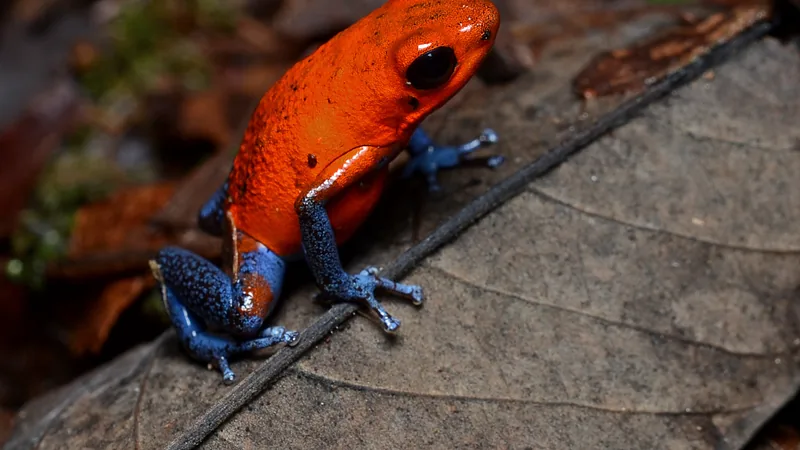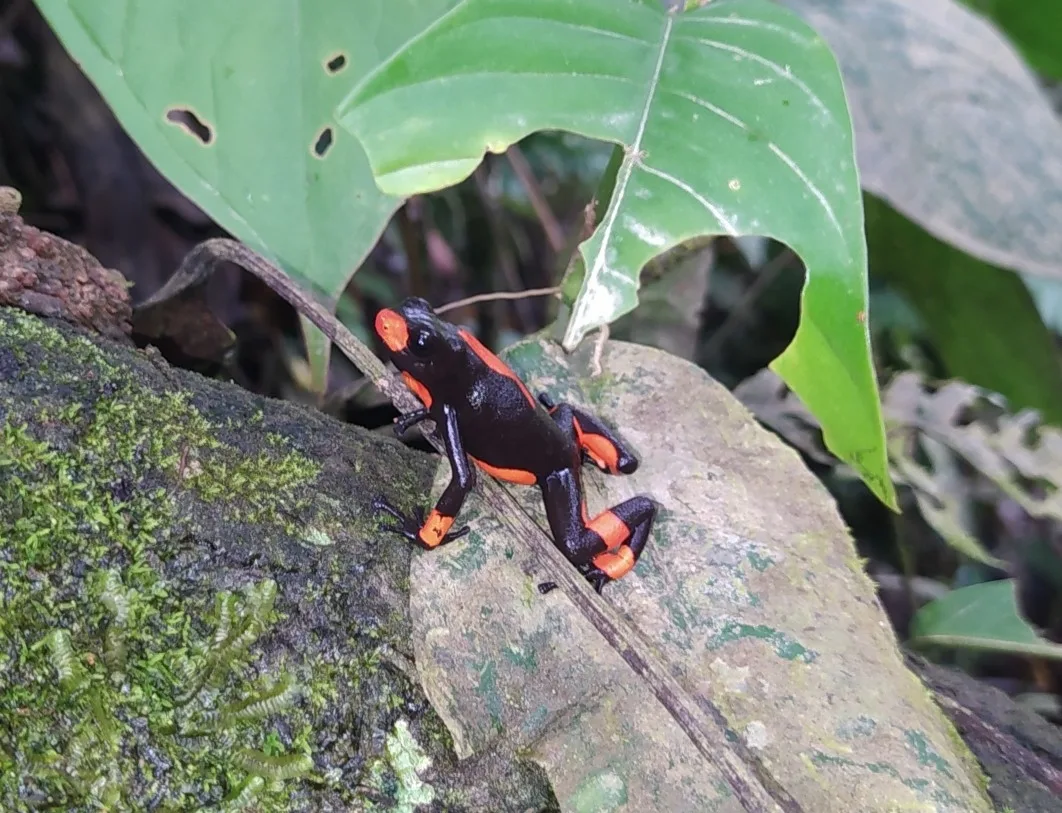
Harlequin Poison Frog (Oophaga histrionica), Colombia
Field
notes
A Living Warning Sign
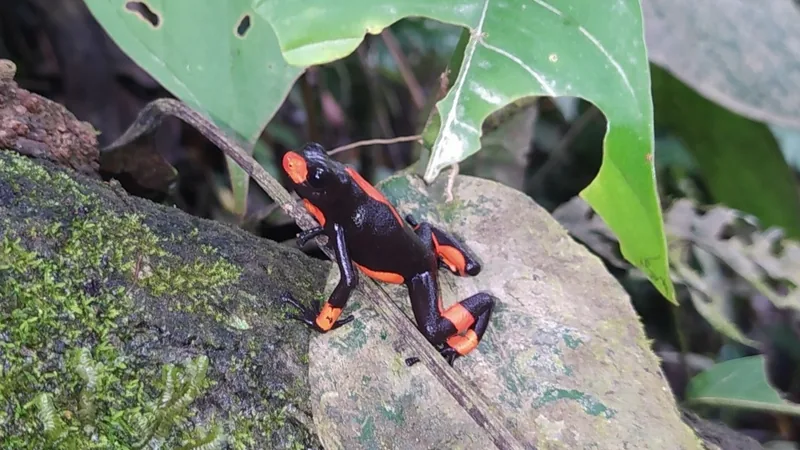
The Harlequin Poison Frog (Oophaga histrionica) does not try to hide: it forages by day, relying on its warning colours. It measures only 2.5 to 3.8 centimetres long, and the AnAge ageing database records a maximum lifespan of 9.1 years in captivity. First described in 1845 as a bright orange frog with black web markings all over its body, it turned out to vary far more than that. Animal Diversity Web’s 2001 account lists base colours of orange, yellow, red, white and powder-blue, with some colour forms varying from valley to valley. The black webbing ranges from thin stripes to speckled, broken lines to an all-black frog with a few coloured spots. The same account says the bright markings probably act as a warning to potential predators.
Borrowed Poison
The frog does not make its toxin from scratch. Animal Diversity Web says it collects the toxin from its prey, mainly ants, termites, small beetles and other small arthropods in the leaf litter, and deposits it in its skin. The result is a highly toxic poison capable of repelling or even killing small predators, and potentially dangerous to people who handle the frog.
The “poison dart frog” name is borrowed too. Poison frogs are often called that because the Chocó people of western Colombia tip blowgun darts with frog toxin, but San Diego Zoo Wildlife Alliance names one species as the frog they use, the golden poison frog, and says scientists know of only three frog species used for darts.
A Jammed Nerve Signal In poison dart frogs, Animal Diversity Web says, the skin toxin blocks nerve signals at the acetylcholine receptor of the neuromuscular junction, the switch nerves use to fire a muscle.
A Mother’s Borrowed Nursery
Breeding runs through the rainy season. A male calls from a perch with a trilling buzz to draw in a female, and once paired, she lays her eggs on the surface of a leaf while he follows behind and fertilises them. She stays by the clutch to guard it. About ten days later, the tadpoles break free of the jelly-like egg mass and swim onto her back using their tails, and she carries them one at a time to a separate pocket of water, usually pooled in a bromeliad’s leaf axils. The tadpoles are obligate egg feeders: she returns every other day to lay infertile eggs in the water for them to eat. After three months of metamorphosis, the young frog climbs out of the bromeliad to start life on land.
One Frog, At Least Five
Animal Diversity Web’s 2001 account placed the harlequin poison frog in rainforest from western Ecuador north through Colombia’s Chocó region, but that single-species picture turned out to be too simple. A 2018 study combining genetic, morphological and ecological data across the histrionica complex found at least five species inside it, three of them new to science, some in small isolated populations outside any protected area. Its authors wrote that some of these species should be considered among the most vulnerable frogs in the Neotropics. The IUCN lists Oophaga histrionica itself as Critically Endangered, assessed in 2019.
Published Updated
Traits
Intel
& FAQ
Guess
first
How big is a Harlequin Poison Frog, really? Slide, lock in, and see what the sources say. Every answer is a figure from this page, quoted from where it came from.
Sources
- 01Oophaga histrionica. Animal Diversity Web, University of Michigan.
- 02Poison Frog. San Diego Zoo Wildlife Alliance Animals and Plants.
- 03Oophaga histrionica (Berthold, 1845). Integrated Taxonomic Information System (ITIS).
- 04AnAge entry for Oophaga histrionica. AnAge: The Animal Ageing and Longevity Database, Human Ageing Genomic Resources.
- 05Posso-Terranova & Andrés (2018). Multivariate species boundaries and conservation of harlequin poison frogs. Molecular Ecology.
- 06Oophaga histrionica. The IUCN Red List of Threatened Species 2019: e.T144231367A144443857.
What the sources say: 45 claims checked word for word against these sources →