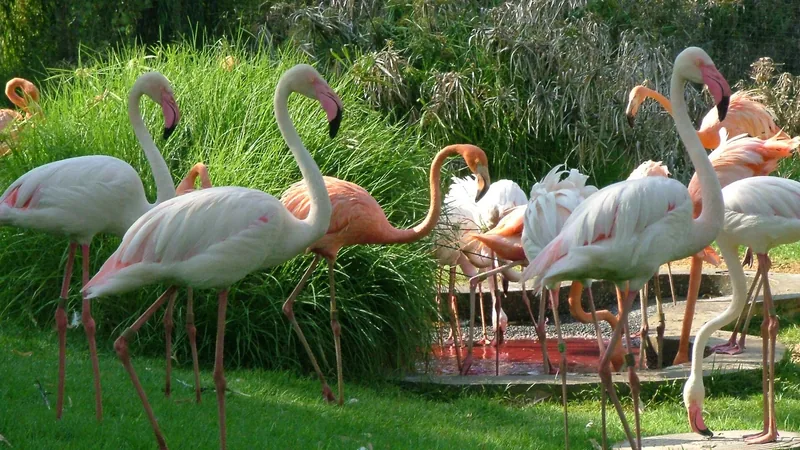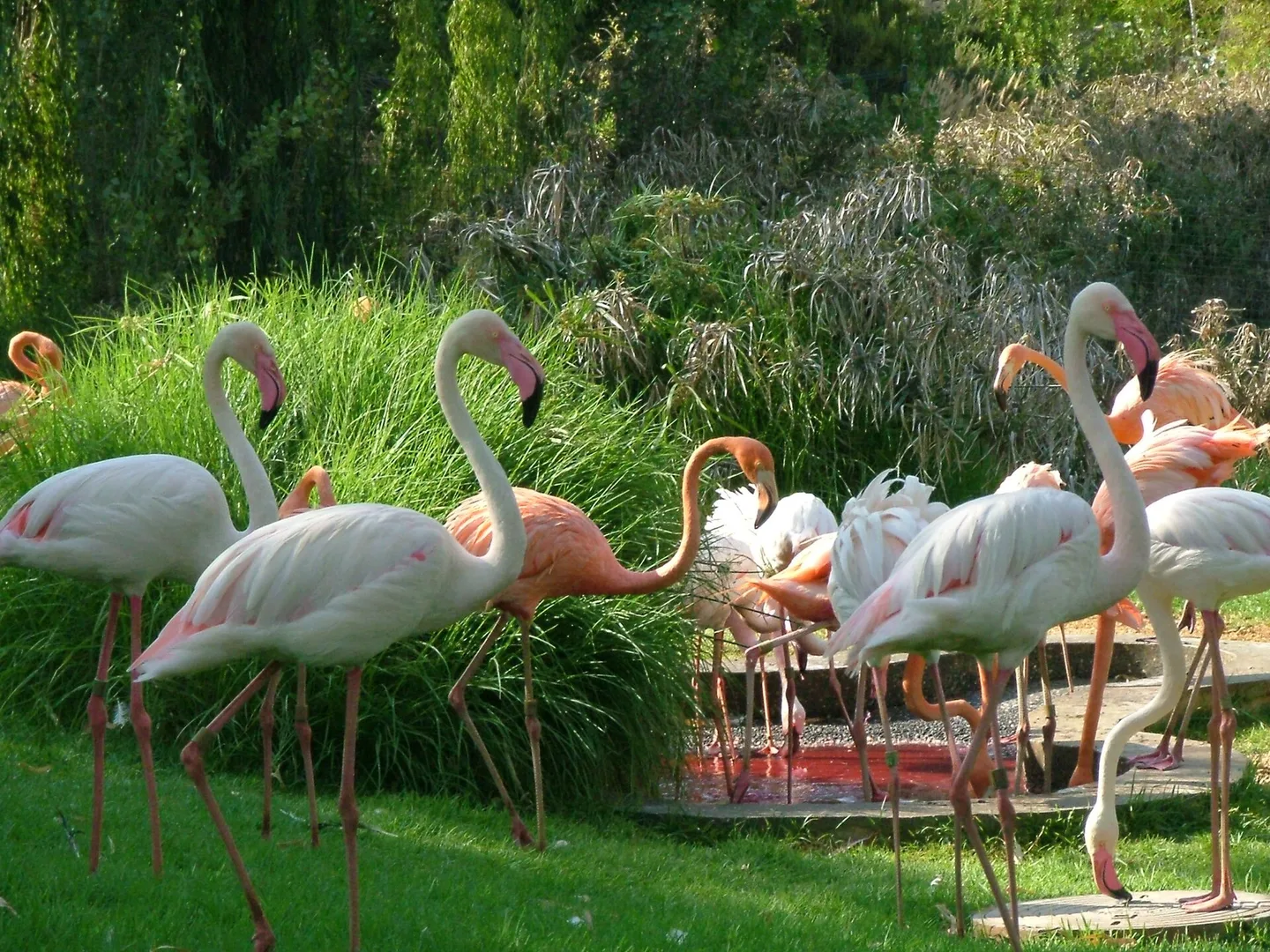
Greater flamingo (Phoenicopterus roseus) in flight in the Camargue, France
Field
notes
At Home in Salty, Alkaline Water
The Greater Flamingo (Phoenicopterus roseus) is the tallest and heaviest of the world’s six flamingo species: adults stand 3.9 to 4.7 feet (120 to 145 centimeters) tall and weigh 4.6 to 9 pounds (2.1 to 4.1 kilograms). Flamingos live 20 to 30 years in the wild, and a zoo bird can go much longer: one wild-born male greater flamingo was estimated at 58.8 years old and was still alive at London Zoo in 2020. The species ranges from West Africa and parts of Europe through the Middle East to South and Southwest Asia. It mainly lives in the shallow water of lagoons, lakes, estuaries, and muddy beaches, where the water is very salty or extremely alkaline (the chemical opposite of acidic), with a pH of up to 11.
Because of the shape of its bill, a greater flamingo has to feed with its head upside down in the water. Flamingos suck water and mud in at the front of the bill, then pump it out at the sides, where plates called lamellae act like tiny filters. The greater flamingo’s catch includes algae, brine shrimp, and chironomid (“lake fly”) larvae.
The One-Leg Mystery Scientists aren’t sure why flamingos stand on one leg. One idea is that tucking the free leg against the body cuts heat loss, but the habit also shows up in hot climates. Another idea is simpler: standing that way is probably just comfortable.
Pink Makeup and Group Displays
Flamingos get their pink from carotenoids, pigments like the ones in carrots, found in the algae and small crustaceans they eat. A greater flamingo also spreads preen oil, an oily fluid its own body makes, over its feathers. The oil carries the same carotenoids as the feathers, so it makes them more colorful, like makeup. One study found greater flamingos do this much more often while displaying in groups than during the rest of the year, and that birds with more colorful plumage started nesting earlier.
Flamingo group displays follow set moves with names like head-flagging, wing salutes, twist-preens, and marching, and the flocks can number in the thousands. Researchers scoring wild greater flamingos aged 4 to 37 found their displays grew more complex until about age 20 and less complex after that. Birds with more complex, varied displays were more likely to breed.
Sharing the Nest
A breeding pair builds a nest mound, usually of mud. The female lays a single egg, and both parents take turns sitting on it for 27 to 31 days. In a study of one zoo flock in Italy, males spent more time than females on and near the nest, and were more aggressive toward other flamingos there. Flamingo chicks are fed “crop milk,” a milky fluid from the parents’ upper digestive tract that both mothers and fathers can provide. Feeding it drains a parent’s color so much that its plumage can turn pale pink or white. Chicks soon leave the nest for a crèche, a flamingo daycare watched over by a few adults. In wild greater flamingos, hatching success is about 30%, because predators and other threats are common. Those threats are almost absent in captivity, and in the Italian zoo flock, 77% of breeding pairs had a chick.
Published Updated
Traits
Intel
& FAQ
Guess
first
How big is a Greater Flamingo, really? Slide, lock in, and see what the sources say. Every answer is a figure from this page, quoted from where it came from.
Sources
- 01Flamingo. San Diego Zoo Wildlife Alliance.
- 02Phoenicopterus roseus (greater flamingo). Animal Diversity Web, University of Michigan.
- 03Phoenicopterus roseus. AnAge: The Animal Ageing and Longevity Database, Human Ageing Genomic Resources.
- 04Sandri et al. (2017). How to be a great dad: parental care in a flock of greater flamingo (Phoenicopterus roseus). PeerJ.
- 05Perrot et al. (2016). Sexual display complexity varies non-linearly with age and predicts breeding status in greater flamingos. Scientific Reports.
- 06Amat et al. (2010). Greater flamingos Phoenicopterus roseus use uropygial secretions as make-up. Behavioral Ecology and Sociobiology.
- 07Phoenicopterus roseus. The IUCN Red List of Threatened Species 2021: e.T22697360A166321997.
What the sources say: 44 claims checked word for word against these sources →