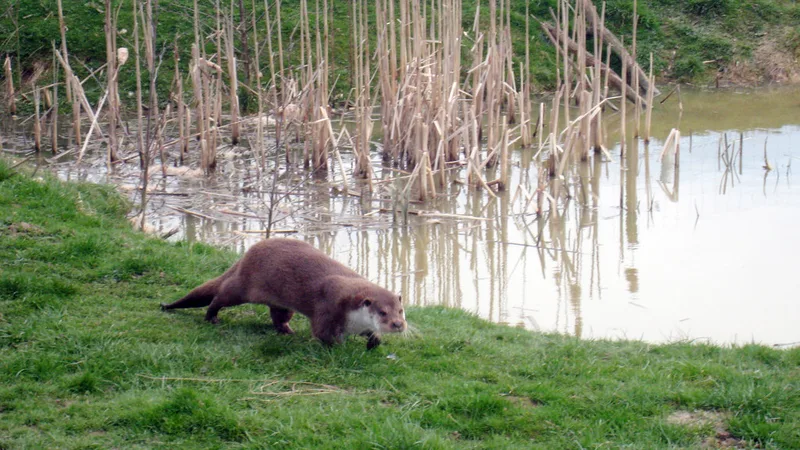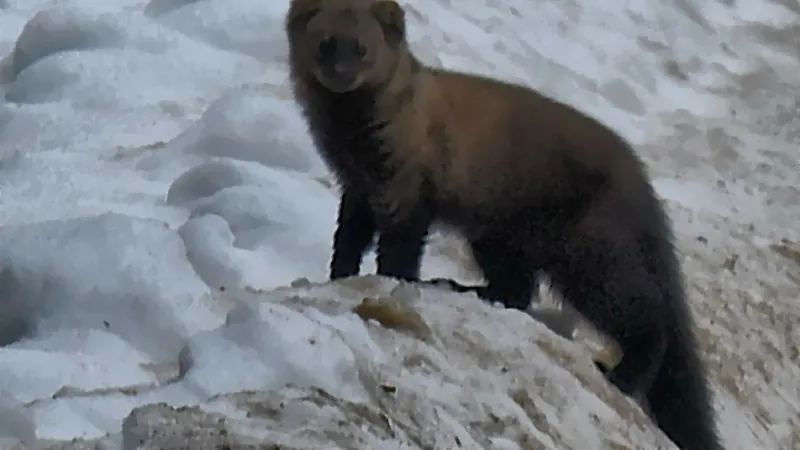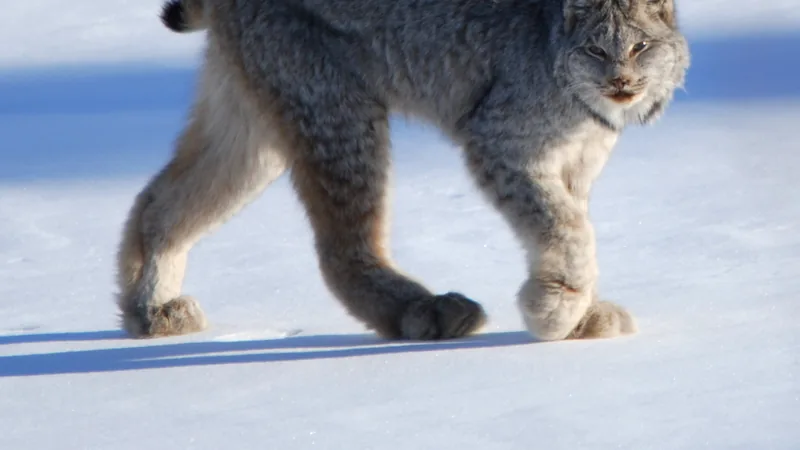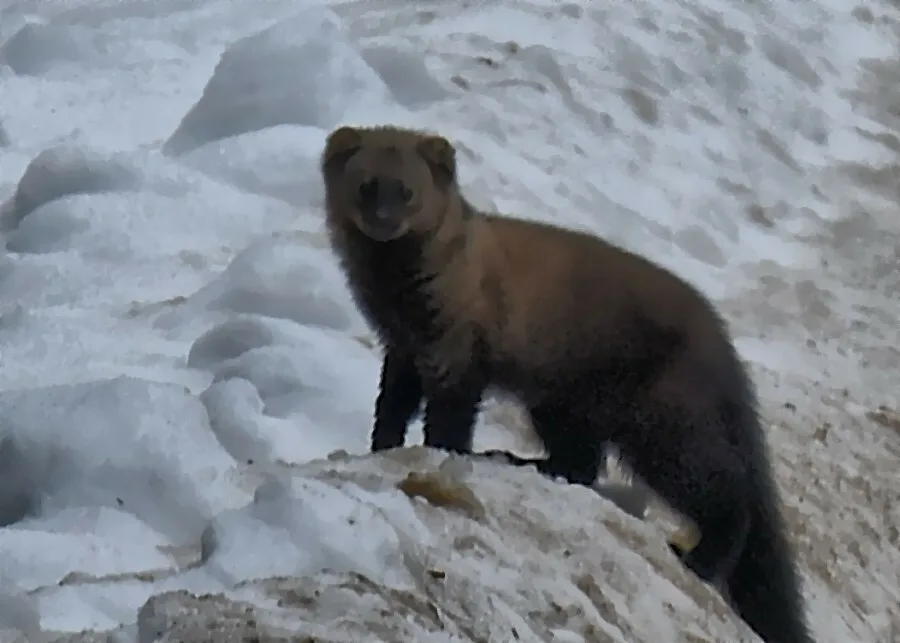
Fisher (Pekania pennanti), I-15 Bantalor area, NB, Canada
Field
notes
Built for tight spaces
The fisher belongs to the weasel family and is fox-sized, with short legs, a long body, small rounded ears and a long, bushy tail. It has five toes on each foot and retractable claws. It is an agile, speedy tree climber, although it usually travels on the ground. On average, males are the larger sex, with a body length of 900 to 1200 mm and a weight of 3.5 to 5 kg. Females measure 750 to 950 mm and weigh 2 to 2.5 kg.
Its trick is stretching out. Only the fisher and the American marten are medium-sized predators that can climb well and also stretch their bodies out to follow prey into holes in the ground, hollow trees and other tight spaces.
Porcupine on the menu
Fishers are solitary hunters that look for prey their own size or smaller, though they can take bigger animals. The menu includes mice, squirrels, snowshoe hares, birds and shrews, and they may also eat fruit and berries. They also hunt porcupines, and Animal Diversity Web notes that this can help control porcupines, which damage timber by stripping bark and killing trees.
A pause button on pregnancy
Paused pregnancy Once a female’s eggs are fertilized, the embryos stop growing for 10 to 11 months. Counting that pause, her pregnancy runs 11 to 12 months.
Biologists call this delayed implantation: the fertilized egg reaches the womb but delays attaching to its lining. The female then gives birth, to an average of 3 young, and soon afterward mates again. So a female spends almost all of her adult life pregnant or nursing.
Newborns are blind, nearly naked and weigh about 40 grams. Their eyes open after about 53 days. By four months old they can hunt for themselves. In captivity, one fisher lived 14.3 years.
From Sierra Nevada to Appalachians
The fisher is found nowhere but North America. Its range reaches south along California’s Sierra Nevada and down the Appalachian chain, as far as West Virginia and Virginia, and it is absent from the prairies and the southern United States. They prefer coniferous forest with plenty of hollow trees for dens. Each fisher keeps a home range of 15 to 35 square kilometers, averaging about 25.
Trapping for pelts once had a significant effect on their numbers, and logging destroys the near-continuous conifer forest they prefer. Virginia lost its fishers by the late 1800s to habitat destruction, heavy trapping and shooting, but in the past 20 years more have been sighted there, with evidence of breeding. In 2003 Animal Diversity Web reported that numbers seemed to have rebounded in parts of North America, including Michigan, Ontario, New York and some of New England. The IUCN Red List rates the species Least Concern, filed under its older name, Martes pennanti.
Published
Traits
Intel
& FAQ
Guess
first
How big is a Fisher, really? Slide, lock in, and see what the sources say. Every answer is a figure from this page, quoted from where it came from.
Sources
- 01Martes pennanti. Animal Diversity Web.
- 02AnAge entry for Martes pennanti. Human Ageing Genomic Resources, AnAge.
- 03Fisher. Virginia Department of Wildlife Resources.
- 04Helgen & Reid (2018). Martes pennanti. The IUCN Red List of Threatened Species 2018: e.T41651A125236220.
What the sources say: 51 claims checked word for word against these sources →