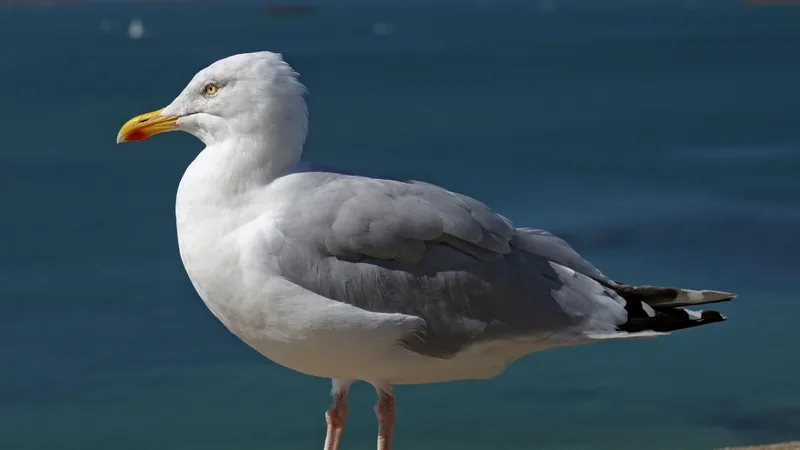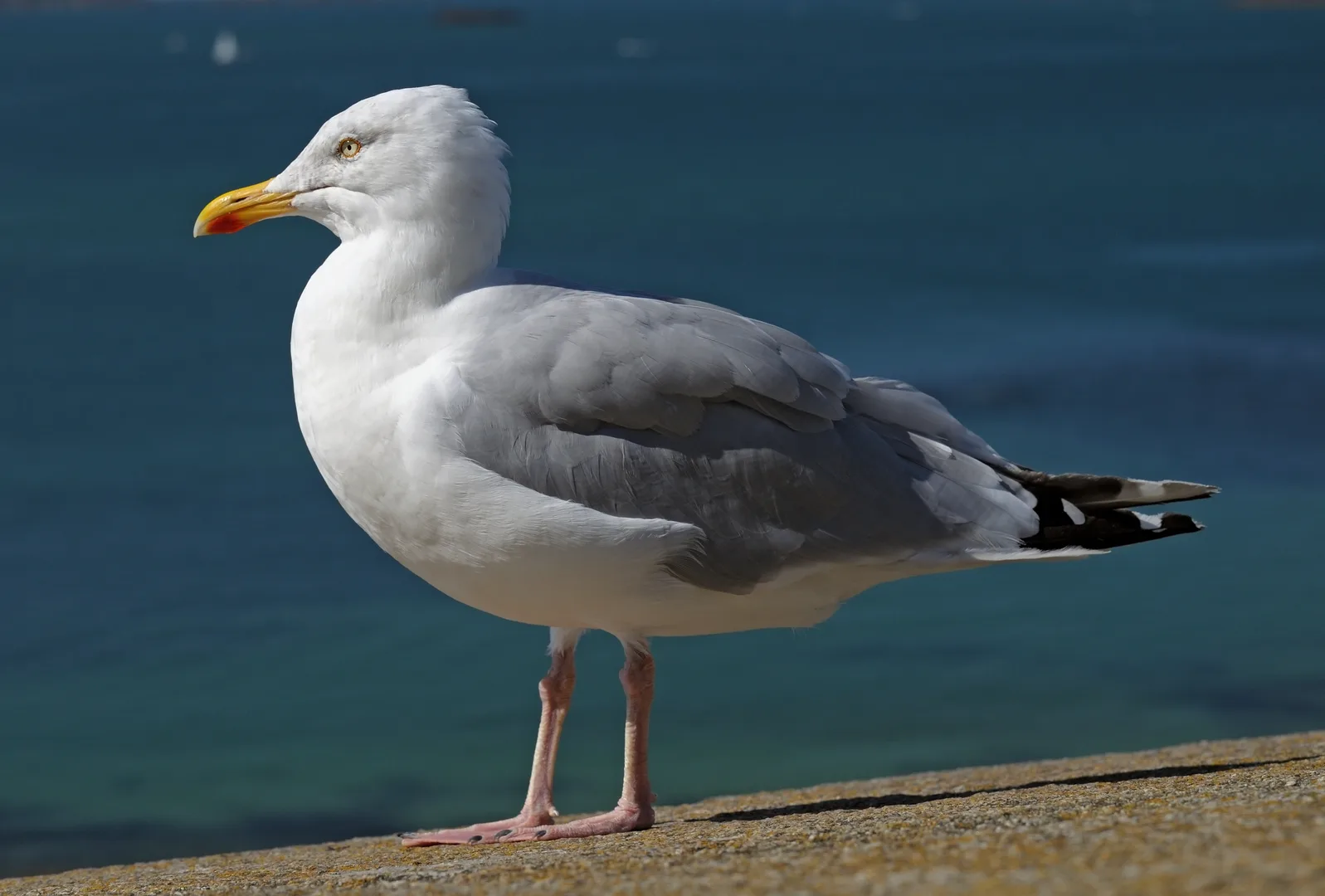
European herring gull (Larus argentatus).
Field
notes
Paddling for worms
The European herring gull, Larus argentatus, has a trick for finding dinner. It paddles its feet on the ground. The RSPB says you might see gulls imitating rain with their feet to encourage worms to the surface.
Mole alarm A 2008 study of worm hunting quotes Tinbergen’s view that paddling brings up earthworms, which seem to have an innate reaction to the quivering of the soil that helps them escape their arch enemy, the mole.
Tinbergen also suggested paddling flushes small animals out of muddy pools of water, and the study suggests that is where the habit began.
Its menu is long. BirdLife International calls its diet highly opportunistic: it takes fish, earthworms, crabs, other marine invertebrates, bird eggs and young, rodents and insects. It also scavenges at refuse dumps. The BTO says the green shore crab is a particular favourite.
Size and lifespan
This is a large gull. The RSPB gives its length as 54 to 60 centimetres. Adults weigh 970.6 grams on average, and nine in ten fall between 757 and 1,264 grams. A gull that reaches breeding age can expect to live about 12 years. Breeding usually starts at around 4 years old.
Adults have light grey backs, white undersides and black wing tips with white spots. Their legs are pink. The heavy bill has a red spot, and chicks peck at it to tell the parent they are hungry.
From cliffs to rooftops
The gull breeds from Iceland, the British Isles and France through northwest Europe to northwest Russia, and across northern Siberia east to the Bering Strait. Northern birds migrate, while southern ones are nomadic or do not migrate.
In Britain, herring gulls were once confined to the coast as breeders. In the 1920s they began swapping cliffside ledges for urban rooftops. The RSPB notes that pair bonds are often lifelong. Herring gulls steal food from other gulls and other species, and in towns they appear to have turned that habit on people. In Cornwall, researchers found that gulls that did touch a bag of chips took significantly longer to approach when the person was looking straight at them.
A common bird in decline
BirdLife estimates approximately 1,060,000 to 1,220,000 mature adults, but the population trend appears to be decreasing. Numbers grew during the 20th century, and around the turn of the century declines began in several key countries, including Norway and the UK. The decline appears to be partly linked to waste management and reduced fishery discards. In the UK the RSPB gives its conservation status as Red because of ongoing population declines. The IUCN Red List rated the species Least Concern in 2021.
Published
Traits
Intel
& FAQ
Guess
first
How big is a European Herring Gull, really? Slide, lock in, and see what the sources say. Every answer is a figure from this page, quoted from where it came from.
Sources
- 01Herring Gull. RSPB.
- 02Herring Gull. BTO BirdFacts, British Trust for Ornithology.
- 03European Herring Gull (Larus argentatus). BirdLife International Data Zone.
- 04Larus argentatus. The IUCN Red List of Threatened Species 2021: e.T62030608A206585142.
- 05Catania (2008). Worm Grunting, Fiddling, and Charming—Humans Unknowingly Mimic a Predator to Harvest Bait. PLoS ONE.
- 06Goumas et al. (2019). Herring gulls respond to human gaze direction. Biology Letters.
What the sources say: 63 claims checked word for word against these sources →