AnimalTracks.wiki

Blobfish

Psychrolutes microporos

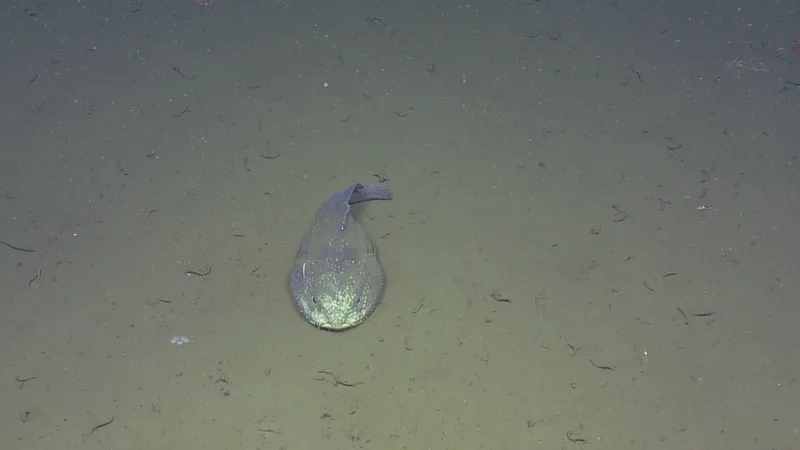
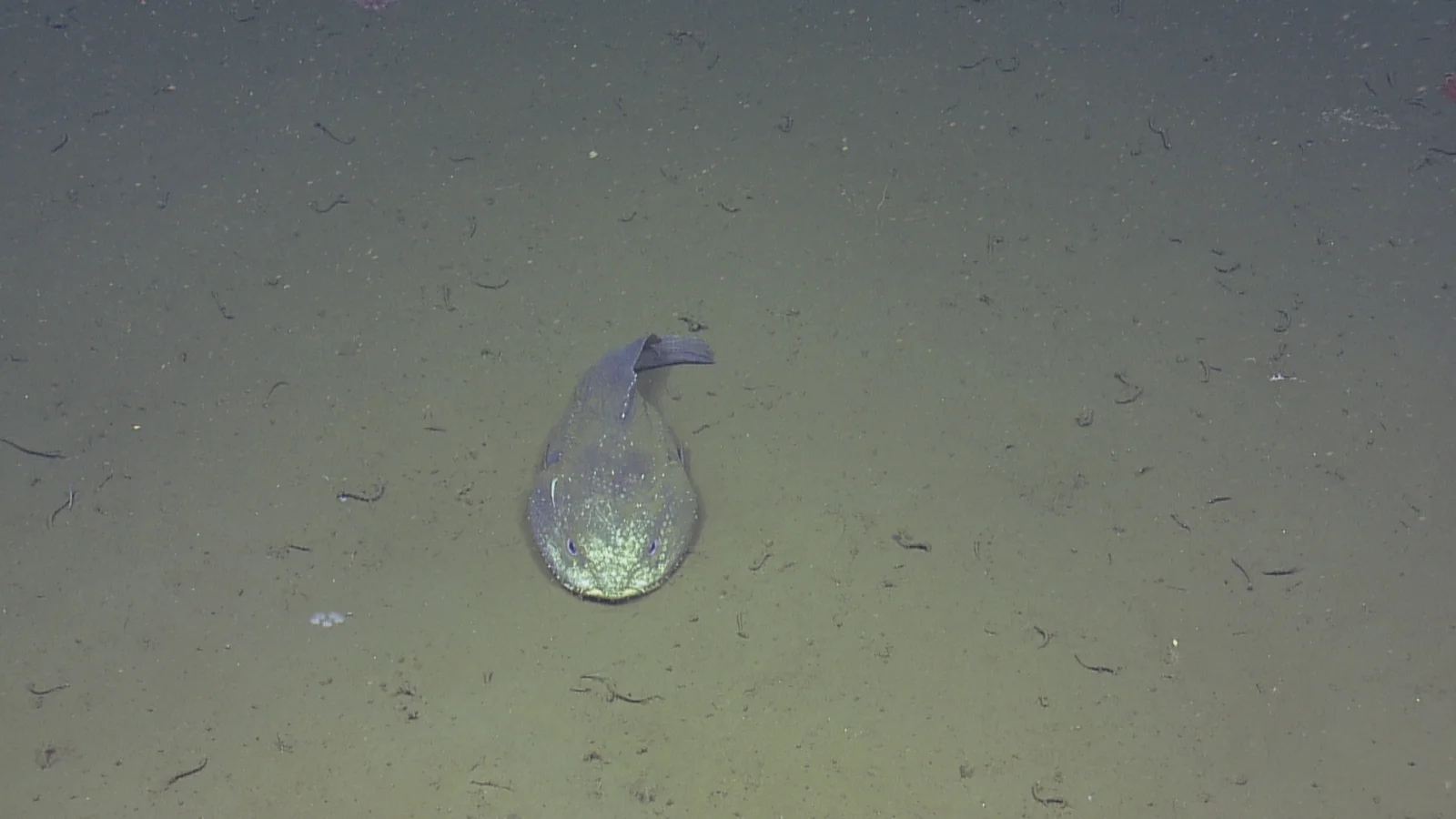
Nicknamed Mr Blobby by the scientists and crew of the research vessel Tangaroa after it was trawled from the Norfolk Ridge in 2003, and now held in the Australian Museum's collection.

Danger tierLowEffectively harmless to people.
IUCN status [NE]Not EvaluatedSpecies has not yet been formally assessed on IUCN Red List.Source: IUCN Red List
Vibe checkMac DeMarcoChillhop & Lo-Fi BeatsListen ↓

Field
notes

Checked against 2 sources ↓

Meet Mr Blobby

In June 2003, during the NORFANZ expedition, a fish was trawled from between 1,013 and 1,340 meters down on the Norfolk Ridge, northwest of New Zealand. The scientists and crew on board the research vessel Tangaroa nicknamed it Mr Blobby. The Australian Museum, which now holds the specimen (AMS I.42771-001) in its ichthyology collection, identifies it as a blobfish, Psychrolutes microporos, and notes a parasitic copepod on its mouth. The specimen was first fixed in formaldehyde and is now kept in 70% ethyl alcohol. Fixing it tightened Mr Blobby’s skin, so his “nose” has shrunk and, in the museum’s words, “he no longer retains his ‘cute’ look.”

How Big It Gets

The Mr Blobby specimen measured 285 millimeters, about 11 inches, in standard length, which leaves out the tail fin. That is one individual, not the species’ limit: FishBase lists a maximum total length of 63 centimeters, about two feet, for Psychrolutes microporos. The species belongs to the family Psychrolutidae, whose members are called blobfishes or fathead sculpins. The name “fathead sculpin” refers to the large, globular head and “floppy” skin typical of these fishes. The genus name, Psychrolutes, comes from the Greek psychroloutes, someone who has a cold bath.

Life on the Deep Seafloor

FishBase lists Psychrolutes microporos as a marine, deep-water fish that is bathydemersal, living on or near the sea floor, in the southwest Pacific off New Zealand. Its family is found more widely: the Australian Museum notes that fathead sculpins live in the Atlantic, Indian and Pacific Oceans at depths between 100 and 2,800 meters. Little is known of their biology, though some have been found with gastropods, the group that includes sea snails, in the stomach.

Out of Water The Australian Museum describes Mr Blobby’s body as “flabby and not adapted to be out of water.”

Little Is Known

Jeff Leis, quoted by the Australian Museum, says neither the eggs nor the larvae of the blobfish have been described, though other Northern Hemisphere members of its family have eggs attached to the bottom and deep-bodied larvae with short guts and short, blunt snouts. Leis notes that psychrolutids are cold-water fishes, found at high latitudes or in deep water, and would expect them to be harmed by rising ocean temperatures from climate change, but he is not aware of any studies that address this in psychrolutids. FishBase rates the species as harmless to humans and, citing the 2025 IUCN Red List, lists its status as Not Evaluated.

Published Updated

Traits

Intel
& FAQ

01Who was the fish nicknamed Mr Blobby?

In June 2003, a blobfish was trawled from between 1,013 and 1,340 meters down on the Norfolk Ridge, northwest of New Zealand, during the NORFANZ expedition. The scientists and crew on board the research vessel Tangaroa nicknamed it Mr Blobby. The Australian Museum now holds the specimen, AMS I.42771-001, and identifies it as Psychrolutes microporos.

Source: Australian Museum 2025

02How big does a blobfish get?

FishBase records a maximum total length of 63 centimeters, about two feet, for Psychrolutes microporos.

Source: FishBase

03How deep do blobfish live?

The blobfish nicknamed Mr Blobby was trawled from between 1,013 and 1,340 meters down on the Norfolk Ridge, northwest of New Zealand. Its family, the fathead sculpins, is found at depths between 100 and 2,800 meters in the Atlantic, Indian and Pacific Oceans.

Source: Australian Museum 2025

04Have blobfish eggs or larvae been described?

No. Jeff Leis, quoted by the Australian Museum, says neither the eggs nor the larvae of the blobfish have been described. Other Northern Hemisphere members of its family have eggs attached to the bottom, and deep-bodied larvae with short guts and short, blunt snouts.

Source: Australian Museum 2025

Sources

More Ray-Finned Fishes

Actinopterygii & Sarcopterygii

Hydrodynamic aquatic rulers with lateral line pressure sensors, swim bladders, and electrical weaponry.

A captive African lungfish resting on aquarium gravel, its long thread-like fins trailing from a mottled olive body

African Lungfish

Protopterus annectens

A fish that breathes air through two lungs and can live for over a year inside a cocoon of its own dried slime.

Obligate air breathing through two lungs, and over a year inside a cocoon of dried slimeView →
▸ ElderHeavy Psych & Desert Rock
Close view of an alligator gar's diamond-scaled back and blunt snout breaking a marsh surface

Alligator Gar

Atractosteus spatula

Described as a 100-million-year-old living fossil, armored in interlocking ganoid scales, with two rows of fang-like teeth in its upper jaw and a swim bladder that can work as a lung.

Interlocking ganoid scale armor with a hard outer layer over a tough bony base, two rows of fang-like teeth in the upper jaw, and a vascularized swim bladder that can work as a lungView →
▸ Creedence Clearwater RevivalClassic Hard Rock & Southern Blues
American paddlefish from below in murky green water, the pale bars of its gill rakers showing inside the open gill slit

American Paddlefish

Polyodon spathula

An ancient river giant that carries 50,000 to 70,000 electroreceptor organs, the largest number of any living vertebrate species.

Paddle and head covered in ampullary organs: 50,000 to 70,000 electroreceptors per adult, the largest number of any living vertebrate speciesView →
▸ Blackberry SmokeDelta Blues & Swamp Rock
Live blackfin icefish, a close relative, seen from above in a pale holding tank at Palmer Station

Antarctic Icefish

Champsocephalus gunnari

A Southern Ocean fish with no working red blood cells, whose nearly clear blood carries oxygen dissolved in plasma, along with its own antifreeze.

Belongs to the only vertebrate family that lacks working hemoglobin genes and working red blood cells: its blood carries oxygen dissolved in the plasma instead.View →
▸ BiosphereGlacial Ambient & Drone Soundscapes

Clade factLateral line sensory systems detect water displacement and pressure waves from surrounding swimming creatures.

Explore all 53 →

Head-to-head showdowns

Simulated face-offs, biological power gauges, and 3-round combat

Down the Rabbit Hole

Associative matches based on weird shared evolutionary traits