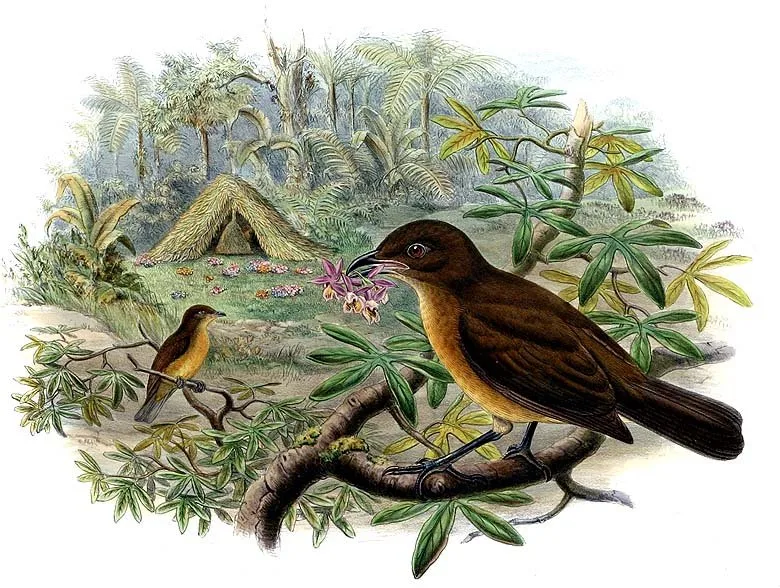
Vogelkop bowerbird (Amblyornis inornata), West Papua
Field
notes
A Brown Bird, an Elaborate Bower
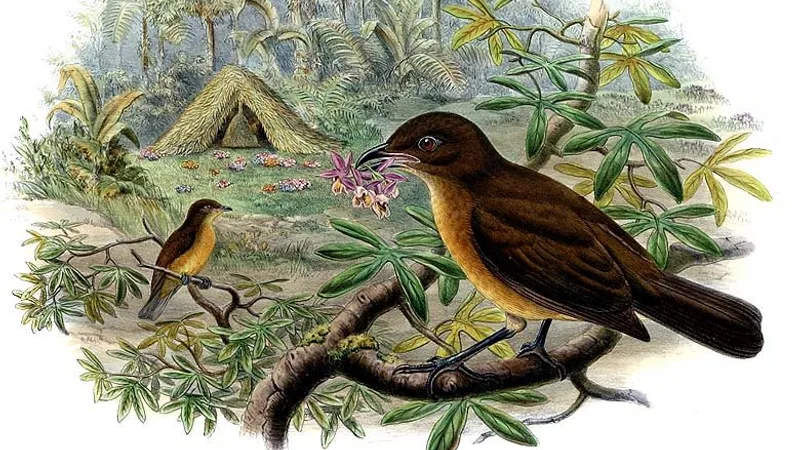
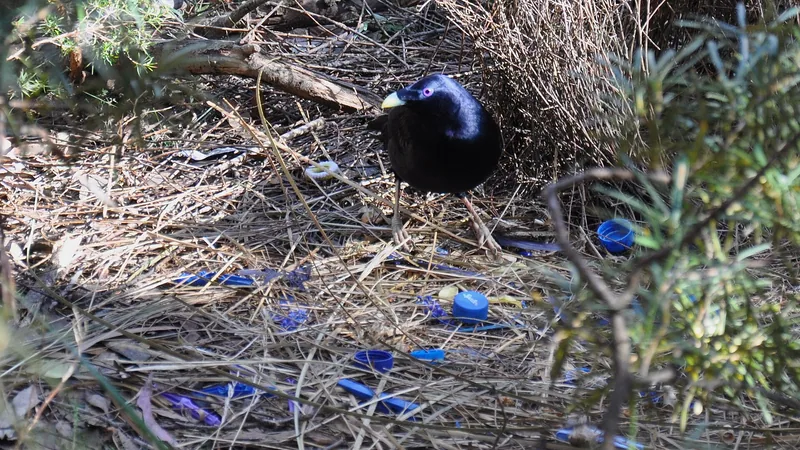
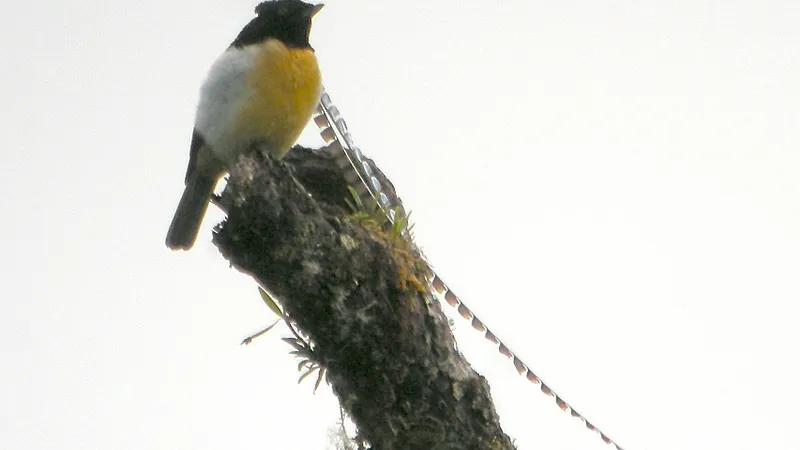
The male Vogelkop bowerbird (Amblyornis inornata) is, like the female, generally brown, while several of the species’ close relatives wear elongate, erectile crests of brilliant orange or yellow. He builds a bower instead, a courtship structure that males of his family use, along with their displays, to attract females. Some biologists who study the bowerbird family think the bower has effectively taken over the job feathers do in showier relatives, moving a male’s display off his own body and onto a structure that does not make him easier for a predator to spot.
A Tower Here, a Hut There
There is no single “Vogelkop bower.” A study of the species found that males in the south Kumawa Mountains build tall stick towers glued together, standing on a circular mat of dead moss painted black and decorated with dull objects like snail shells, acorns and stones, while males in the Wandamen Mountains build low, woven towers roofed by a stick hut with an entrance, standing on a green moss mat and decorated with colorful fruit, flowers and butterfly wings. Young males build simpler versions, and adult males still differ from one another. Bower style may be partly learned, the researcher who described it suggested, which would make these geographically varying styles a culturally transmitted trait, like human art styles.
Not even close Bowers like these are, in the words of the study that compared them across two mountain ranges, “the most elaborately decorated structures erected by an animal other than humans.”
A later study of two populations found that they barely differ genetically, yet females in the one with the more elaborate display prefer its divergent decorations and bower.
Nine Nests in the Arfak Mountains
Despite the attention paid to bowers, almost nobody had found a Vogelkop bowerbird nest. In this family the female alone builds the nest and rears the young. Only two nests had been described before researchers found nine more between 2008 and 2014, in forest above Syoubri village, in West Papua’s Arfak Mountains, at elevations between roughly 1,500 and 2,000 meters. Every one held a single egg or a single nestling, and one egg, pure white, measured 41.4 by 29.2 millimeters. The birds may breed twice a year, with egg-laying peaking in May to June and again from October to January. One nestling was about 7.5 centimeters long from bill tip to tail, with long greyish-brown down over its head and back.
Published Updated
Traits
Intel
& FAQ
Sources
- 01Bowerbird. San Diego Zoo Wildlife Alliance.
- 02Diamond (1986). Animal art: Variation in bower decorating style among male bowerbirds Amblyornis inornatus. Proceedings of the National Academy of Sciences.
- 03Uy & Borgia (2000). SEXUAL SELECTION DRIVES RAPID DIVERGENCE IN BOWERBIRD DISPLAY TRAITS. Evolution.
- 04Ericson et al. (2020). Parallel Evolution of Bower-Building Behavior in Two Groups of Bowerbirds Suggested by Phylogenomics. Systematic Biology.
- 05Frith & Frith (2004). Morphology, demography, bower sites, structures, and their significance. Bird Families of the World.
- 06Noske, Wonggor & Prativi (2025). Breeding season, nest, egg and nestling of the Vogelkop Bowerbird Amblyornis inornatus in the Arfak Mountains, West Papua. Bulletin of the British Ornithologists' Club.
- 07Amblyornis inornata. The IUCN Red List of Threatened Species 2018: e.T22703644A130219341.
What the sources say: 38 claims checked word for word against these sources →