AnimalTracks.wiki

Northern Pike

Esox lucius

A freshwater ambush predator that lies cocked in an S, then strikes with a sprint.

Danger tierLowEffectively harmless to people.
IUCN status [LC]Least ConcernPopulation stable and widespread in natural habitats.Source: IUCN Red List
Vibe checkPixies90s Grunge & Alt-RockListen ↓

Field
notes

Checked against 4 sources ↓

Cocked in an S

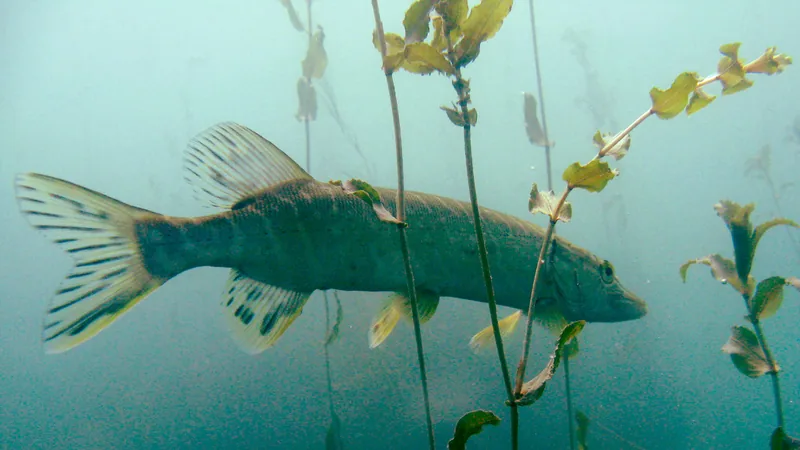
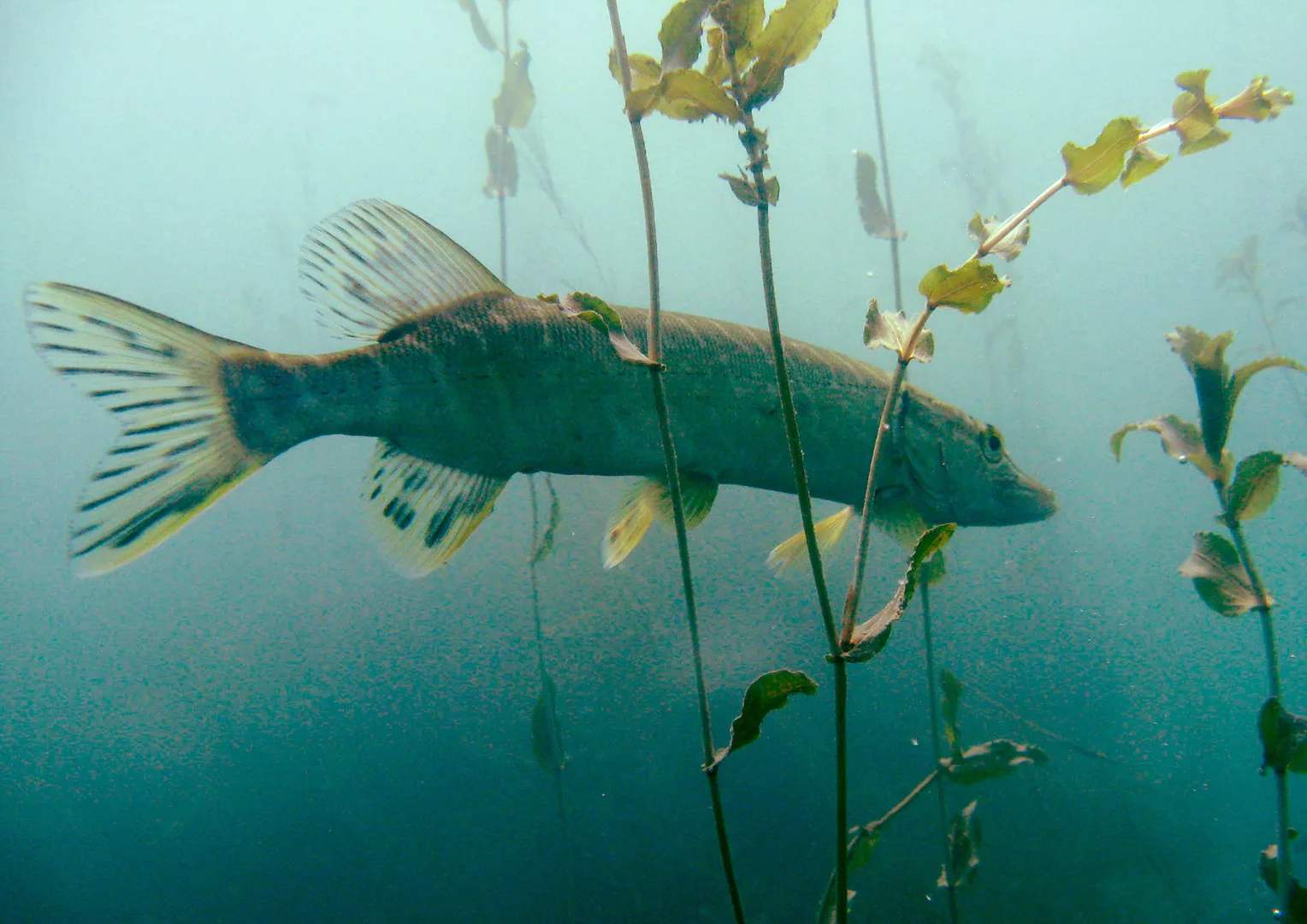
A northern pike (Esox lucius) is built to ambush. ADW calls it a “sprint predator”: it hides in cover, bent into an S shape, ready to strike. Its eyes are highly movable and can see in practically any direction, which is extremely important in tracking prey. Add sharp teeth and a complex skull and jaw.

Pike are top predators in the systems they inhabit, and they prey on smaller fish, frogs, crayfish, small mammals and birds. FishBase says adults feed mainly on fishes, and cannibalism is common. In arctic lakes a pike is sometimes the only fish species in the water. There, large individuals are mainly cannibals, which means they eat their own kind.

Alarm signal Other fish avoid pike feces because they contain alarm pheromones, which are chemical warning signals.

Size and years

ADW gives an average length of 46 to 51 cm and a mass range of 0.5 to 1.4 kg. The top end is much bigger. FishBase lists a maximum length of 150 cm for a female, a maximum published weight of 28.4 kg and a maximum reported age of 30 years.

No parenting

Pike show no parental involvement. They are random spawners, not nest builders, and the eggs, which hatch in about 2 weeks, get no protection. Young pike face their own predators: the eggs, fry and young may be eaten by other predatory fish, aquatic birds, otters or the larvae of aquatic insects. Young pike have insatiable eating habits and grow rapidly in both length and weight.

Almost any freshwater

Pike are circumpolar in fresh water, meaning they ring the Arctic. In North America they live from Labrador to Alaska and south to Pennsylvania and Nebraska. They are found in almost every type of freshwater, from cold deep lakes to warm shallow ponds to muddy rivers. The IUCN lists the species as Least Concern.

Pike can cause trouble when people move them. The USGS says that introduced pike can significantly reduce prey density and even eliminate species. In a 1990 University of Montana study, pike eliminated most other fishes except the pumpkinseed, which was likely protected by its deep body and stiff spines, making it difficult prey.

Published

Traits

Intel
& FAQ

01How big can a northern pike get?

FishBase gives a common length of 55 cm for females and 40 cm for males or unsexed fish. The maximum is far larger: females can reach 150 cm, and the maximum published weight is 28.4 kg.

Source: FishBase

02How does a pike catch its food?

It is typically a lurker that waits in some kind of cover, cocked into an S, and can attack quickly. Highly movable eyes help it track prey from almost any angle.

Source: Animal Diversity Web, University of Michigan

03Can pike wipe out other fish?

They can do real damage where they are introduced. The USGS says pike have been shown to cut prey numbers sharply, with the potential to wipe out species. A 1990 University of Montana study found pike had removed most other fish except pumpkinseed.

Source: USGS Nonindigenous Aquatic Species database

Guess
first

How big is a Northern Pike, really? Slide, lock in, and see what the sources say. Every answer is a figure from this page, quoted from where it came from.

  1. ?
  2. ?
  3. ?

Sources

More Ray-Finned Fishes

Actinopterygii & Sarcopterygii

Hydrodynamic aquatic rulers with lateral line pressure sensors, swim bladders, and electrical weaponry.

A captive African lungfish resting on aquarium gravel, its long thread-like fins trailing from a mottled olive body

African Lungfish

Protopterus annectens

A fish that breathes air through two lungs and can live for over a year inside a cocoon of its own dried slime.

Obligate air breathing through two lungs, and over a year inside a cocoon of dried slimeView →
▸ ElderHeavy Psych & Desert Rock
Close view of an alligator gar's diamond-scaled back and blunt snout breaking a marsh surface

Alligator Gar

Atractosteus spatula

Described as a 100-million-year-old living fossil, armored in interlocking ganoid scales, with two rows of fang-like teeth in its upper jaw and a swim bladder that can work as a lung.

Interlocking ganoid scale armor with a hard outer layer over a tough bony base, two rows of fang-like teeth in the upper jaw, and a vascularized swim bladder that can work as a lungView →
▸ Creedence Clearwater RevivalClassic Hard Rock & Southern Blues
American paddlefish from below in murky green water, the pale bars of its gill rakers showing inside the open gill slit

American Paddlefish

Polyodon spathula

An ancient river giant that carries 50,000 to 70,000 electroreceptor organs, the largest number of any living vertebrate species.

Paddle and head covered in ampullary organs: 50,000 to 70,000 electroreceptors per adult, the largest number of any living vertebrate speciesView →
▸ Blackberry SmokeDelta Blues & Swamp Rock
Live blackfin icefish, a close relative, seen from above in a pale holding tank at Palmer Station

Antarctic Icefish

Champsocephalus gunnari

A Southern Ocean fish with no working red blood cells, whose nearly clear blood carries oxygen dissolved in plasma, along with its own antifreeze.

Belongs to the only vertebrate family that lacks working hemoglobin genes and working red blood cells: its blood carries oxygen dissolved in the plasma instead.View →
▸ BiosphereGlacial Ambient & Drone Soundscapes

Clade factLateral line sensory systems detect water displacement and pressure waves from surrounding swimming creatures.

Explore all 53 →

Head-to-head showdowns

Simulated face-offs, biological power gauges, and 3-round combat

Down the Rabbit Hole

Associative matches based on weird shared evolutionary traits