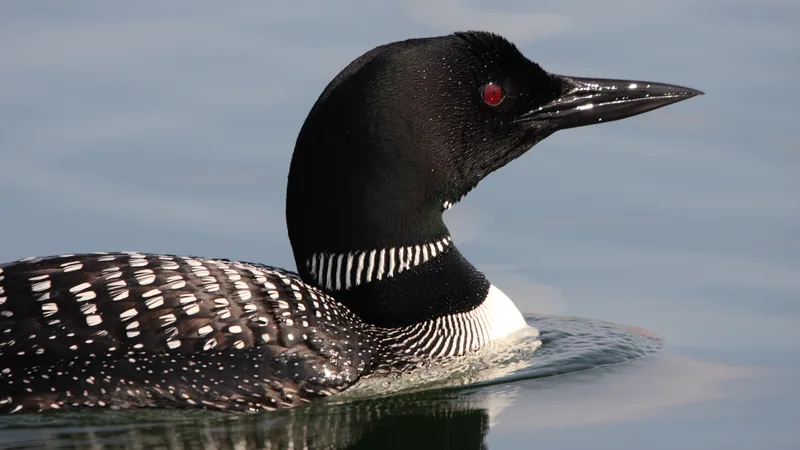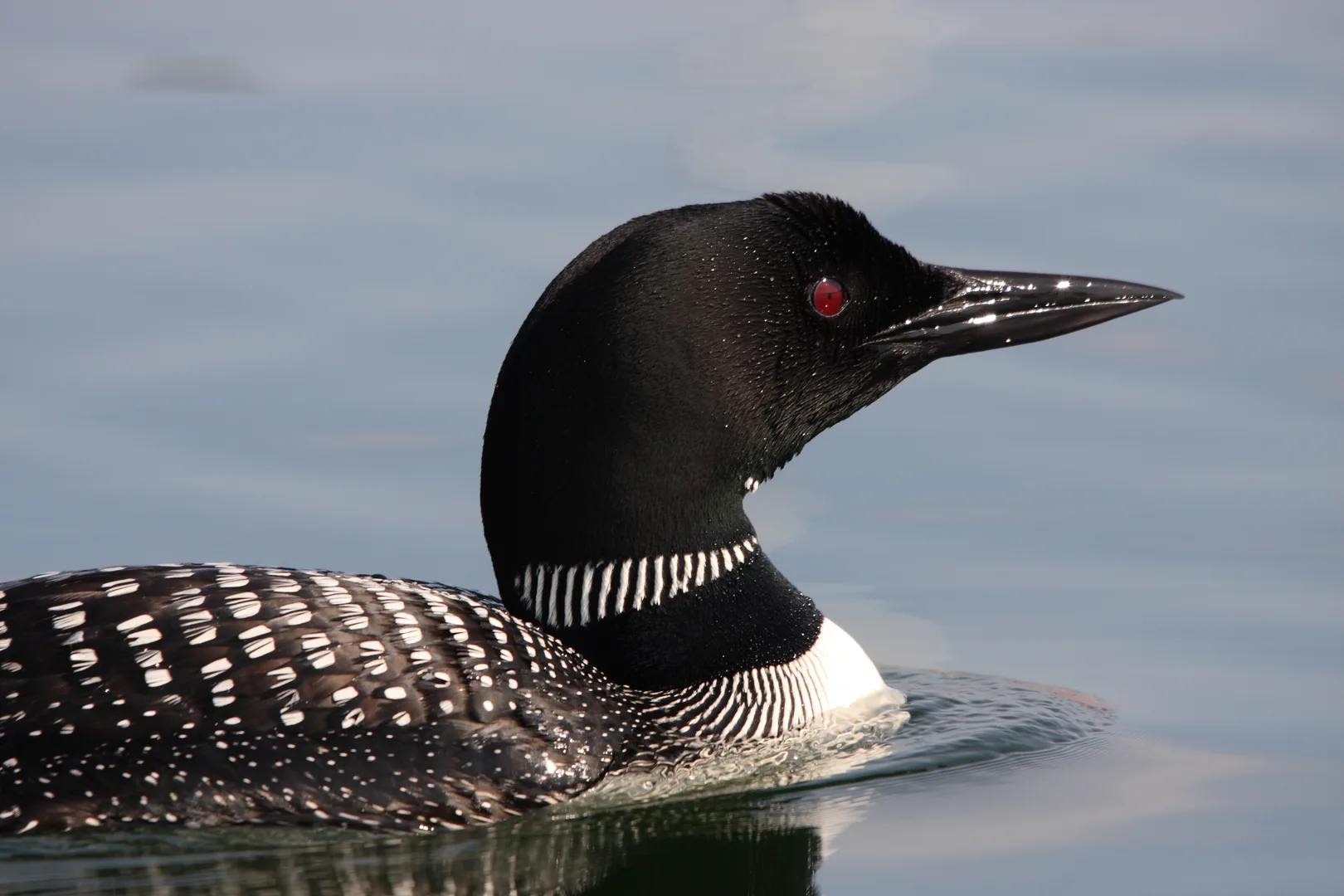
Breeding colours.
Field
notes
A Submarine With Feathers
The common loon is built to sit low in the water. Its bones are dense, which makes it float low, and its big webbed feet sit on powerful legs set far back on its body. That rear-set design drives it rapidly underwater. Loons, the five species of the order Gaviiformes, are specialized divers, reaching depths of up to 60 metres and staying under for up to three minutes. This one hunts by sight, generally in water 2 to 4 metres deep, and clear water is critical to it.
The design has a price on land. Its legs sit far back, and walking is difficult. Loons seldom visit land except to mate and nest. Its small wings mean it has to run a long way across the water’s surface just to take off.
Big Bird, Long Life
A common loon is 70 to 90 cm long. One account reports birds from 2.7 kg to over 6.3 kg, and in Michigan males average 4.6 kg and females 3.7 kg. Males are typically 24 to 35% heavier than females.
AnAge lists a maximum recorded longevity of 24.1 years in the wild.
A Voice Like a Wolf
The yodel Of the common loon’s at least six calls, the yodel is the only one that differs between the sexes. Males give this abrasive, oscillating bugle to defend their breeding territory.
The most recognized call is the wail, which resembles the howl of a wolf and can help paired birds find each other. Trouble inside the territory gets the tremolo, a staccato cry of distress.
Lakes in Summer, Coasts in Winter
Common loons nest on lakes from western Greenland across Canada and the northern United States (Alaska included), and a population breeds in Iceland. Winter sends them to the Atlantic and Pacific coasts of North America, south to Texas and Baja California, and they are frequent winter visitors on Europe’s western coasts. The species is also known as the great northern diver.
The menu is mostly fish, with crayfish, shrimp, leeches and some aquatic vegetation also eaten. A female lays one to three eggs, usually two, and for the first few weeks the chicks often ride on a parent’s back.
Mercury pollution is a threat. In a study built on 18 years of measurements, the loons at highest risk from mercury produced 41% fewer fledged young than a reference group. The IUCN Red List rates the species Least Concern.
Published
Traits
Intel
& FAQ
Guess
first
How big is a Common Loon, really? Slide, lock in, and see what the sources say. Every answer is a figure from this page, quoted from where it came from.
Sources
- 01Gavia immer (common loon). Animal Diversity Web, University of Michigan.
- 02Common Loon (Gavia immer). Michigan Natural Features Inventory.
- 03AnAge entry for Gavia immer. AnAge: The Animal Ageing and Longevity Database.
- 04Gavia immer. The IUCN Red List of Threatened Species 2021: e.T22697842A166327842.
- 05Gayk et al. (2018). Genomic insights into natural selection in the common loon (Gavia immer): evidence for aquatic adaptation. BMC Evolutionary Biology.
- 06Evers et al. (2007). Adverse effects from environmental mercury loads on breeding common loons. Ecotoxicology.
What the sources say: 43 claims checked word for word against these sources →