Monotremes
Egg-laying mammalian living relics featuring electroreceptive bills and venomous spurs.
Monotremata
Monotremes are the oldest surviving branch of mammals, retaining primitive reptilian traits like laying leathery eggs and having a cloaca, while producing milk and growing fur. Found only in Australia and New Guinea, they represent an ancient evolutionary snapshot.
Key Evolutionary Adaptations
Platypus bills contain 40,000 electroreceptors and 60,000 mechanoreceptors that detect muscle impulses of buried prey.
Females lack teats, secreting protein-rich milk directly from abdominal skin glands for hatchlings to lap up.
Male platypuses carry hollow calcaneus spurs on their hind legs connected to crural venom glands.
All Monotremes

Duck-Billed Platypus
An egg-laying mammal with venomous spurs and an electric sense in its bill, once thought to be a taxidermist's hoax.
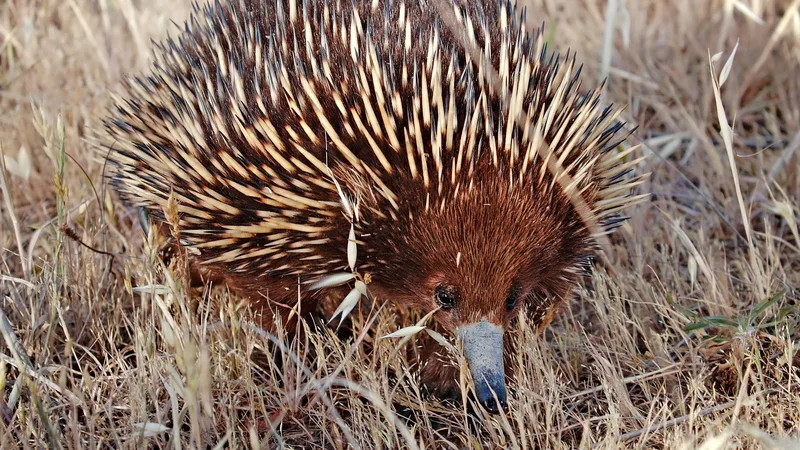
Short-Beaked Echidna
The spiny, egg-laying mammal that digs into ant and termite nests and carries an electric sense in its snout.