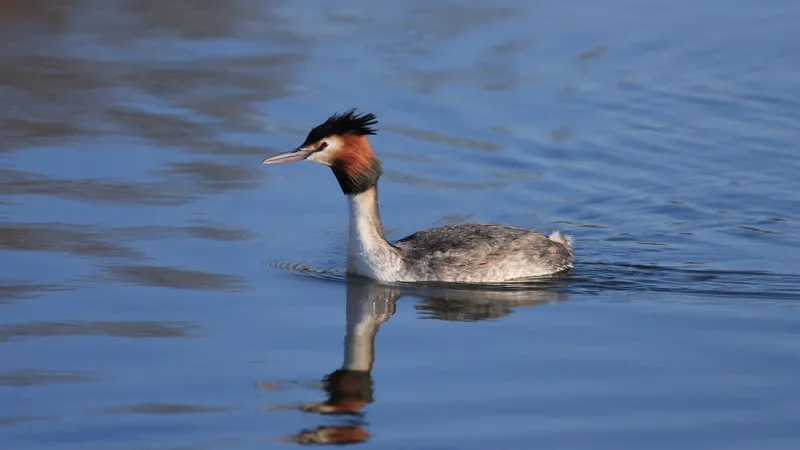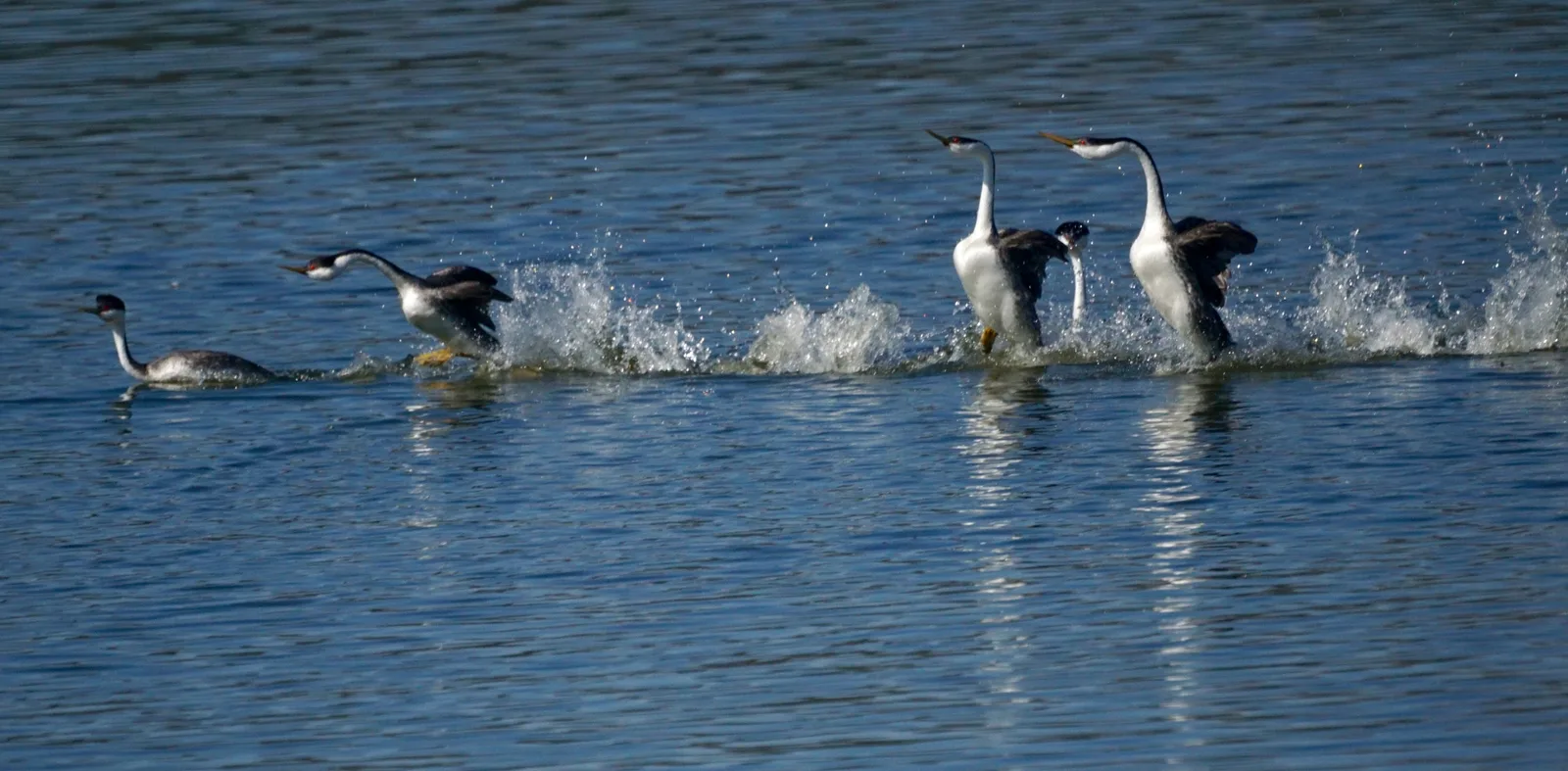
Western Grebe (Mike's Birds from Riverside, CA, US).
The 20-Meter Water Sprint
Western grebes perform one of the most mechanically demanding courtship rituals in the animal kingdom, known as rushing. After a preliminary sequence of synchronized head clicks and dips, two birds suddenly rise straight out of the water.
Arching their necks into rigid S-curves and holding their wings tight to their flanks, the birds sprint across the surface side-by-side. Taking up to 20 steps per second, they cover 15 to 20 meters across the lake surface in under two seconds without sinking.
Hydrodynamic Slap-and-Glide Mechanics
Human feet cannot generate enough upward hydrodynamic force to support body weight on water, but the western grebe’s lobed feet act as specialized hydrofoils. Each broad, flattened toe expands as it strikes the surface, creating an air cavity that generates vertical lift.
By slapping the water at extreme frequencies and pulling the foot horizontally backward before the air cavity collapses, the grebe lifts several hundred grams of body weight entirely above the waterline.
Spear Fishing and Floating Nurseries
Beneath the surface, the western grebe hunts using its long, dagger-sharp yellowish-green bill. It impales rapid freshwater fish with lightning forward thrusts of its flexible neck, swallowing prey head-first upon surfacing.
Nests are large floating mats constructed from bulrushes and pondweeds. Freshly hatched chicks ride high between the parent’s back feathers for their first month of life, keeping warm and avoiding underwater predatory pike.