The Freshwater Eurovision Spectacle
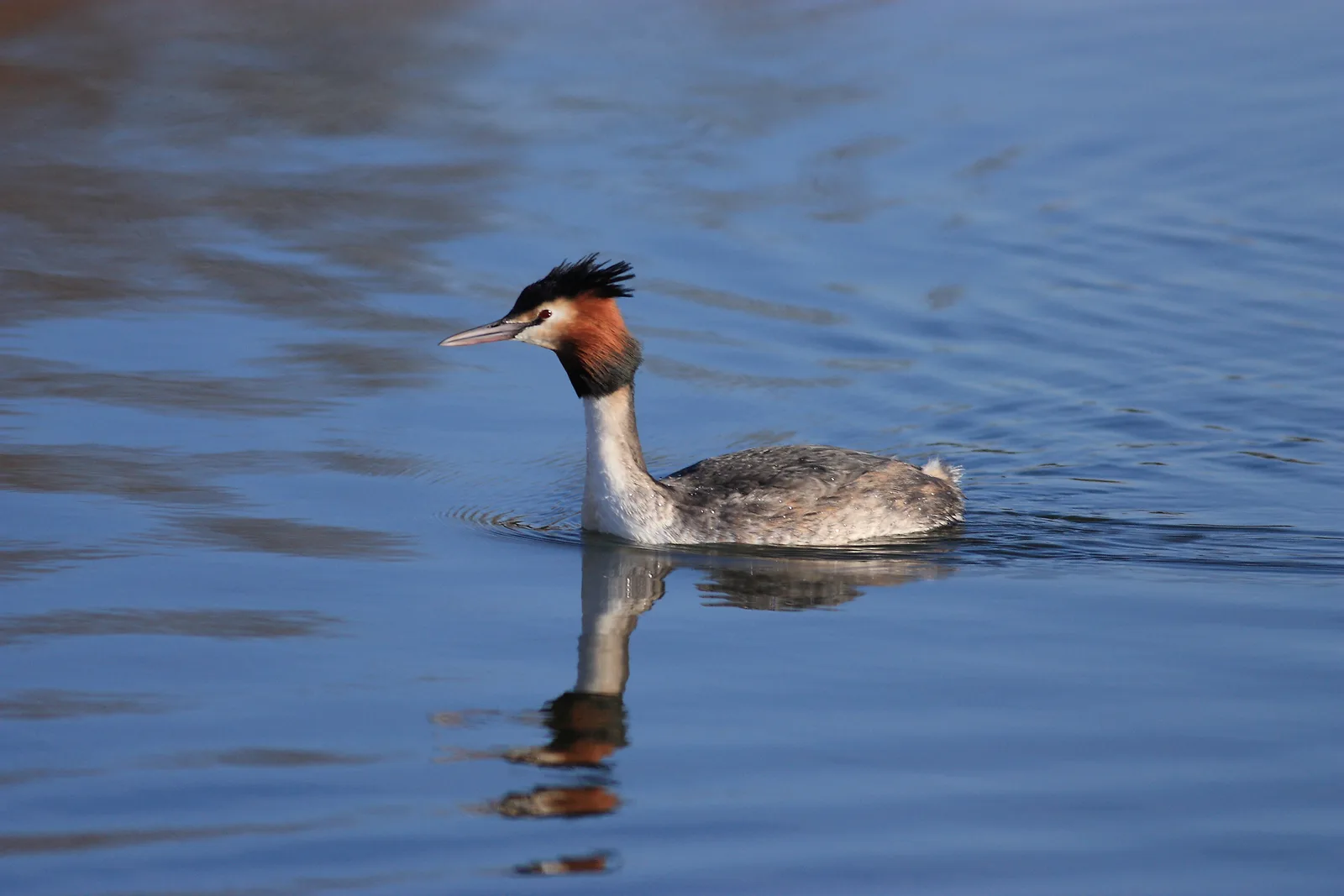
During spring breeding season, great crested grebes abandon all subtlety. Partners face each other with raised black horn-like crests and expanded chestnut neck ruffs. They begin the head-shaking ceremony, matching each other tilt-for-tilt with millisecond precision.
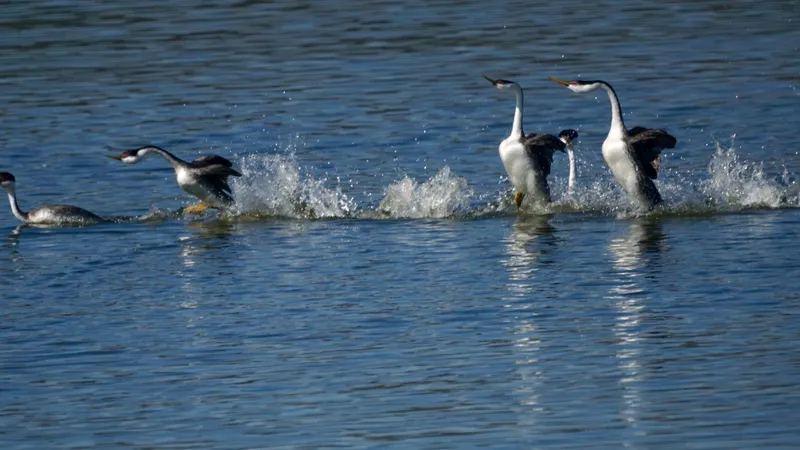
The routine builds to the weed-rush display. Both birds dive beneath the surface, tear up ribbons of aquatic vegetation, and burst upward. Rearing their chests vertically out of the water, they paddle vigorously to stand upright while pressing their weed-filled bills together like trophy presentations.
Lobed-Foot Hydrodynamics
Unlike ducks that possess webbed feet, great crested grebes feature flexible leaf-shaped lobes along each toe. Positioned far back on the pelvic girdle, these feet act like rear-mounted outboard propellers. On the forward stroke, the lobes fold flat against the toe bones to minimize drag; on the backward power stroke, they flare open to generate massive thrust.
This anatomical specialization makes walking on land almost impossible, forcing grebes to remain entirely aquatic. Underwater, they hunt small fish, freshwater insects, and crustaceans, remaining submerged for up to 30 seconds per dive.
Floating Daycares and Feather Consumption
Parent grebes construct floating nests anchored to emergent reeds. Once the striped chicks hatch, they climb directly onto their parents’ backs, riding securely between ruffled waterproof mantle feathers. Parents dive for fish while carrying their young, keeping the chicks insulated from chilly water.
Adult grebes also deliberately swallow their own feathers and feed them to their chicks. The dense plug of down lines the stomach, trapping sharp fish bones and parasite larvae until they can be safely digested or regurgitated.