Regal Poise and Charcoal Velvet
Native to the expansive waterways of Australia, the black swan overturned European zoological assumptions when Dutch explorer Willem de Vlamingh encountered them on the Swan River in 1697.
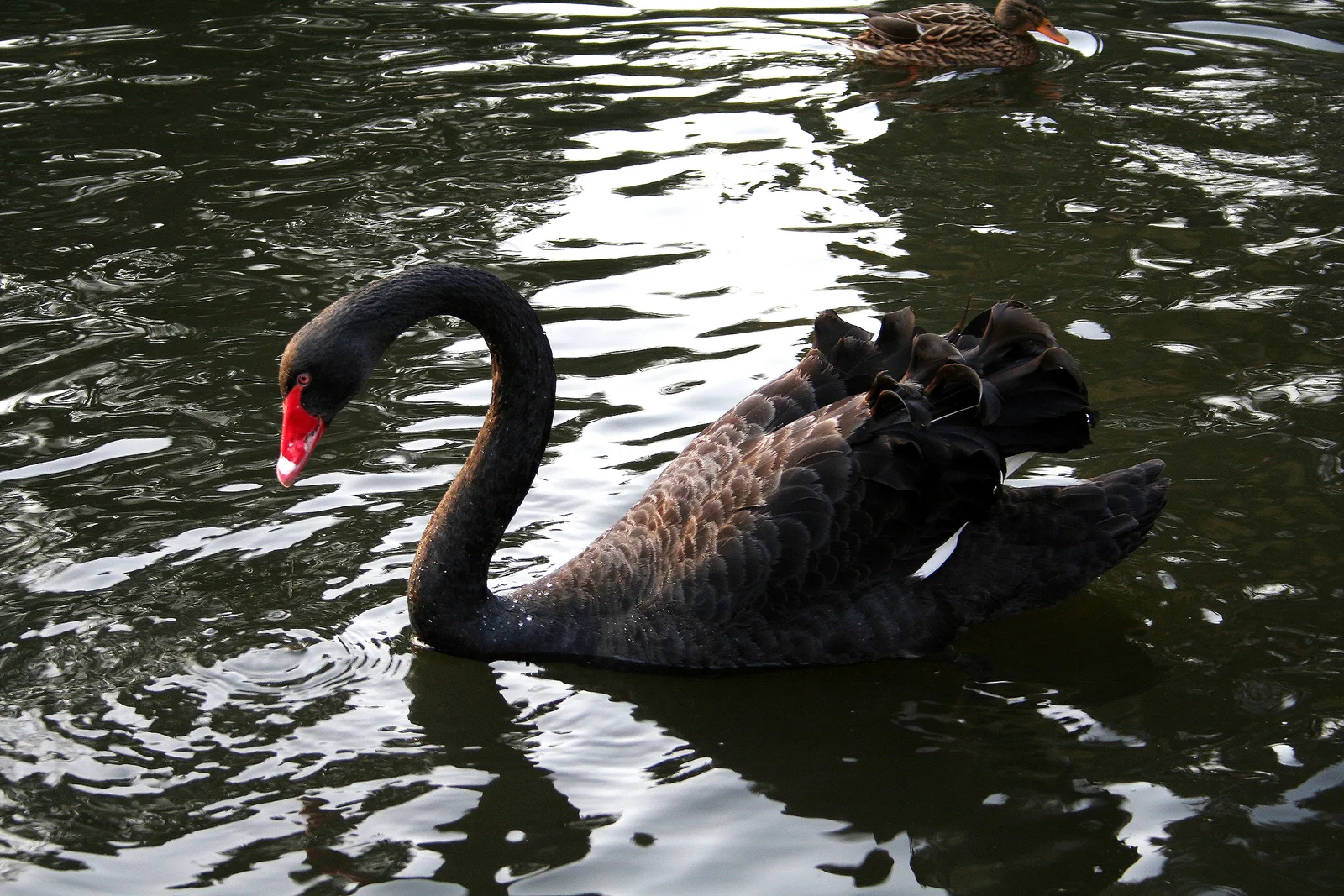
Its plumage is deep sooty black with delicate crinkled edges on the flight feathers. In flight, it reveals bright white primary wing feathers, creating a striking monochrome strobe effect visible across miles of open sky.
The S-Curved Neck Extension
The black swan possesses the longest neck relative to body size of any swan species, supported by up to 25 cervical vertebrae. This elongated neck allows it to graze on submerged aquatic plants up to one meter deep without fully diving, tipping its tail upward in an up-ending foraging posture.
When threatened, the swan raises its neck in an aggressive S-curve, arches its wing feathers, and hisses loudly while striking out with bony wing joints capable of bruising intruders.
Lifelong Monogamy and Shared Parenting
Black swans form deeply loyal pair bonds that often endure for life. Both parents contribute equally to nest construction, building massive floating islands of reeds and twigs up to two meters across.
Incubation duties and chick guarding are strictly shared. Parents carry young cygnets on their backs across deep open waters, fiercely defending their brood against predatory gulls and wetland reptiles.