The Living Paint Palette
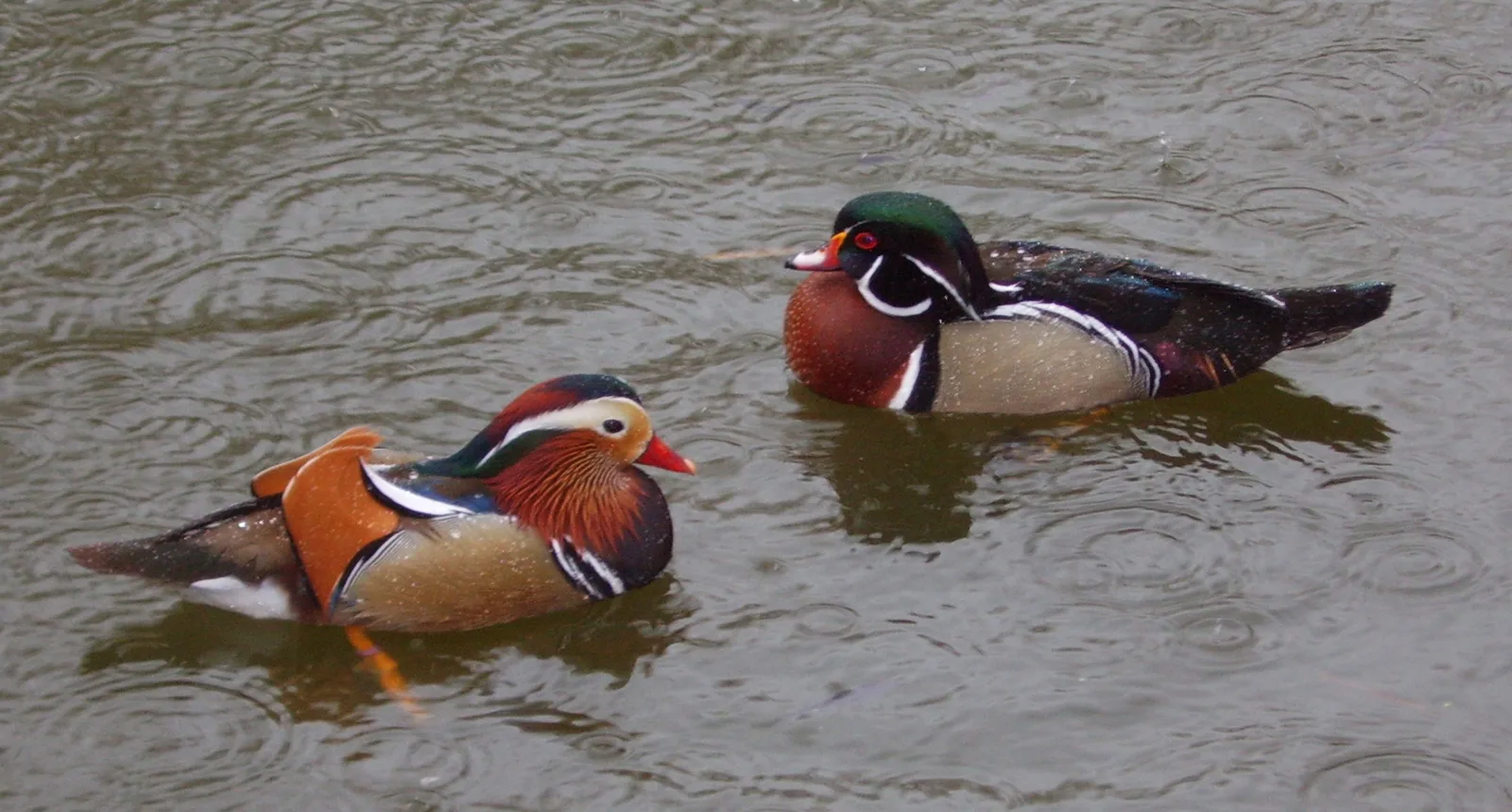
The male mandarin duck is widely regarded as the most visually elaborate waterfowl species in the world. Its head features a long, flowing crest of copper, metallic green, and royal purple, accented by broad creamy-white eye stripes and a bright red coral bill.
Rising from its lower back are two large, fan-shaped orange feathers called sails. These modified inner flight feathers stand vertically above the wings during display, creating a theatrical visual silhouette that has made the bird a symbol of artistic beauty and fidelity across East Asia for centuries.
Arboreal Tree-Nesting Specialists
Unlike most ducks that nest on the ground, mandarin ducks nest high in tree hollows up to 15 meters above forest streams. Equipped with sharp, curved claws on their webbed feet, adults can perch comfortably on narrow tree limbs and navigate dense woodland canopies.
Within 24 hours of hatching, the mother duck calls from the ground beneath the tree. The tiny downy ducklings climb to the edge of the hollow and leap into empty air, bouncing unharmed on the soft leaf litter of the forest floor before being led directly to the nearest water.
Woodland Diet and Vertical Burst Flight
Mandarin ducks feed heavily on terrestrial tree nuts, showing a particular fondness for autumn acorns and beech seeds, which they swallow whole. They also dabble in shallow water for snails, small water beetles, and aquatic weed shoots.
When startled by foxes or birds of prey, the mandarin duck can launch vertically straight out of the water like a helicopter, darting through dense overhanging branches with remarkable flight agility.