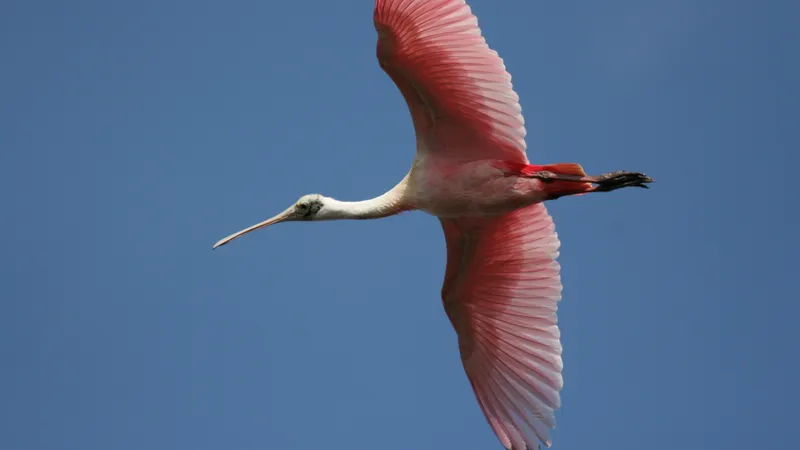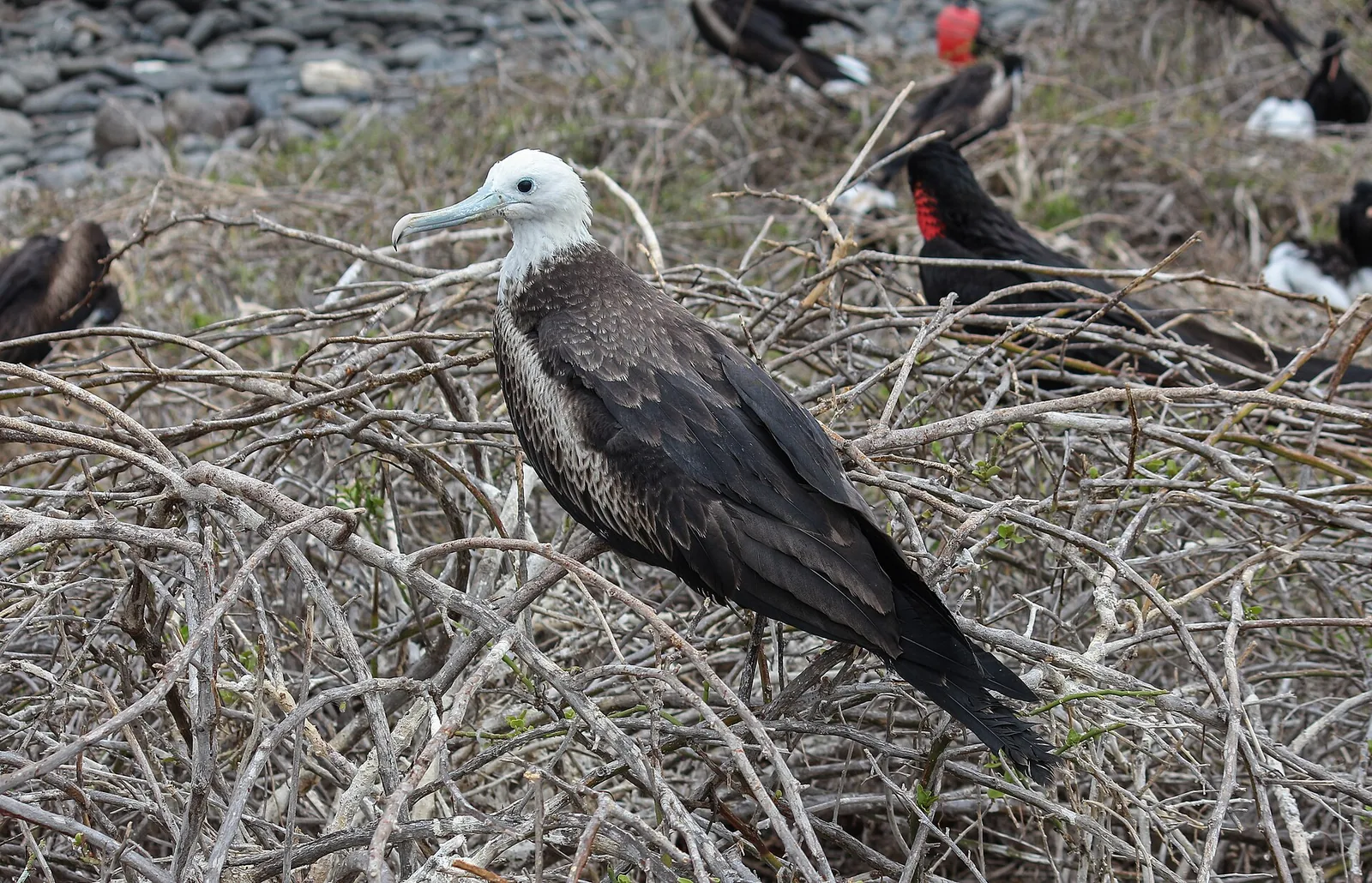
Curved raptorial upper bill tip used to snatch flying fish from ocean surface.
The Nonstop Glider of the Tropical Oceans
With a seven-foot wingspan and a body mass of barely three pounds, the magnificent frigatebird (Fregata magnificens) boasts the lowest wing loading (ratio of weight to wing area) of any bird species in existence. This aerodynamic geometry allows it to ride rising thermal updrafts to altitudes of 4,000 meters and glide for weeks across open oceans without flapping a single wing stroke.
Unlike gulls, petrels, and ducks, frigatebirds produce almost no waterproof preen oil in their uropygial glands. If a frigatebird lands on water, its plumage becomes waterlogged, dragging the bird under to drown. As a result, individual frigatebirds remain airborne continuously for up to two months at a time, sleeping in micro-naps of 10 seconds while spiraling upward in thermal air columns.
Aerodynamic Profile:
- Wingspan: 2.1 to 2.4 meters (7.5 feet)
- Body Weight: 1.1 to 1.6 kg (pneumatic hollow skeleton)
- Wing Loading: Lowest ratio of any living bird
- Continuous Flight Record: 56 consecutive days aloft
Aerial Piracy and the Scarlet Resonance Sac
Because they cannot dive into seawater, frigatebirds developed high-altitude kleptoparasitism. They ambush returning boobies, terns, and pelicans in mid-air, biting their tail feathers, turning them upside down, and forcing them to regurgitate freshly swallowed fish. The frigatebird then dives at 95 mph to catch the falling meal before it strikes the ocean surface.
During the breeding season, male frigatebirds inflate a scarlet gular throat pouch like a giant red weather balloon. By vibrating their bills against the taut membrane, males generate a hollow, drum-like acoustic resonance audible across kilometers of coastal mangrove swamps.