Neon Magenta Pigment Synthesis
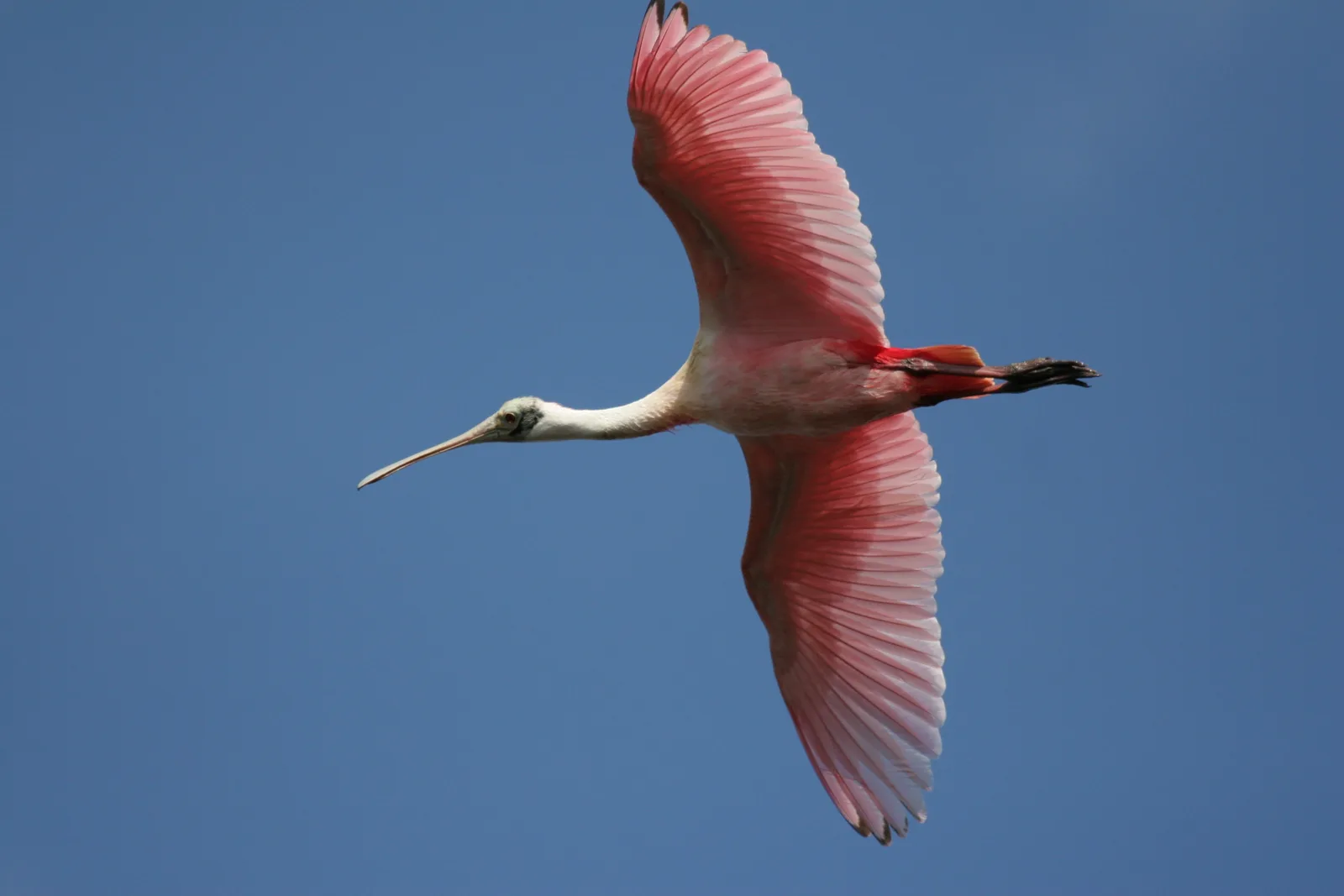
While young spoonbills hatch with pale pink and white feathers, adults develop an intense neon palette. Their wings and tail convert into brilliant carmine red, their chests turn soft rose-pink, and their shoulder epaulets glow in deep scarlet with golden-buff undertones.
This striking coloration is derived entirely from their diet. By digesting micro-crustaceans and algae rich in canthaxanthin and astaxanthin carotenoid pigments, the bird metabolizes lipids that bind directly to growing feather keratin.
Tactile Spoon-Bill Sweeping
The spoonbill’s bill is a specialized mechanical filter. Flattened into a wide, rounded spatula at the tip, the bone is honeycombed with thousands of microscopic sensory pits called the organ of Herbst.
Wading through murky mangrove shallows, the bird swings its submerged bill back and forth in smooth figure-eight arcs. When an unsuspecting minnow or shrimp brushes against the inner bill lining, pressure-sensitive nerves trigger an involuntary snap reflex in under 25 milliseconds.
Mangrove Island Rookeries
Roseate spoonbills nest in mixed social colonies situated on predator-free mangrove islands. Both partners cooperate in building bulky stick nests anchored in dense red mangrove branches, lined with soft mosses and leaves.
Pairs greet each other at the nest with elaborate bill-clattering ceremonies, bowing deeply, lifting their wings to reveal scarlet underparts, and exchanging fresh twigs to reinforce the communal nursery.