The 380-Million-Year-Old Evolutionary Survivor
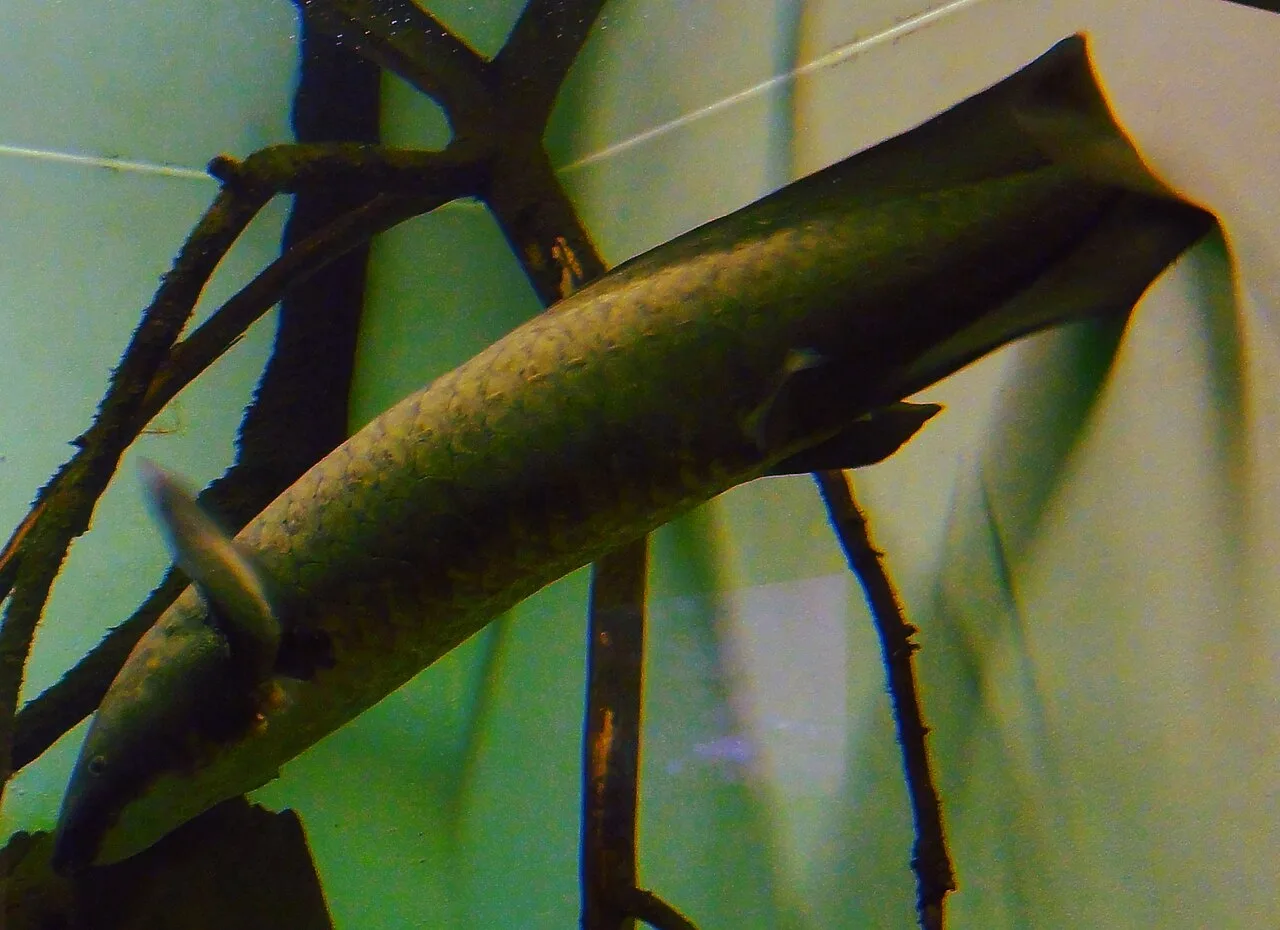
Unchanged in its essential anatomical design since the Middle Devonian period over 380 million years ago, the Australian lungfish (Neoceratodus forsteri) is one of the most ancient vertebrate lineages on Earth.
It represents the closest living fish relative to tetrapods, the four-limbed ancestors of all amphibians, reptiles, birds, and mammals.
Fleshy Lobe-Fins and the Single Lung
Its heavy, paddle-like pectoral and pelvic fins are supported by an internal bony skeleton with joints, functioning much like proto-limbs. The lungfish uses these fins to walk and prop itself up along muddy riverbeds.
Unlike its African and South American relatives which have paired lungs and can estivate in dried mud, the Australian lungfish possesses a single, highly vascularized dorsal lung used as a supplement to its functioning gills when river pools become stagnant.
Centenarian Longevity in Queensland Rivers
Australian lungfish can grow up to 1.5 meters (5 feet) in length, weigh over 40 kilograms (88 pounds), and live well beyond a century.
A famous wild-caught specimen named Granddad lived at the Shedd Aquarium in Chicago for 84 years, reaching an estimated age of at least 109 before passing away in 2017 as the oldest recorded fish in zoological care.