The Megafauna of the Amazon Basin
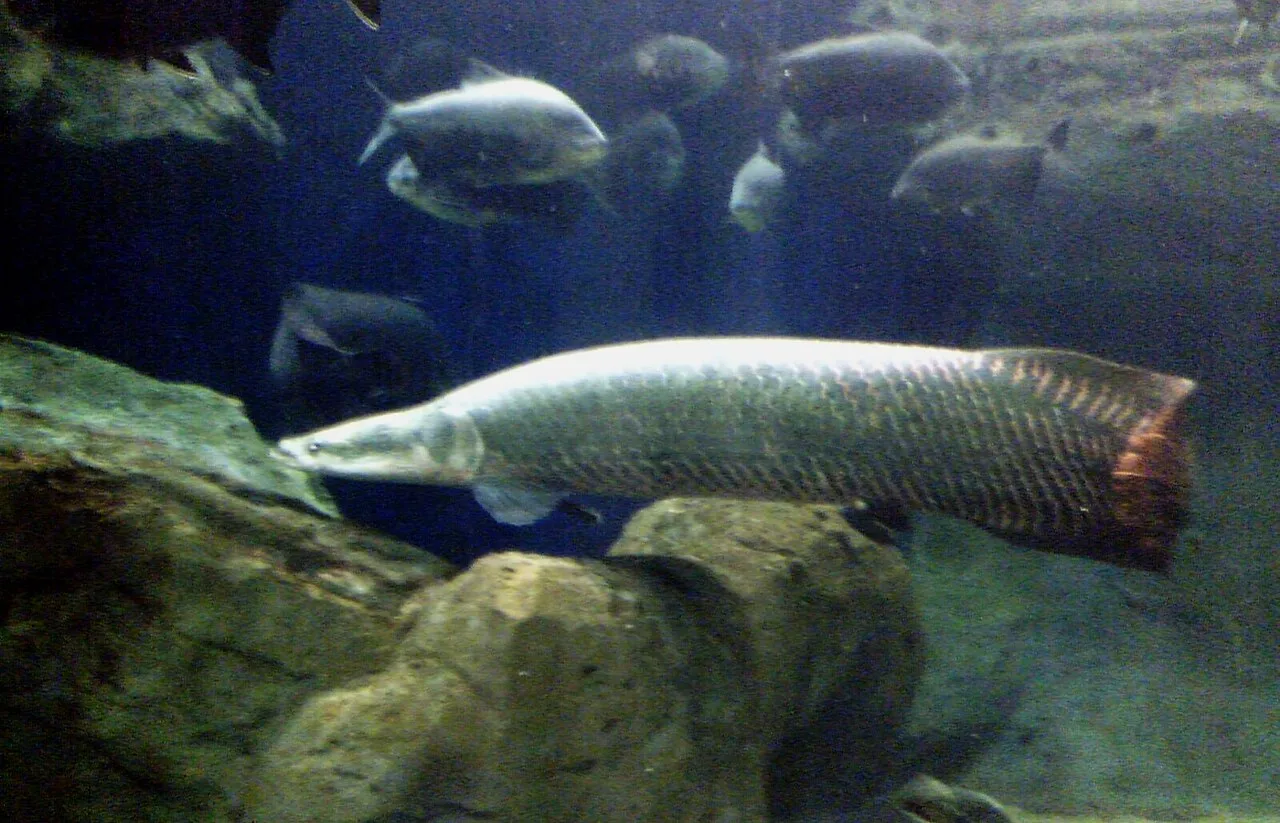
Also known as the pirarucu in Brazil and paiche in Peru, the Arapaima (Arapaima gigas) is one of the largest strictly freshwater fish on the planet, growing up to 3 meters (10 feet) long and weighing over 200 kilograms (440 pounds).
Its elongated, muscular body is tipped with fiery crimson accents along its tail, giving it a distinctive dragon-like silhouette as it glides through slow-moving blackwater lagoons.
Piranha-Proof Flexible Body Armor
Surviving in waters teeming with razor-toothed piranhas requires exceptional natural defense. The Arapaima is covered in large, overlapping scales with a unique dual-layer structural design.
The outer layer is hard and heavily mineralized with calcium phosphate to resist tooth penetration, while the underlying inner layer is composed of flexible, woven collagen fibers aligned in alternating directions. This enables the scales to deform without cracking, completely neutralizing piranha bites.
Obligate Air-Breathing and Tongue Crushing
Because Amazonian floodwaters frequently become hypoxic, the Arapaima has evolved a modified, highly vascularized swim bladder that acts as an air-breathing lung. It must surface every 10 to 20 minutes to take a loud, gulping breath of atmospheric air.
When hunting, it expands its buccal cavity to create an overwhelming vacuum, drawing prey directly into its mouth where a rigid, tooth-covered bony tongue (osteoglossid) crushes the meal against the roof of its mouth.