The Colossal River Glider of Southeast Asia
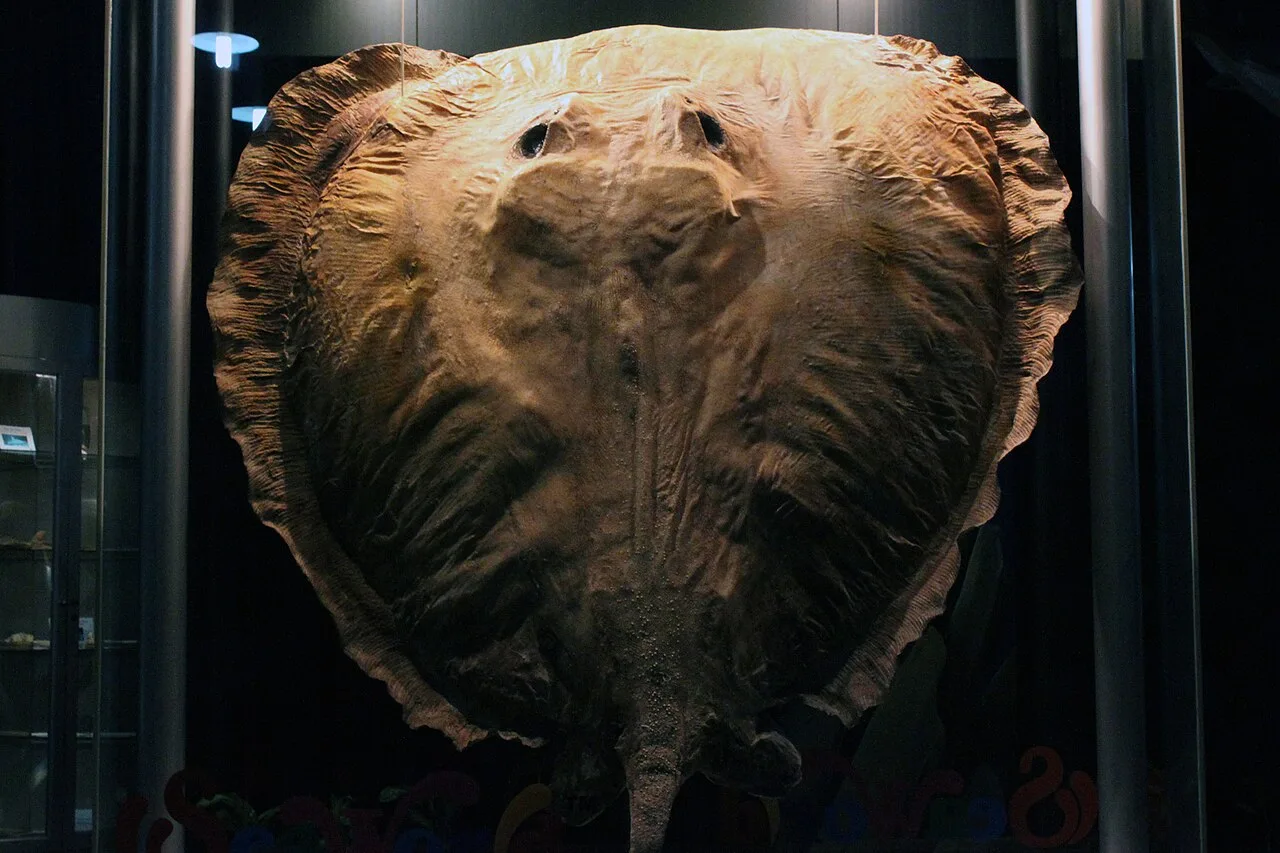
Measuring up to 2.2 meters (7.2 feet) in disc width, over 4 meters (13 feet) in total length, and weighing up to 300 kilograms (660 pounds), the giant freshwater stingray (Urogymnus polylepis) is one of the heaviest freshwater fishes on Earth.
In June 2022, local fishermen and scientists on the Mekong River in northern Cambodia captured and tagged a female specimen weighing 300 kilograms (661 pounds), setting a confirmed world record.
The 15-Inch Venomous Tail Blade
At the base of its long, whip-like tail sits a formidable weapon: a serrated, bone-hard spine measuring up to 38 centimeters (15 inches) in length.
This barb is coated in a toxic sheath of glandular tissue that delivers excruciating, tissue-destroying venom. The ray uses this blade strictly for self-defense against large predators, capable of driving the spike cleanly through solid rubber boats and boots.
Riverbed Suction and Electro-Sensing
Dwelling completely concealed beneath layers of fine river silt, the giant stingray uses an array of Lorenzini ampullae across its ventral disc to detect the weak bio-electric fields of buried clams and crabs.
Once prey is detected, the ray settles its disc firmly over the riverbed and uses powerful buccal suction to dislodge the food, crushing tough shells between thick, pavement-like tooth plates.