The Prehistoric Bayou Apex Hunter
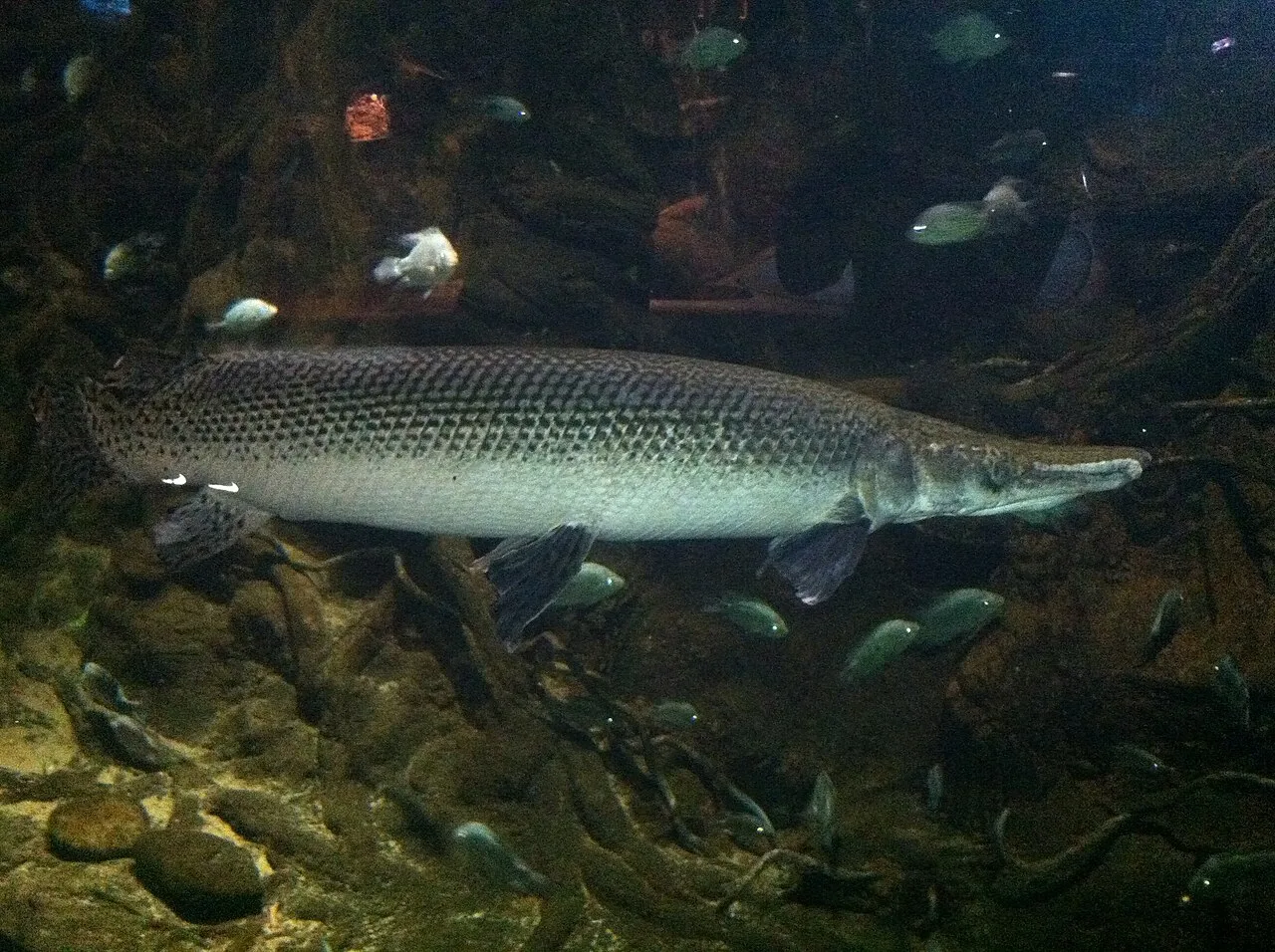
Surviving for over 100 million years with fossil ancestors dating back to the Early Cretaceous, the alligator gar (Atractosteus spatula) is the largest strictly freshwater fish in North America.
Reaching lengths of up to 3 meters (10 feet) and weights exceeding 140 kilograms (300 pounds), its wide, flattened snout closely mirrors that of the American alligator, earning it its common name.
Diamond Ganoid Scale Plating
Unlike the flexible, thin scales of modern teleost fish, the alligator gar is encased in interlocking, diamond-shaped ganoid scales.
Each scale is composed of a bone layer covered by a glass-hard enamel coating called ganoine. Native American tribes historically used these impenetrable scales for arrow points, scrapers, and protective breastplate armor.
Dual Tooth Rows and Atmospheric Gulping
Unlike other gar species that possess a single row of teeth, the alligator gar features a double row of large, sharp enamel teeth in its upper jaw, ensuring that slippery prey cannot wriggle free.
During hot summer months when stagnant bayous lose dissolved oxygen, the gar rises to the surface to gulp atmospheric air, routing it into a spongy, vascularized swim bladder functioning as a supplementary lung.