The Peter Pan of Amphibians
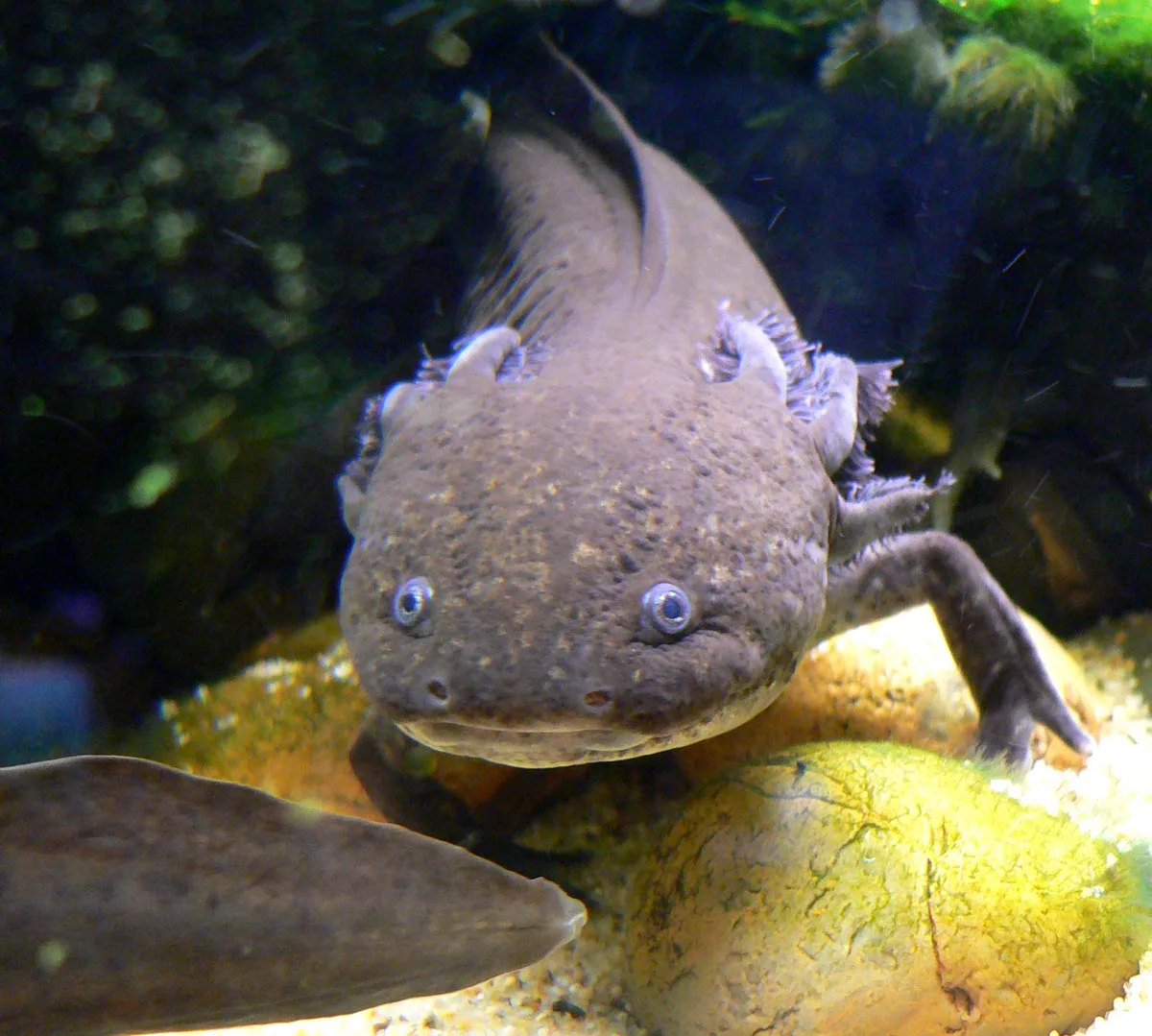
While nearly every other salamander goes through metamorphosis, loses its gills, and crawls onto dry land to live a boring terrestrial adult life, the Axolotl (Ambystoma mexicanum) said “no thank you”. It stays in its aquatic larval stage for life, a condition called neoteny. It spends its entire lifespan swimming around with feathery, pink branching external gills that look like high-tech cybernetic antenna arrays.
“Cut off an axolotl’s leg, and within a few months it will grow a perfect replacement: complete with bones, muscles, nerves, and blood vessels with zero scar tissue.”
Wolverine-Level Regenerative Biology
The axolotl is biology’s ultimate cheat code. Most vertebrates heal injuries by forming tough fibrous scar tissue. Axolotls instead revert their cells at the wound site back into stem-cell-like progenitor cells, reconstructing entire complex limbs, portions of their heart muscle, retinas, spinal cords, and even sections of their brain. Scientists study them tirelessly in hopes of unlocking human organ regeneration.