The Bacterial Farmer of the Vents
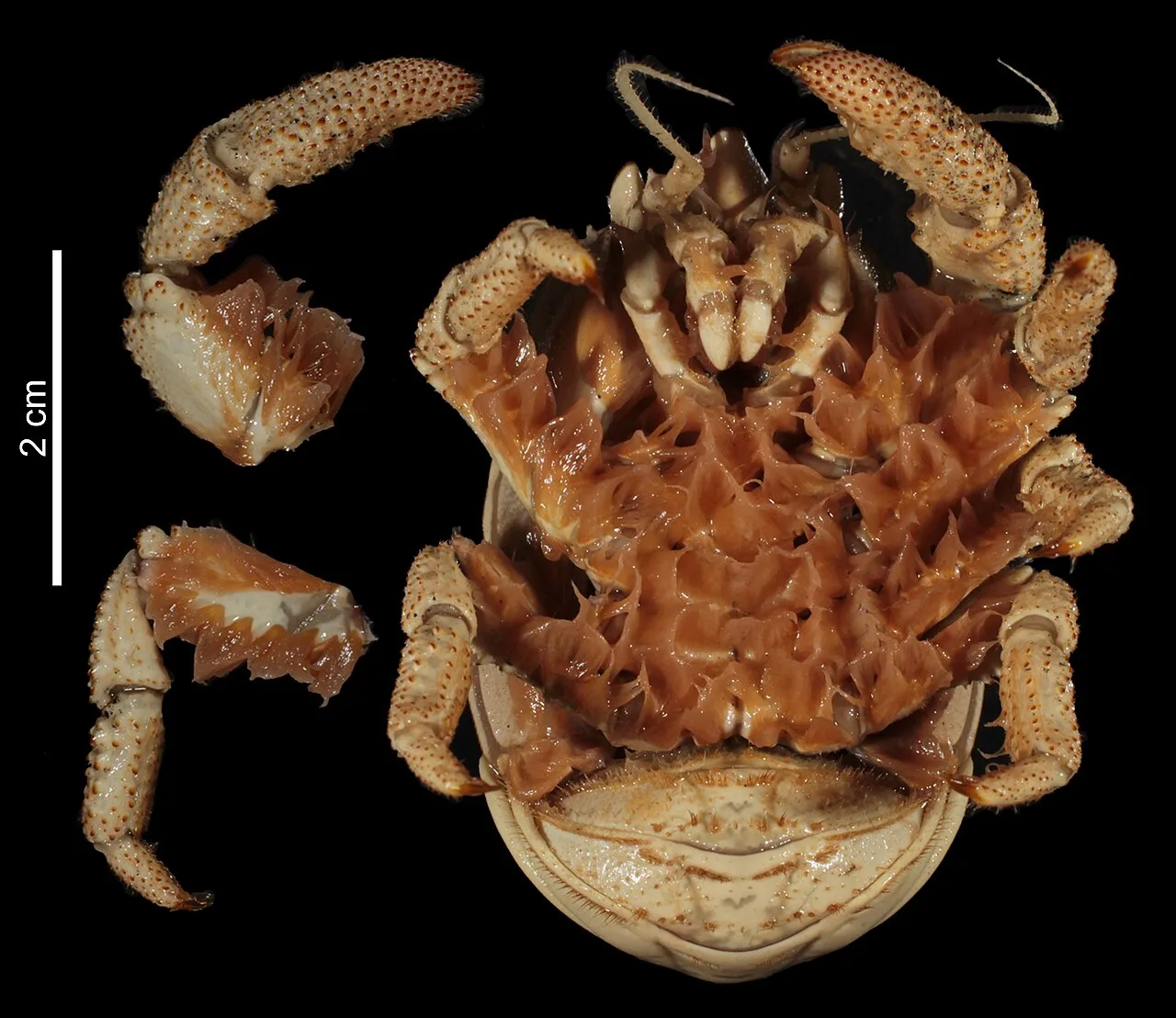
Discovered near methane seeps off the coast of Costa Rica and hydrothermal chimneys in the South Pacific, the yeti crab (Kiwa puravida) is famous for its dense covering of flexible, hair-like bristles (setae) on its elongated claws.
These bristles serve as miniature agricultural fields. Filamentous chemosynthetic bacteria colonize the hairs, drawing energy from hydrogen sulfide and methane escaping from the seafloor.
The Hydrothermal Vent Dance
To fertilize its bacterial crops, the yeti crab performs continuous rhythmic movements, waving its hairy claws back and forth in methane plumes.
This waving action circulates fresh oxygen and sulfide-rich water over the bacterial colonies, maximizing their growth. When hungry, the crab uses specialized mouthparts with comb-like appendages to scrape the bacteria directly off its claws and eat them.
Blind Life in the Midnight Zone
Having evolved in complete darkness miles below the photic zone, the yeti crab has completely lost its compound eyes, retaining only vestigial, pigment-free ocular stalks.
It navigates thermal gradients and chemical plumes using high-density chemoreceptors situated across its antennae and legs, crowding tightly together in dense colonies around vent cracks.